Independent species review: pending. Source-check date: 2026-09-05.
Report a care correction · Offer a species reviewArticle changes
- 2026-09-05 · Added a scoped introduction with verified sources, practical checks and ownership planning.
- 2026-09-05 · Aligned the displayed experience level with the finder’s classification.
- 2026-09-08 · Expanded practical preparation, maintenance and observation sections, with scoped sources where applicable. This update checks the new material; independent species review remains pending.
At a glance
- Scope
- Eunectes group; green and yellow examples do not constitute care for every anaconda species. ↗
- Housing
- Editorial planning decision: individual enclosure assessment; no automatic size preset. ↗
This is an introductory planning guide. Sources describe particular animals and methods; they do not certify an enclosure, temperament or veterinary fitness.
Use this guide as a starting point alongside the detailed sources below. Health concerns, unexplained changes in behavior, or feeding problems belong with a reptile veterinarian.
A category containing different species
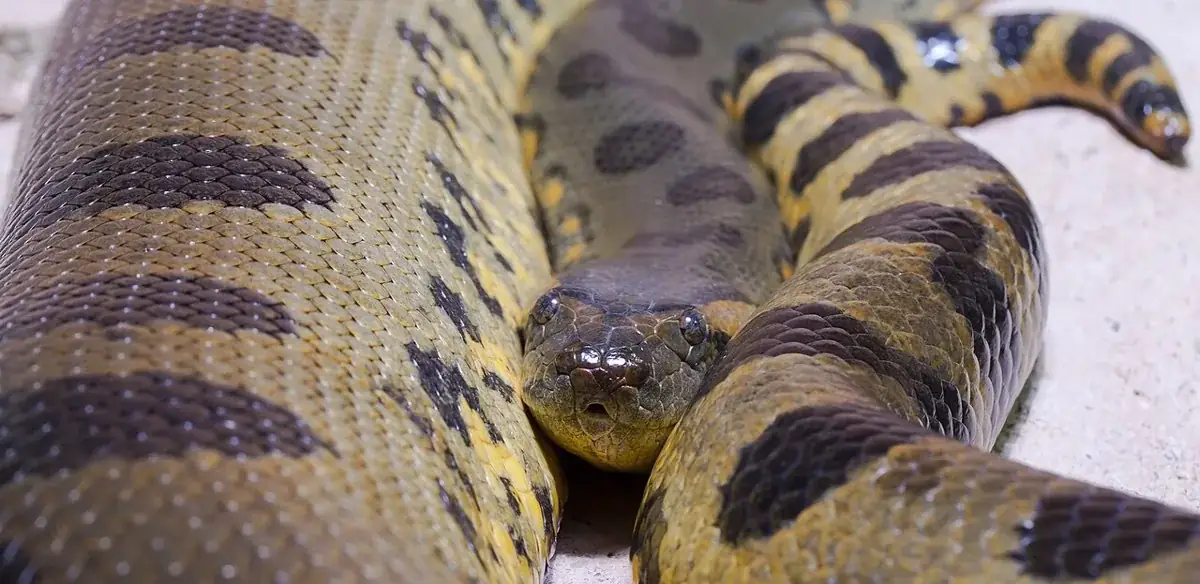
Anacondas belong to Eunectes, whose species require separate care assessments. This introduction uses green and yellow anacondas as examples; it does not provide complete husbandry for every species or locality. Record the scientific identification, sex when reliably established, origin and current measurements. Taxonomic revisions also make an unqualified common name a poor substitute for documentation.
Decide whether the adult facility is realistic
The Smithsonian describes the green anaconda’s exceptional body mass and aquatic habits. Our planning requirement is a written adult facility assessment before acquisition: usable land, swimming provision, secure access and a suitable temporary holding arrangement during maintenance. Have structural loading, drainage and electrical installation assessed by qualified people where a substantial pool or room conversion is involved.
Water is daily husbandry
Fisher Reptiles’ green and yellow accounts both emphasise substantial water provision. Design easy exits and access for draining, scrubbing and refilling. Its yellow-anaconda account notes that animals may foul their water and that filtration does not remove the need for prompt cleaning. Keep spare water-service parts and record maintenance rather than judging cleanliness by clarity alone.
Measure more than the pool
Commission the land and water environments separately with an experienced species keeper. Record water temperature, air conditions, accessible warm areas and shaded retreats. Protect heaters and cables from contact and displacement. There is no single group temperature or enclosure-size preset here: adult size, species, room conditions and maintenance access all affect the final design.
Plan feeding and essential access together
Ask for exact prey, meal dates and growth records from the current keeper. An experienced reptile veterinarian should help assess condition and any repeated feeding problem. Our service plan requires people with substantial large-snake experience, a documented access procedure and secure containment; casual handling is not the purpose of this animal’s care.
Fund a facility for many years
The Smithsonian reports some green anacondas living into their late twenties in human care; that is not a lifespan estimate for every Eunectes species. Budget for water, power, whole prey, servicing, suitable transport and specialist veterinary support. Confirm applicable local keeping requirements and a realistic long-term backup placement before committing to an animal of this scale.
Confirm identity before sizing the facility
Smithsonian's green-anaconda account describes a strongly water-associated snake with marked size differences between males and females. It is a green-anaconda natural-history reference, not a complete housing prescription for every Eunectes species.
Keep the identified species, sex assessment and supporting records with the adult plan. Ask which facts are documented and what remains uncertain. Do not use a small male photograph or a yellow-anaconda care sheet as an automatic space estimate for another animal. Have an experienced specialist assess the expected adult, land area, water system and service arrangements. The category label alone does not establish whether the home can accommodate the animal.
References: Smithsonian's National Zoo — green anaconda identity and size context
Commission the pool as a maintenance system
Before the animal arrives, document filling, emptying, cleaning, refilling and inspection of the water feature. Record the time and assistance each step needs, where contaminated water goes and how the snake is securely separated from the work. Include access to concealed corners and any drain or pump components.
Keep a dry-land route, full-body refuge and usable exits visible on the plan. Check how splashing or overflow affects the surrounding substrate and structure. Save photographs of service features with the pool empty, not only the completed display. If the water system cannot be kept clean through the planned routine, redesign it before occupancy.
Make backup care an actual arrangement
Confirm the experienced carers, veterinarian, transport equipment and secure alternative facility that would be used during keeper illness, a major leak or an extended equipment failure. Check that the adult can pass through the building and into the intended vehicle in appropriate containment.
Record utility dependencies and who can repair them, alongside the agreed response to a fault. Review the plan as the animal grows and whenever the facility changes. These notes do not teach anaconda handling or certify containment. They help assess whether care can continue during a disruption. Delay acquisition until essential help and an adult receiving facility are arranged.
Sources & further reading
Read the full recommendations and check details for your animal, equipment, and local conditions.
- Smithsonian National Zoo — green anaconda natural history and lifespan
- Fisher Reptiles — green anaconda care
- Fisher Reptiles — yellow anaconda care
Compiled September 2026. Original summaries; not individually reviewed by a veterinarian.