Independent species review: pending. Source-check date: 2026-09-05.
Report a care correction · Offer a species reviewArticle changes
- 2026-09-05 · Added a scoped introduction with verified sources, ownership planning and a practical checklist.
- 2026-09-05 · Aligned the displayed experience level with the finder’s classification.
- 2026-09-08 · Expanded practical preparation, maintenance and observation sections, with scoped sources where applicable. This update checks the new material; independent species review remains pending.
At a glance
- Scope
- Northern and southern white-lipped lineages need documented identification. ↗
- Legacy names
- Older sources use Bothrochilus and southern meridionalis. ↗
Planning references apply only to the species and life stage described. They do not certify an enclosure, temperament or veterinary fitness.
Use this guide as a starting point alongside the detailed sources below. Health concerns, unexplained changes in behavior, or feeding problems belong with a reptile veterinarian.
Check the scientific name behind the colour
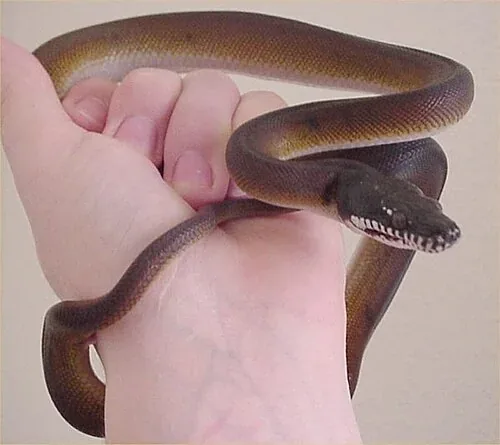
Northern or gold and southern or black white-lipped pythons should not be treated as colour morphs with interchangeable care. This page follows the Reptile Database’s Leiopython albertisii and L. fredparkeri treatment. Southern animals also appear under meridionalis, and older accounts use Bothrochilus. Record legacy labels without assuming a seller’s colour description proves identity. This remains a group introduction pending individual assessment.
Provide useful space and concealment
Reptile Supply’s L. albertisii guide emphasises extension space, climbing opportunities and securely anchored furnishings. Plan connected elevated routes while preserving movement across the floor. The Reptile Database notes a larger maximum body size in the southern form, so no dimensions are supplied for the whole group. Before construction, draw where the animal can rest unseen and how you will reach water and remove soiled material.
Humidity is more than spraying
Keeper Scott Borden’s first-hand account identifies hydration and cleanliness as major priorities, especially for young animals. He reports humidity around 55–85% while avoiding surfaces that remain wet. Treat that broad range as his setup reference, not an all-day target at its upper end. Pair measurements with drinking-water checks, ventilation and observation of drying. Build a cleaning routine that still works when the snake is concealed.
Heat and food require a record
Borden reports a basking area around 31–32°C (88–90°F), with cooler choices, and warns that enthusiastic feeding can produce excessive growth and obesity. Ask for the established prey routine and thermal records for the particular animal. Record meal size and body condition, and assess lamp clearance wherever it can climb. This introduction does not transfer the author’s winter cooling experiments into a routine pet-care schedule.
Choose observation over a temperament promise
The keeper account describes considerable behavioural variation. A calm photograph cannot tell you how that snake behaves during cleaning or feeding. Arrange quiet settling, safe essential removal and veterinary transport in advance. Our specialist budget reflects a substantial furnished enclosure and repeated maintenance, not the purchase price. No reliable lifespan estimate is established here; retain long-term care and rehoming plans with the animal’s identity records.
Keep the historical names with the documented identity
The Reptile Database records the relationship between Leiopython fredparkeri and the older meridionalis usage. A keeper may therefore encounter different scientific labels for the same historical southern account. Retain the original label and the date of any later identification review rather than silently rewriting the animal's history.
Ask what evidence supports northern or southern identification and keep locality claims separate from verified lineage. When comparing care articles, check which form the author maintained. A dark or pale appearance alone should not select the enclosure plan. Include the naming history in veterinary and future-owner handoffs so older records remain intelligible without treating a colour description as proof of ancestry.
References: The Reptile Database — Leiopython fredparkeri and synonymy
Give the humidity system its own maintenance record
List the water reservoir, sprayer or nozzle, drinking vessel and the positions used for readings. For each, record how it is inspected and cleaned. Note whether a surface is still wet before the next scheduled cycle; an immediate peak alone does not describe the environment the snake occupies.
Keep a clear distinction between deliberate moisture provision and an accidental spill or obstructed drain. After changing cover or branches, inspect the newly concealed areas and recheck the measurements at used resting positions. Record the change in the enclosure journal. Check that routine servicing remains possible while the snake has access to retreat.
Ask about the individual during cleaning, not only handling
A brief video of a calm white-lipped python does not show how it behaves when water is changed, food is presented or a branch is removed. Request the keeper's ordinary procedure and recent feeding record. Ask whether a transition in prey or housing remains unresolved.
Plan essential access and secure temporary accommodation with someone familiar with the identified form. During settling, record significant responses and the circumstances without assigning a permanent temperament label. Keep growth and condition beside meals, rather than treating enthusiastic feeding as a reason for rapid enlargement. If a behaviour changes after relocation or rearrangement, save that context for discussion.
Sources & further reading
Read the full recommendations and check details for your animal, equipment, and local conditions.
- Scott Borden — first-hand white-lipped python husbandry, 2020
- The Reptile Database — Leiopython albertisii
- The Reptile Database — L. fredparkeri and meridionalis synonymy
- Reptile Supply — L. albertisii housing and furnishing guidance
Compiled September 2026. Original summaries; not individually reviewed by a veterinarian.