Independent species review: pending. Source-check date: 2026-09-05.
Report a care correction · Offer a species reviewArticle changes
- 2026-09-05 · Added an original species introduction, verified source links, setup checklist, ownership considerations and explicit evidence limits.
- 2026-09-05 · Aligned the displayed experience level with the finder’s classification.
- 2026-09-08 · Expanded practical preparation, maintenance and observation sections, with scoped sources where applicable. This update checks the new material; independent species review remains pending.
At a glance
- Identity
- Python anchietae; distinct from the ball python. ↗
- Heat reference
- Zoo author: ambient 26–27°C; basking no higher than about 32°C. ↗
- Commitment
- Virginia Zoo reports 20–30 years; page flagged for updating. ↗
Source-specific planning references, not enclosure certification. This introduction has not received independent species review; confirm the individual animal’s care plan before acquisition.
Use this guide as a starting point alongside the detailed sources below. Health concerns, unexplained changes in behavior, or feeding problems belong with a reptile veterinarian.
Know which python you are choosing
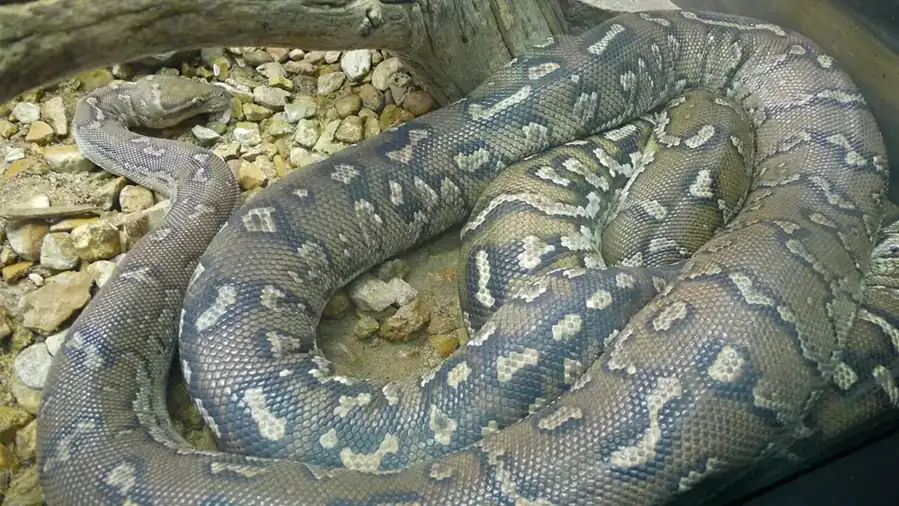
Python anchietae is a distinct southwestern African species, not a ball-python morph. Virginia Zoo describes its characteristic bead-like scales and rocky shrubland habitat. Choose an animal with a documented captive history and established feeding. Before choosing an animal for its unusual appearance, check that you can maintain and service an adult enclosure for decades.
Build around secure retreats
Arrange adult housing around full-body shelter and usable movement space. Phil Colclough’s zoo account emphasizes this species’ strength: anchor rocks and heavy furnishings so burrowing cannot undermine them. Provide separate warm and cooler retreats and absorbent substrate. Avoid inaccessible caves that prevent inspection. This introduction deliberately leaves dimensions for an individual adult assessment.
Control heat inside the habitat
Colclough reports an ambient reference of 26–27°C (78–80°F), with a basking area no higher than about 32°C (90°F). These describe his zoo method, not temperatures for every surface. Use thermostatic control and separate measurements in occupied retreats. Wild desert temperature extremes are not captive targets. Plan shaded daytime lighting without inventing a universal UV setting.
Dry terrain still needs drinking water
Keep drinking water available and maintain hygiene around the bowl. A dry-looking display does not demonstrate that its hidden microclimates suit the snake. Record humidity where the animal rests, inspect substrate beneath furnishings, and review the plan if sheds are repeatedly incomplete. Avoid increasing heat to compensate for poor ventilation or damp, dirty bedding.
Use feeding records to guide care
The zoo account describes appropriately sized killed rodents and warns against obesity. Obtain the animal’s prey type and recent feeding record, then track meals alongside weight and body condition. Do not treat every movement toward the door as a request for food. Make settling-in checks possible without dismantling every retreat or repeatedly handling the new arrival.
Budget for the whole adult project
Virginia Zoo reports a 20–30-year lifespan, although its page carries an update caveat. Plan ongoing heating, sturdy housing, replacement controls and veterinary care across that scale of commitment. Before acquisition, write down who will provide care during absences and how the adult enclosure will move if your housing changes. Confirm the plan with an experienced species keeper.
Ask for the captive history behind a rare animal
Virginia Zoo describes the Angolan python's restricted rocky-shrubland distribution and notes the pressures associated with demand for unusual animals. Before acquisition, ask who bred or raised the individual, its hatch date, established prey and any known parental history.
Save the answers with the original sales record and identify what remains unverified. A rare-species label is not evidence that the animal has already adapted to the environment you can provide. Ask for recent measured care information before selecting equipment. If the history cannot be supplied, obtain specialist advice before acquisition rather than treating uncertainty as a minor detail to resolve later.
References: Virginia Zoo — Angolan python habitat and trade context
Make the rockwork reversible
Plan the retreat arrangement with a removable cover and supports that remain stable if the snake pushes beneath them. List which elements are structural and which are decorative. Include access to inspect the rear of each retreat and the substrate beneath the water vessel.
Take a photograph before filling the enclosure, then keep it with the build record. If a shelter needs changing as the python grows, the image shows how to dismantle it without disturbing unrelated supports. During the empty-habitat trial, complete a water change and a hidden-corner inspection. A rocky theme should provide useful concealment while allowing the keeper to maintain hygiene and recover a problem safely.
Separate a successful setup from a proven protocol
Keep the chosen expert's climate plan together with the actual enclosure measurements, rather than recording only the thermostat target. Note the animal's life stage, the source date and any differences between the published setup and your own. A zoo account can be useful experience without validating every home installation.
Review the plan when shelter size, substrate depth or lighting position changes. Add dated weights and comparable photographs so growth remains visible alongside equipment decisions. For future caretakers, record which aspects have been assessed and which still depend on specialist advice. This introduction can help organise that process, but it leaves unresolved care requirements for specialist review.
Sources & further reading
Read the full recommendations and check details for your animal, equipment, and local conditions.
- Phil Colclough — Angolan python care at Knoxville Zoo
- Virginia Zoo — Angolan python identity and lifespan
Compiled September 2026. Original summaries; not individually reviewed by a veterinarian.