Independent species review: pending. Source-check date: 2026-09-05.
Report a care correction · Offer a species reviewArticle changes
- 2026-09-05 · Added scoped introduction, preparation checklist, source references and individual housing assessment; independent species review remains pending.
- 2026-09-08 · Expanded practical preparation, maintenance and observation sections, with scoped sources where applicable. This update checks the new material; independent species review remains pending.
At a glance
- Scope
- Aspidoscelis tigris; other whiptails require separate guidance. ↗
- Observed activity
- A wary, fast daytime forager that uses nearby cover. ↗
- Coverage boundary
- Identity and preparation only; captive climate and dimensions need specialist review. ↗
These are source-specific planning references, not enclosure certification. Identity, adult size, measuring location and the individual animal require review. Blank finder dimensions mean that a manual assessment is necessary.
Use this guide as a starting point alongside the detailed sources below. Health concerns, unexplained changes in behavior, or feeding problems belong with a reptile veterinarian.
A whiptail name is not a care protocol
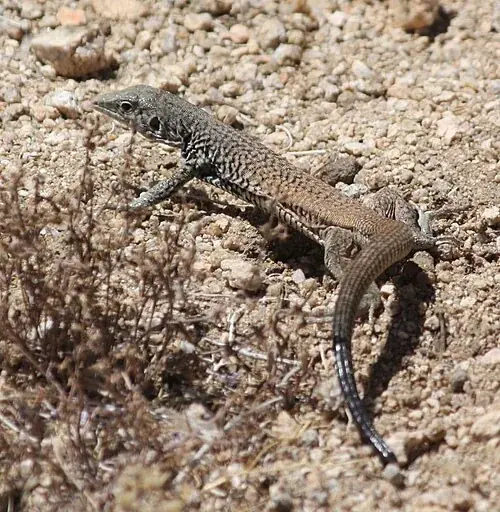
This page concerns western or tiger whiptails, Aspidoscelis tigris, formerly Cnemidophorus tigris. It does not cover rainbow whiptails, other Cnemidophorus species or every Aspidoscelis. The Reptile Database recognizes geographic forms within A. tigris. Record the animal’s identity and origin before borrowing seasonal care advice or assuming that a generic whiptail listing describes the animal offered.
Choose active observation
CaliforniaHerps documents Great Basin western whiptails as wary daytime foragers that dig and dash to nearby cover. National Park Service observations likewise describe animals moving between bushes. This behavior makes an observation-focused project the sensible expectation. Plan routine servicing around containment; rapid movement and a long tail make a small opening or an improvised capture attempt consequential.
Have the terrestrial layout reviewed
Use the recorded behavior to frame the design discussion: provide usable movement space, cover near open areas and a substrate plan that accommodates digging. These are planning inferences, not a tested enclosure specification. No universal numerical dimensions are supplied here. Have an experienced keeper assess the identified form, expected adult size and furnishings before ordering the permanent enclosure.
Resolve heat, UVB and moisture together
Field observations cannot be converted directly into a safe basking thermostat setting. The sources reviewed for this introduction do not establish a complete captive climate protocol. Obtain species-specific daytime and nighttime temperatures, UVB placement and moisture guidance before acquisition. Ask where each value is measured and how the lizard can retreat; a uniformly hot, brightly exposed box offers little environmental choice.
Prepare an insect-feeding routine
The field account records small invertebrate prey. That supports investigating an appropriate live-invertebrate diet, but does not validate feeding wild scorpions, a single feeder insect or an improvised supplement schedule. Obtain the animal’s established feeding record and a reviewed feeder, gut-loading and supplementation plan. Record food offered and accepted, and confirm that prey cannot disappear into inaccessible equipment spaces.
Know what remains unresolved
No defensible captive lifespan range was established from these sources. Costs include a suitable terrestrial habitat, measured lighting and heat, recurring feeders and veterinary care. Budget time for daily observation and feeder maintenance. Before committing, be able to explain safe servicing and the completed climate plan. This introduction helps organize that work; it is not sufficient on its own to start keeping the species.
Keep a field observation within its limits
The National Park Service record concerns whiptails seen moving between bushes on a particular Yosemite trail during one morning. It supports the value of open-ground movement with nearby cover, but it does not measure captive temperatures, enclosure size or dietary completeness. Keep a source note stating what was actually observed before converting it into a design question. A local time of activity cannot be copied as a universal lighting schedule. Keep that limitation explicit when using natural-history material to plan captive care.
References: National Park Service — western whiptail field observation
Plan routine access for an animal that moves quickly
Use the recorded rapid movement between cover to rehearse maintenance before an animal is present. Identify the small opening needed for feeding, how tools enter and leave, and where the lizard can retreat while a water container is serviced. Keep the surrounding room secure during necessary access. Ask the experienced reviewer how a veterinary transfer would work for the identified animal rather than assuming routine hand capture. These are planning inferences, not a handling protocol or a guarantee against escape. The service sequence should remain workable while the whiptail moves around the enclosure.
References: National Park Service — western whiptail movement context
Write down the missing care plan before seeking a seller
Prepare a list of information still needed: confirmed form and origin, adult movement space, substrate and retreat design, measured daytime and nighttime conditions, UVB exposure, feeder preparation and veterinary access. Bring that list and a proposed habitat drawing to someone with documented experience of the same animal. Retain the source and measurement location for each agreed value. These acquisition questions do not establish biological requirements or numerical care settings. If the available information is limited to generic whiptail guidance, the questions remain unresolved. Complete the individual care record before buying equipment.
References: The Reptile Database — Aspidoscelis tigris identity reference
Sources & further reading
Read the full recommendations and check details for your animal, equipment, and local conditions.
- The Reptile Database — Aspidoscelis tigris identity and forms
- CaliforniaHerps — Great Basin whiptail field observations
- National Park Service — western whiptail observations at Yosemite
Compiled September 2026. Original summaries; not individually reviewed by a veterinarian.