Independent species review: pending. Source-check date: 2026-09-05.
Report a care correction · Offer a species reviewArticle changes
- 2026-09-05 · Added original species planning guidance with linked references and explicit evidence limits.
- 2026-09-08 · Expanded practical preparation, maintenance and observation sections, with scoped sources where applicable. This update checks the new material; independent species review remains pending.
At a glance
- Adult housing
- Sex-dependent, bespoke adult enclosure; see the full dimensions and caveats. ↗
- Diet
- Omnivorous; composition and meal frequency change with age. ↗
These are attributed adult planning references, not a validated enclosure design. Surface temperature, shaded air temperature and UV Index describe different measurements. Read the full guide before setting equipment. Independent species review is pending.
Use this guide as a starting point alongside the detailed sources below. Health concerns, unexplained changes in behavior, or feeding problems belong with a reptile veterinarian.
Identify the adult project
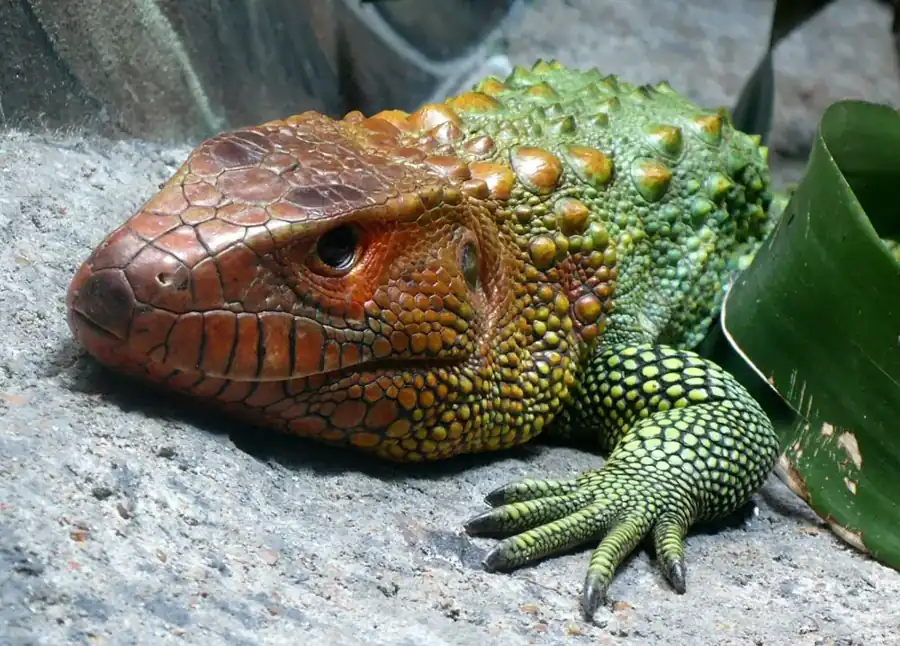
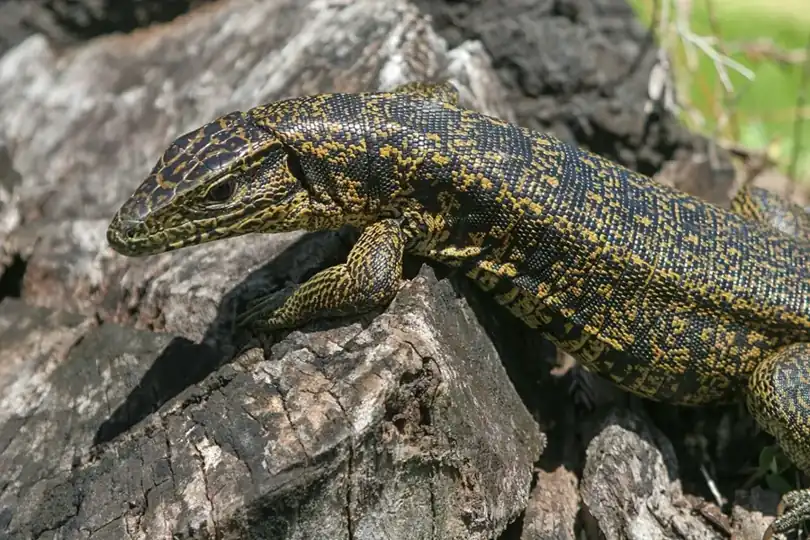
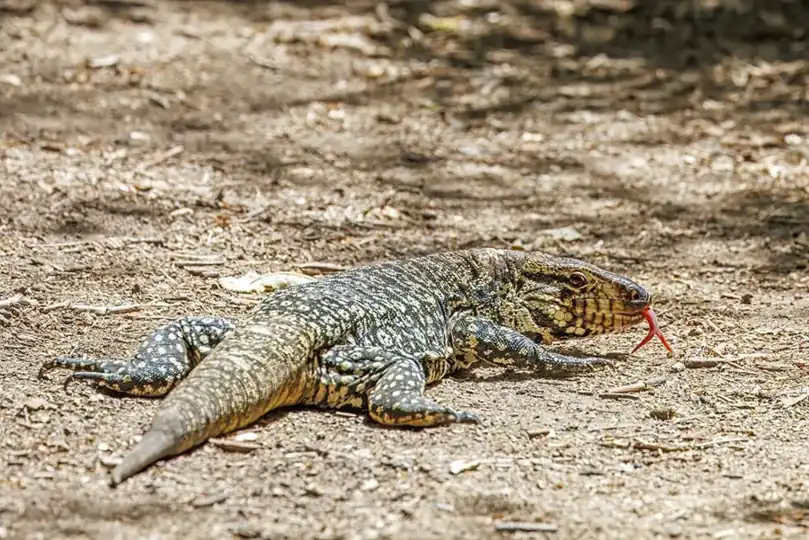
This guide covers Salvator merianae, including color forms sold under the Argentine black-and-white name. It does not cover Colombian tegus. Plan around a 15–20-year commitment, potentially longer. Plan the housing, food storage and keeper access for an adult rather than judging those needs by a youngster’s current size.
Space before purchase
ReptiFiles now distinguishes adult planning by sex: approximately 3 × 1.5 × 1.5 m for males and 2.4 × 1.2 × 1.2 m for females. These references do not certify an individual installation. Fund the larger project if sex is uncertain. Add secure retreats, diggable substrate and furnishings that leave usable movement space. A tegu must not be able to dislodge its lamps.
Measure the entire basking area
The cited lighting plan uses a 52–57°C basking surface, 32–35°C warm-side air and 24–29°C cool-side air. These are different readings: scan the platform with an infrared thermometer and use shaded probes for air. An adult needs broad heating coverage. Verify UV Index 3–4 at the animal’s basking position, accounting for its back height, fixture and mesh; leave shaded retreats.
Moisture without a dirty enclosure
ReptiFiles targets 70–80% humidity and provides a more humid retreat. Measure both ends; a single sensor beside a mister can mislead. Check the substrate beneath its surface and keep water containers clean. Record whether low readings persist between misting events. A successful setup provides humid refuge while allowing cleaning, fresh air and safe access to equipment.
A diet that changes with growth
Young Argentine tegus eat an insect-rich, protein-heavy diet; adults need a varied omnivorous plan with more vegetables and limited fruit. Whole prey and appropriately supplemented other foods have different nutritional roles. ReptiFiles describes progressively fewer meals as growth slows. Treat that schedule as a starting point, then record portions and body condition. Eager feeding is not evidence that an adult needs another meal.
Make the project sustainable
Price the adult enclosure, replacement lamps, electricity, fresh food, freezer space and capable holiday care separately. Keep a record of enclosure dimensions, installed equipment and routine checks so another keeper can take over. Independent review of this guide is pending. Seasonal inactivity, breeding and medical problems need additional species-specific advice; this overview does not establish a brumation protocol.
Commission the enclosure with the substrate in place
ReptiFiles bases its housing recommendations on freedom of movement and a usable gradient, and warns that tegus can disturb lamps. Evaluate the furnished enclosure after adding the planned digging material: measure remaining headroom, accessible lamp distance and the route around the water container. Push-test doors, latches and fixed furniture while the enclosure is empty. Mark the intended substrate level so later top-ups do not quietly bring the animal closer to equipment. Photograph the support positions before covering their bases. This practical commissioning sequence checks the installation you will actually use, rather than assuming that correct external dimensions guarantee useful space inside.
References: ReptiFiles — tegu enclosure functions and lamp security
Separate individual housing from supervised interaction
The housing source explicitly says tegus do not require a companion, and that compatibility between individuals is not guaranteed. Fund a complete single-animal home before considering any additional tegu. If the household already keeps reptiles, plan separate service equipment and a contained route to the veterinarian or temporary holding enclosure. A relaxed interaction in an open room does not test competition over the same heated refuge or food bowl. Write down how essential cleaning can be done when this individual is unwilling to approach. This is a management plan for predictable access, not a requirement to make the tegu accept handling or a reason to introduce another animal.
References: ReptiFiles — tegu cohabitation limitations
Record seasonal changes before interpreting them
Keep a calendar with activity, actual meals, comparable weights and enclosure measurements before a seasonal slowdown develops. Note changes in room conditions and timer settings alongside behavior. If appetite or activity changes, that record gives a qualified adviser something more useful than a guess that the tegu is brumating. Do not begin a cooling or fasting program from this overview, particularly for an animal with uncertain health or origin. Also record the practical implications for backup care: who checks equipment, who notices an unusual change and how the animal can be transported. These recordkeeping suggestions support assessment without turning normal-season explanations into a home diagnosis.
References: ReptiFiles — complete tegu care manual for further seasonal guidance
Sources & further reading
Read the full recommendations and check details for your animal, equipment, and local conditions.
- ReptiFiles — tegu identity and lifespan
- ReptiFiles — adult enclosure dimensions
- ReptiFiles — measured heat, UVB and humidity
- ReptiFiles — age-aware food and nutrition
Compiled September 2026. Original summaries; not individually reviewed by a veterinarian.