Independent species review: pending. Source-check date: 2026-09-05.
Report a care correction · Offer a species reviewArticle changes
- 2026-09-05 · Added original species planning guidance with linked references and explicit evidence limits.
- 2026-09-08 · Expanded practical preparation, maintenance and observation sections, with scoped sources where applicable. This update checks the new material; independent species review remains pending.
At a glance
- Adult housing
- Tall bespoke habitat combining climbing, land and a maintained water area. ↗
- Common concern
- Persistent nose rubbing requires a design review and care for any resulting injury. ↗
These are attributed adult planning references, not a validated enclosure design. Surface temperature, shaded air temperature and UV Index describe different measurements. Read the full guide before setting equipment. Independent species review is pending.
Use this guide as a starting point alongside the detailed sources below. Health concerns, unexplained changes in behavior, or feeding problems belong with a reptile veterinarian.
Plan for a climbing swimmer
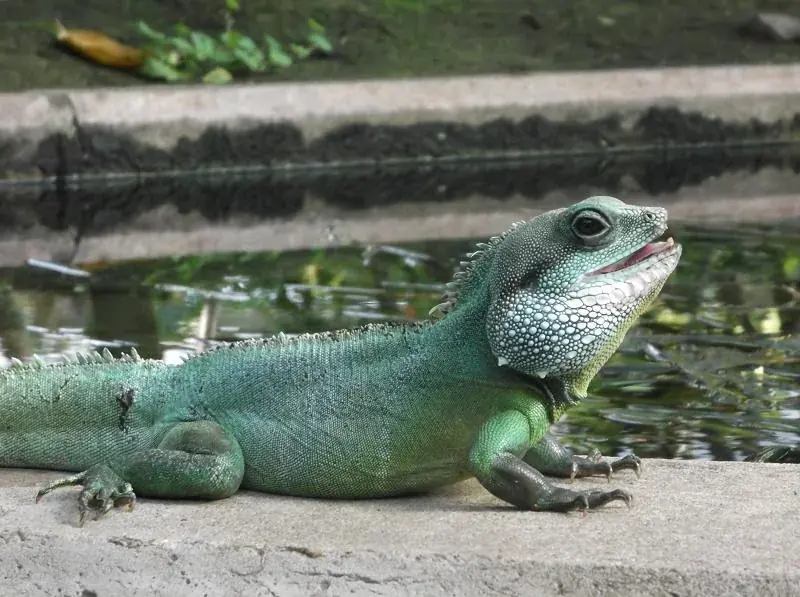
Physignathus cocincinus is also sold as the Asian, Thai or green water dragon. This is not the Australian water dragon. Keeper Tricia Power describes choosing a documented captive-bred animal to reduce the stresses associated with importation. ReptiFiles gives a 10–15-year lifespan reference. Adult size, climbing and water use make this a demanding housing project, despite the small youngsters often offered for sale.
A pool does not replace climbing space
ReptiFiles recommends an adult reference of 1.8 × 0.9 × 1.8 m, preferably larger. Provide secure branches at several heights, leafy cover and a water area large enough for full submersion. Design easy exits, drainage and waste removal before filling it. The pool and tall structure must coexist with usable land and safe keeper access; a tall empty box is insufficient.
Take measurements at the branches
The cited ReptiFiles plan uses a 32–35°C basking area, 25–30°C cooler zone and basking UVI 3–4. Check exposure at the dragon’s back height. Use probes to track local temperatures and an infrared thermometer for solid surfaces, documenting which was measured. Keep heat sources inaccessible and ensure branches provide routes away from direct heat and UVB as well as toward them.
Humidity requires drainage and cleaning
A daytime 60–80% humidity reference comes from ReptiFiles. Long Island Bird & Exotics emphasizes clean water, daily waste removal and reliable ventilation in a humid enclosure. Inspect drains and water contamination every day. Mist droplets on a sensor do not describe the whole habitat. Make cleaning possible without dismantling all the climbing structure or leaving an open escape route.
Vary food and monitor growth
Tricia Power’s keeper account emphasizes varied animal foods and frequent meals for hatchlings. Appropriately sized, well-fed insects are important; older dragons can use a broader feeding plan reviewed for calcium and overall balance. Adults and growing youngsters should not automatically receive identical portions. Record food variety and acceptance alongside growth. A refusal deserves attention to conditions and health, not endless substitution with one favored treat.
Recognize problems early
Nose or chin rubbing against transparent walls can cause injury; the veterinary source lists these abrasions among common concerns. Review visibility, retreat space and enclosure design, and seek veterinary attention for damaged tissue. Budget for water changes, electricity, replacement lamps and a large transport container. Independent review is pending; this guide does not certify pool engineering or prescribe treatment for wounds and parasites.
Make the pool easy to empty while the animal stays secure
Long Island Bird & Exotics emphasizes frequent water cleaning in a moist enclosure. Before finalizing the pool, rehearse waste removal, draining, refilling and checking the exit route with the enclosure empty. Identify where the dragon will remain while the pool is serviced and how the keeper can reach every soiled area. Record the equipment involved, including any pump or removable drain guard. A decorative water feature that cannot be cleaned without opening the whole habitat will be difficult to maintain consistently. This is a practical service test, not an engineering approval; water weight, electrical protection and the supporting structure still need appropriate assessment for the actual installation.
References: Long Island Bird & Exotics — water dragon enclosure cleaning
Use a barrier review when glass rubbing appears
The veterinary guide identifies rubbing against transparent walls as a cause of nose and chin injury. Record where contact occurs and what is visible beyond that panel. Check enclosure size, cover and routes as well as reflections or an apparently open view. A suitable visual barrier may help make the boundary apparent, but it should not block ventilation or create a new climbing hazard. Photograph any tissue change for the veterinarian and seek assessment rather than applying home wound treatments. Also review which maintenance movements trigger repeated rushing at a panel. This observation process complements the source's barrier advice without assuming that every abrasion has the same cause.
References: Long Island Bird & Exotics — water dragon glass rubbing
Follow growth across land, branches and water
A juvenile can outgrow several habitat features before the enclosure itself looks small. Keep dated photographs of the dragon beside its main resting branch, pool entrance and hide opening. During maintenance, check whether those resources still support the whole animal and allow it to turn or leave without difficulty. Reassess UVB and heat exposure after a larger branch is installed because the back may sit closer to the fixtures. Keep food records alongside these changes to distinguish a new feeding difficulty from reduced access to a familiar station. These are original growth-review suggestions that make the guide's climbing-and-swimming requirements useful throughout the transition to adult housing.
References: ReptiFiles — Chinese water dragon housing and growth context
Sources & further reading
Read the full recommendations and check details for your animal, equipment, and local conditions.
- ReptiFiles — Chinese water dragon requirements
- Tricia Power — first-hand Chinese water dragon husbandry
- Long Island Bird & Exotics — water dragon clinical care
Compiled September 2026. Original summaries; not individually reviewed by a veterinarian.