Independent species review: pending. Source-check date: 2026-09-05.
Report a care correction · Offer a species reviewArticle changes
- 2026-09-05 · Added scoped introduction, preparation checklist, source references and individual housing assessment; independent species review remains pending.
- 2026-09-08 · Expanded practical preparation, maintenance and observation sections, with scoped sources where applicable. This update checks the new material; independent species review remains pending.
At a glance
- Scope
- Dracaena guianensis; D. paraguayensis needs its own assessment. ↗
- Basking surface reference
- 49–54°C (120–130°F); not the ambient air temperature. ↗
- Natural behavior
- Swimming and climbing both shape the habitat. ↗
These are source-specific planning references, not enclosure certification. Identity, adult size, measuring location and the individual animal require review. Blank finder dimensions mean that a manual assessment is necessary.
Use this guide as a starting point alongside the detailed sources below. Health concerns, unexplained changes in behavior, or feeding problems belong with a reptile veterinarian.
Which caiman lizard?
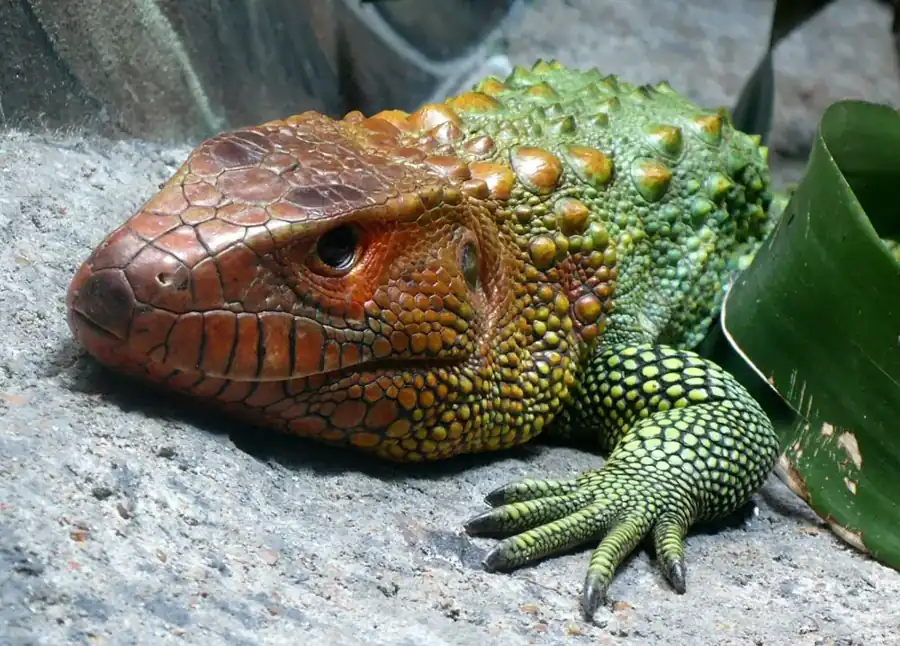
This introduction covers the northern or Guyana caiman lizard, Dracaena guianensis. The genus also contains D. paraguayensis; a shared trade name does not establish identical care. Smithsonian describes a substantial, semi-aquatic climber. Expect to observe swimming, climbing and feeding, with handling expectations secondary to safe, predictable husbandry.
Design around three usable spaces
Allocate genuine swimming room, accessible land and branches that carry an adult safely. Smithsonian records animals basking above water and retreating into it. Translate that behavior into a layout with clear routes between spaces. Before construction, draw the pool drain, filter access and cleaning position; an impressive pool that cannot be serviced will create daily problems.
Separate surface heat from air
Dubia gives a basking-surface reference of 49–54°C (120–130°F), measured with an infrared thermometer, with cooler air elsewhere. That is not a whole-enclosure temperature. Provide daytime UVB according to the actual fixture and distance, and retain shade. Run the finished enclosure before arrival, checking the occupied branch and water independently rather than relying on the thermostat display.
Maintain water and humid shelter
A swimming pool needs reliable filtration, replacement-water access and easy exits. Dubia lists 70–80% air humidity as its reference. Humidity does not replace clean water or ventilation. Make a written maintenance route that allows waste removal without chasing the lizard; inspect submerged equipment and ramps during servicing. A soaking dish alone does not provide the swimming environment described here.
Source the diet before the animal
Wild D. guianensis crush aquatic molluscs; Smithsonian also reports feeding its animals snails and crawfish alongside other foods. Secure a dependable supply of appropriate captive-produced foods and obtain the animal’s existing feeding and supplementation history. Treat a wild food list as natural history, not a complete nutritional recipe. Record accepted foods and condition so changes are visible.
Budget for an aquatic system
Dubia reports a lifespan exceeding ten years. The lasting expense is the large habitat, water management, heating, UVB equipment and specialist food, together with veterinary care. Rehearse a water change and equipment failure response before acquisition. A keeper who enjoys maintaining both a reptile habitat and a water system is a better fit than someone seeking a simple display enclosure.
Plan the specialist food supply before arrival
Smithsonian describes feeding its caiman lizards snails and crawfish alongside other items, consistent with the animal's mollusc-crushing specialization. Ask the existing keeper which foods the individual actually accepts, their source and how they are prepared. Confirm a reliable replacement supply before the lizard arrives; an occasional grocery item with the same common name does not prove that it can replace the established menu. Keep storage and feeding records with the veterinary nutrition plan. These continuity checks do not establish a complete diet.
References: Smithsonian — caiman lizard diet and feeding anatomy
Review escape routes into water as habitat routes
Smithsonian describes caiman lizards basking above water and escaping into it when threatened. Use that behavior to examine the enclosure geometry: is the route clear of hard obstacles, exposed equipment and narrow gaps, and can the lizard readily climb out afterward? Check how a growing animal's weight affects branches and ramps. Plan quiet maintenance so an unnecessary disturbance does not repeatedly force an escape response. These are design questions inferred from natural history, not a specification for drop height, water depth or pool dimensions. A qualified reviewer should assess the actual layout and adult capacity rather than treating the presence of a branch over a pool as sufficient.
References: Smithsonian — caiman lizard climbing and water retreat
Keep the pool and land records connected
At each water service, note contamination, filter operation, water temperature and any change in the lizard's use of ramps or resting branches. Record the adjacent land conditions too, particularly if splashing or leaks keep one area saturated. Keep a drawing of drain and heater locations and check protective fittings after cleaning. Use the record to show what changed and which areas the animal could use afterward. These monitoring suggestions do not establish water-quality thresholds or a fixed change schedule.
References: Smithsonian — caiman lizard semiaquatic habitat context
Sources & further reading
Read the full recommendations and check details for your animal, equipment, and local conditions.
- Smithsonian National Zoo — caiman lizard natural history and zoo diet
- Dubia — Dracaena guianensis care references
- The Reptile Database — species in Dracaena
Compiled September 2026. Original summaries; not individually reviewed by a veterinarian.