Independent species review: pending. Source-check date: 2026-09-05.
Report a care correction · Offer a species reviewArticle changes
- 2026-09-05 · Added visible editorial status and correction reporting.
- 2026-09-05 · Added lifetime planning, cost drivers, lighting measurement and arrival considerations.
At a glance
- Adult enclosure starting point
- 60 × 60 × 120 cm (24 × 24 × 48 in); larger males may require more space. ↗
- Basking-perch target
- About 29°C (85°F), with a cooler retreat. ↗
- General daytime air
- 22–25°C (72–78°F). ↗
- Humidity cycle
- 40–50% by day; 80–100% during cool, ventilated nights. ↗
- Diet
- Varied gut-loaded insects with a carefully selected calcium/vitamin schedule. ↗
Enclosure dimensions are adult planning references in length × width × height unless stated otherwise. Larger individuals need larger housing, and usable furnishing space matters. Check the linked source and the full guide for age, subspecies and measurement details.
Use this guide as a starting point alongside the detailed sources below. Health concerns, unexplained changes in behavior, or feeding problems belong with a reptile veterinarian.
Meet the species
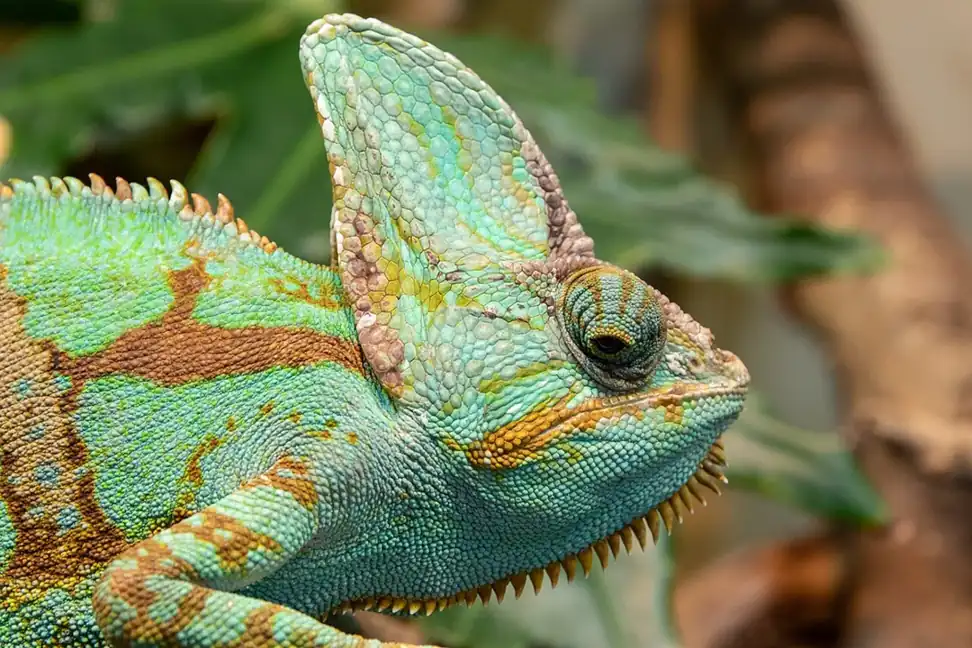
Veiled chameleons are striking daytime climbers with demanding environmental needs. They are best treated as observation animals. A successful setup offers privacy, several microclimates and drinking opportunities without exposing the animal to stagnant, constantly wet air.
Housing
House individually in a spacious vertical enclosure with effective ventilation and drainage. Build a network of stable branches, including horizontal perches, plus substantial leafy cover. Select plants appropriate for a species that may bite foliage. Mature females need a suitable egg-laying site even when kept without a male.
Heat and light
ReptiFiles gives a basking area near 29°C (85°F) and general daytime conditions around 22–25°C (72–78°F), with cooler nights. Measure at the animal’s occupied perches. Provide appropriately positioned linear UVB and daytime illumination. Prevent access to hot mesh or lamps and preserve shade throughout the enclosure.
Humidity and hydration
Both sources recommend a drier day and more humid night: approximately 40–50% by day and 80–100% at night. High nighttime humidity belongs with cool, ventilated conditions. Use controlled misting or a dripper for drinking droplets, allow surfaces to dry and maintain clean reservoirs, tubing and drains.
Food and routine
Offer varied, gut-loaded insects with a carefully selected calcium and vitamin schedule. Requirements depend on age, sex, diet and UVB provision. Monitor body condition and avoid excessive feeding, especially for females. Remove leftovers and waste and watch drinking and feeding behavior.
Avoid
Avoid communal housing, constant handling, warm daytime fogging and mixing multiple supplement regimens. Closed eyes during daytime, weakness or persistent failure to eat warrant prompt assessment by a reptile vet.
Growing animals and mature females
A hatchling requires tiny prey, closely monitored feeding and accessible drinking droplets on nearby leaves. Fine branches should offer continuous routes through cover. Young animals may climb ceiling mesh, so check lamp clearance from every reachable position rather than from the preferred basking perch alone.
Plan a single adult’s enclosure around at least 60 × 60 × 120 cm, with larger space for a large male. As the animal grows, recheck branch strength and clearance above its back and casque. A female can produce infertile eggs without meeting a male; prepare an appropriate private laying area and establish experienced veterinary support before maturity.
Feeding as growth slows
Growing juveniles generally feed daily. As growth in length slows, transition to measured adult meals; three to five appropriately sized insects every other day is a commonly used starting point, not a universal quota. A large roach and a small fly provide very different meals. Females need especially careful review of intake and condition.
Use a varied insect supply, feed those insects well, and follow one coherent calcium and vitamin schedule matched to UVB provision. Record the actual products and dates rather than simply writing “dusted.” Track meals accepted, leftovers and periodic weights with minimal disturbance. If the casque or body becomes progressively fuller, review the entire diet with an experienced adviser instead of waiting for food refusal.
Shedding and voluntary interaction
Shedding is normally allowed to progress without pulling or soaking the animal. Maintain the planned hydration cycle and inspect for persistent material around toes or the tail. A patchy shed is a reason to review conditions; constricting material or other changes need veterinary assessment.
Enjoy this species primarily through observation. During necessary transfers, offer a secure branch and allow deliberate stepping rather than pulling gripping feet free. Dense live foliage and branches at several levels let the chameleon choose privacy, light and temperature. Avoid rearranging the whole enclosure at once, and keep plants suitable for a species that sometimes bites leaves.
Three setup problems to investigate
The enclosure stays wet through the warm day: inspect blocked drains, pooling beneath pots and the misting timer. Review the actual humidity cycle alongside temperature, then adjust water delivery and airflow so drinking access remains available without stagnant wet conditions.
The animal hangs beneath the ceiling: measure accessible mesh and the space occupied by the casque, inspect connected routes to a suitable perch, and verify both UVB and heat placement. Do not move a hot bulb closer based on behavior alone.
Drinking is never observed: watch quietly during scheduled hydration, check that the dripper or nozzles reach leaves beside usable perches, and clean reservoirs and tubing. Record misting duration and drainage. Persistent feeding changes, daytime closed eyes or weakness need prompt reptile-vet assessment; increasing misting does not establish the cause.
Lifetime commitment and costs
The veterinary reference describes some captive individuals, especially males, reaching 10 years or more and shorter female lives. It does not supply a measured captive average; 10 years is a planning horizon, not a guarantee.
Allow for a large ventilated climbing enclosure, dense cover, a measured UVB system and a water-delivery arrangement with drainage.
Live feeders, supplements, cleaning of misting equipment and access to a reptile veterinarian are continuing commitments; females also need a suitable egg-laying provision.
References: Long Island Bird & Exotics Veterinary Clinic — veiled chameleon care
Measure the lighting installation
Take UVI measurements at head/casque height on the basking branch, with the installed screen between sensor and lamp. Check every higher reachable branch and preserve shaded routes. A distance copied from a different mesh, lamp or reflector may deliver a different exposure.
References: Long Island Bird & Exotics Veterinary Clinic — veiled chameleon care
Arrival and quarantine planning
Provide branches and visual cover during separation. Track drinking opportunities, food acceptance and droppings through observation instead of frequent handling.
Prepare a separate species-appropriate arrival enclosure and dedicated equipment. Agree observation, screening and release criteria with a reptile veterinarian. Keep the animal’s identity, origin, baseline condition and care history together.
References: The Unusual Pet Vets — reptile quarantine · VCA Animal Hospitals — the new reptile visit
Sources & further reading
Read the full recommendations and check details for your animal, equipment, and local conditions.
- ReptiFiles — veiled chameleon care
- Chameleon Academy — veiled chameleon care
- Chameleon Academy — life-stage feeding guidance
- Long Island Birds & Exotic Veterinary Clinic — adult enclosure reference
- The Unusual Pet Vets — reptile quarantine
- VCA Animal Hospitals — the new reptile visit
Compiled September 2026. Original summaries; not individually reviewed by a veterinarian.