Independent species review: pending. Source-check date: 2026-09-05.
Report a care correction · Offer a species reviewArticle changes
- 2026-09-05 · Added visible editorial status and correction reporting.
- 2026-09-05 · Added lifetime planning, cost drivers, lighting measurement and arrival considerations.
- 2026-09-08 · Expanded practical preparation, maintenance and observation sections, with scoped sources where applicable. This update checks the new material; independent species review remains pending.
At a glance
- Adult enclosure starting point
- 90 × 45 × 45 cm (36 × 18 × 18 in), with more floor space where possible. ↗
- Hot-end air target
- 28–30°C (82–86°F), using the RSPCA zone-temperature plan. ↗
- Cool-end air
- 24–26°C (75–79°F). ↗
- General humidity
- 30–40% plus a damp humid hide. ↗
- Diet
- Varied gut-loaded, supplemented insects; juveniles feed more often than adults. ↗
Enclosure dimensions are adult planning references in length × width × height unless stated otherwise. Larger individuals need larger housing, and usable furnishing space matters. Check the linked source and the full guide for age, subspecies and measurement details.
Use this guide as a starting point alongside the detailed sources below. Health concerns, unexplained changes in behavior, or feeding problems belong with a reptile veterinarian.
Meet the species
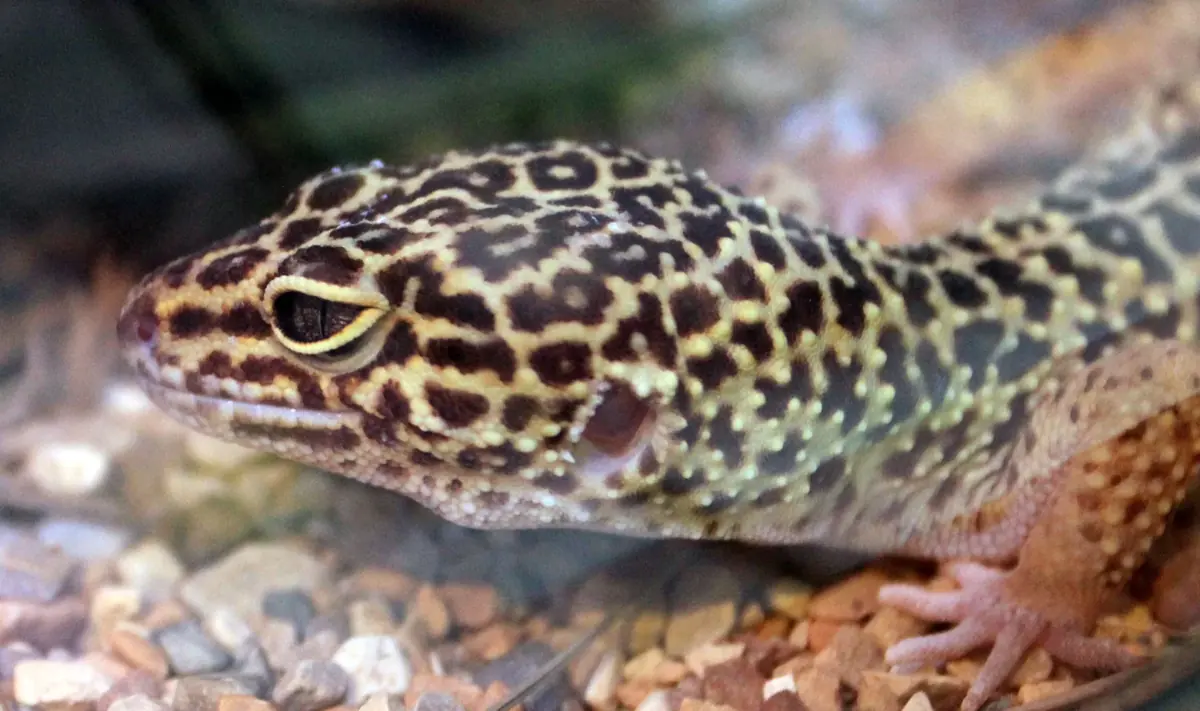
Leopard geckos spend much of their day sheltered and often become active as light fades. Their modest size should not be confused with minimal space needs. A well-furnished terrestrial enclosure lets them investigate, choose temperatures and retreat from attention.
Housing
House individually with generous floor space, low stable climbing features and multiple hides. Include a warm hide, a cool hide and a humid hide. Support heavy rocks directly on a stable base so digging cannot undermine them. Provide a shallow drinking bowl and an easy-to-clean feeding area.
Heat and light
Position controlled heat at one end. RSPCA lists a hot end of 28–30°C (82–86°F) and cool end of 24–26°C (75–79°F); these are zone temperatures, not a universal basking-surface target. Check temperatures at gecko level. Provide suitable low-output UVB, shade and a dark night period. Lamp strength, distance and the animal’s pigmentation all matter.
Humidity
Keep the general enclosure ventilated and the humid hide damp rather than flooded. RSPCA gives 30–40% general humidity with a humid hide. Check toes after shedding; retained skin can constrict them. Recurrent problems deserve a husbandry review and veterinary advice.
Food and routine
Offer a rotation of correctly sized feeder insects that have been gut-loaded and appropriately supplemented. Growing geckos eat more frequently than adults; adjust portions to body condition. Remove uneaten insects, refresh water and spot-clean daily. Record weight and appetite to notice changes early.
Avoid
Avoid a fruit diet, relying on dried insects, leaving crickets loose overnight or grabbing the tail. Handle close to a safe surface and stop if the gecko repeatedly tries to escape.
Growing geckos and adult housing
Set up an adult-sized floor plan from the outset when you can provide accessible food, water and small secure hides. ReptiFiles recommends at least 90 × 45 × 45 cm for an adult, with additional floor area welcome. Height becomes useful when it contains low, stable routes with safe landings. A tall empty enclosure cannot replace ground space.
For a newly arrived small gecko, a simple non-loose floor can make droppings and feeding easier to monitor. The RSPCA recommends non-loose substrate for very young animals until they are doing well. Once established, plan digging opportunities appropriate to the animal and overall husbandry. Keep a warm hide, cool hide and humid hide accessible as its body size changes.
Insect meals and a changing appetite
Offer appropriately sized insects daily to growing juveniles. ReptiFiles moves young adults toward meals every two to three days, with some well-conditioned adults needing longer intervals; the RSPCA gives every other day as its adult starting point. Use regular weights, growth and overall condition to choose portions rather than assuming every adult needs the same insect count.
Rotate suitable feeder types, such as crickets, roaches, silkworms and black soldier fly larvae, instead of relying on one worm. Gut-load feeders before use and follow a defined calcium and vitamin schedule that accounts for the UVB setup. Fatty treats should remain occasional. Supervise feeding, count uneaten insects back out, and note what was actually consumed. Tail thickness is useful context but cannot diagnose health or replace assessment of the whole animal.
Shedding and comfortable interaction
A gecko may become pale before shedding and may eat the discarded skin, so you will not always find a complete shed. Check toes, tail tip and the area around the eyes without restraining the animal unnecessarily. A damp, clean humid hide should remain available between sheds. The RSPCA advises against pulling stuck skin and recommends veterinary advice for retained skin around toes or eyes.
Allow the gecko to approach a supported hand, and keep early sessions short and close to the enclosure floor. Support all feet; never hold it by the tail. A new cork tunnel, a low textured ramp or a sheltered feeding position can encourage investigation. Preserve familiar retreats while changing one optional feature at a time.
Three common setup problems to investigate
The gecko only uses one hide: compare shelter fit, exposure and temperatures inside every hide. Brightness or a large doorway may be making another location unattractive. Improve cover and verify measurements before concluding the animal prefers one temperature all day.
Toes repeatedly retain shed: check that the humid hide has not dried out or become dirty, and review general humidity and water access. Retained rings can damage toes, so seek a reptile vet’s advice rather than pulling them loose or repeating improvised baths.
Insects disappear but weight falls: confirm the gecko is eating rather than allowing feeders to hide in décor. Feed under observation, remove leftovers and check occupied-zone temperatures. Falling weight, weakness, unusual stools or persistent appetite change warrants veterinary assessment; do not compensate simply by offering richer treats.
Lifetime commitment and costs
RSPCA says up to 20 years; Merck lists 20+ years. Budget and succession planning should allow for a longer life.
Include a varied live-insect supply, feeder housing and food, suitable supplements, multiple hides and controlled heating.
UVB replacement and measured setup checks remain recurring costs even when the animal itself was inexpensive.
References: RSPCA — leopard gecko care · Merck Veterinary Manual — average captive reptile lifespan
Measure the lighting installation
Provide a low-exposure area beside full shade and hides. Measure on top of the highest reachable basking furnishing. Leopard geckos are efficient users of UVB; a strong lamp without a shaded retreat is not a substitute for a measured gradient.
References: RSPCA — leopard gecko care · Arcadia Reptile — low UV species
Arrival and quarantine planning
Retain a humid hide and temperature choices in the separate setup; record food acceptance, weight and sheds.
Prepare a separate species-appropriate arrival enclosure and dedicated equipment. Agree observation, screening and release criteria with a reptile veterinarian. Keep the animal’s identity, origin, baseline condition and care history together.
References: The Unusual Pet Vets — reptile quarantine · VCA Animal Hospitals — the new reptile visit
Prepare a laying site for an adult female
RSPCA notes that female leopard geckos can produce infertile eggs without living with a male, and need a suitable nesting box. Discuss that provision when an adult animal's sex and housing are reviewed. Keep the proposed site accessible for checking without repeatedly exposing the gecko, and record unusual digging or appetite changes for your veterinarian. Those observations help describe a change; they do not establish whether eggs are present or whether the animal can pass them normally.
References: RSPCA — leopard gecko reproductive provision
Sources & further reading
Read the full recommendations and check details for your animal, equipment, and local conditions.
- RSPCA — leopard gecko care
- ReptiFiles — leopard gecko feeding
- Adult enclosure starting point — supporting care reference
- ReptiFiles — heat, lighting and humidity
- Merck Veterinary Manual — average captive reptile lifespan
- Arcadia Reptile — low UV species
- The Unusual Pet Vets — reptile quarantine
- VCA Animal Hospitals — the new reptile visit
Compiled September 2026. Original summaries; not individually reviewed by a veterinarian.