Independent species review: pending. Source-check date: 2026-09-05.
Report a care correction · Offer a species reviewArticle changes
- 2026-09-05 · Added original species planning guidance with linked references and explicit evidence limits.
- 2026-09-08 · Expanded practical preparation, maintenance and observation sections, with scoped sources where applicable. This update checks the new material; independent species review remains pending.
At a glance
- Adult planning target
- Approximately 91 × 61 × 122 cm, with connected cover and climbing routes. ↗
- Interaction
- Best approached as an observation animal; individual tolerance varies. ↗
These are attributed adult planning references, not a validated enclosure design. Surface temperature, shaded air temperature and UV Index describe different measurements. Read the full guide before setting equipment. Independent species review is pending.
Use this guide as a starting point alongside the detailed sources below. Health concerns, unexplained changes in behavior, or feeding problems belong with a reptile veterinarian.
Choose observation over frequent handling
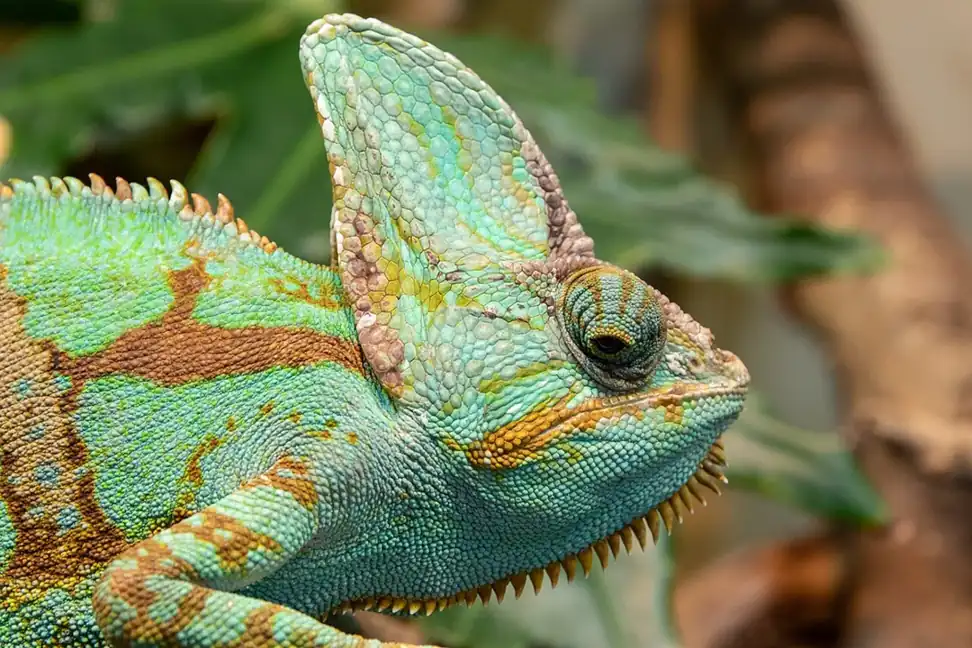
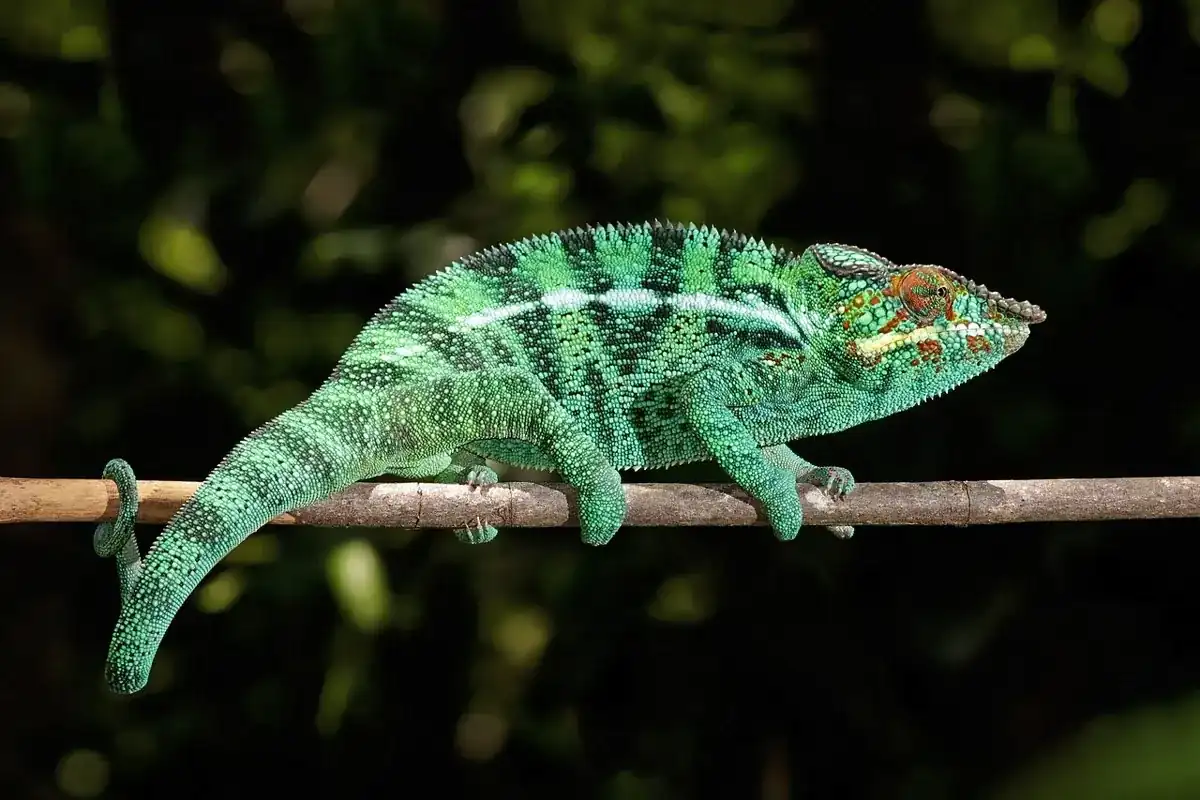
Panther chameleons are Furcifer pardalis. Names such as Ambilobe and Nosy Be describe geographic color lines within this species; they do not establish separate care requirements for beginners. Chicago Exotics describes chameleons as primarily observation animals with demanding husbandry. Their appeal is watching climbing, hunting and changing displays. If frequent holding is central to your plans, this species is a poor fit.
Provide climbing routes and visual cover
Chameleon Academy prefers an adult target of about 91 × 61 × 122 cm, beyond the commonly sold 61 × 61 × 122 cm cage. House one animal per enclosure. Provide connected branches and dense visual cover beneath an open basking area. Choose screen or partly solid construction to suit the room’s climate, then verify airflow and drainage rather than assuming one cage material always works.
Measure light and warmth separately
Chameleon Academy describes gentle basking in the mid-80s°F, with cooler surrounding air and a nighttime drop. ReptiFiles gives about UVI 3 at basking height. Measure where the chameleon’s back actually sits, including the effect of mesh and fixture design. Keep lamps beyond reach of a climber hanging beneath the roof. Bright visible illumination does not replace UVB, and a timer does not replace checking temperatures.
Make the day-night moisture cycle visible
The ReptiFiles reference is 50–60% daytime humidity and 75–100% at night; Chameleon Academy stresses moving air and dry daytime surfaces. Use timed misting or dripping to provide drinking opportunities, with drainage that can be emptied and cleaned. Fogging should coincide with suitable cool nighttime conditions. Log overnight temperature and humidity together before copying another keeper’s equipment schedule.
Feed and observe the individual
Chameleon Academy starts youngsters with plentiful appropriately sized feeders and reduces feeding when adults finish growing. Use varied, well-fed insects with a coherent calcium and vitamin plan. Record successful captures as well as offerings. Chicago Exotics warns that striking at prey against a hard wall can injure the tongue, so inspect feeding positions and keep feeders reachable without inviting strikes at transparent barriers.
Commit to the system as well as the animal
Budget for the enclosure, drainage, misting maintenance, replacement lighting, insects and cooling when the room becomes too warm. Several years of daily care are a real commitment; a single lifespan number is not used here because sex and reproductive history matter. Independent review is pending.
Prepare a female laying site
A mature female needs an accessible laying area and privacy. Chameleon Academy describes a diggable soil or sand-soil area with drainage; saturated soil is unsuitable. Have the individual setup reviewed before egg production, and avoid repeatedly disturbing a female that is investigating or digging. Reproductive concerns require an experienced reptile clinician.
Check the watering system from reservoir to drain
Chameleon Academy presents watering as a timed cycle rather than a continuously wet cage. Draw the actual path through reservoir, tubing, nozzles, leaves and drainage container. During a test cycle, verify that water reaches accessible foliage, escapes the enclosure as intended and does not collect where the animal rests. Put cleaning and emptying instructions beside the timers so another caretaker can maintain the whole system. Record what actually happened if a nozzle blocks or the reservoir runs low. A programmed event does not prove that drinking opportunities occurred. Review the nighttime temperature alongside humidity before changing a fogging schedule; another keeper's clock settings do not reproduce their room.
References: Chameleon Academy — panther chameleon lighting and watering cycle
Maintain the canopy after plants grow
The care source describes branches and foliage that provide choices of light, shelter and visibility. Take a reference photograph after the commissioned layout is measured. As plants grow, compare access to the basking area, shaded retreat and feeding position, and remeasure any newly reachable surface near the lamps. Prune or reposition selectively rather than removing the whole visual barrier at once. Watch whether the chameleon can travel across supported branches instead of needing to cross an exposed gap. These layout checks are a practical way to preserve the habitat's function over time. Lush plant growth by itself does not confirm adequate UVB exposure, ventilation or feeding access.
References: Chameleon Academy — panther chameleon habitat design
Distinguish an observation from an interpretation
Write down successful prey captures, normal resting locations and the times the animal becomes active before relying on labels such as stressed or dehydrated. Chameleon Academy's descriptions of drinking and basking reflect its author's husbandry interpretation; they should not make one dripper visit or one long basking session a diagnosis. Add the measured conditions and recent equipment changes, then consult a reptile clinician when behavior or intake changes persist or other signs of illness appear. For females, retain the laying-site plan and reproductive history with those records. Keep this history for individual assessment without repeatedly handling the animal to provoke a response.
References: Chameleon Academy — observation and individual adjustments
Sources & further reading
Read the full recommendations and check details for your animal, equipment, and local conditions.
- Chameleon Academy — first-hand panther husbandry
- ReptiFiles — panther UVB, hydration and housing
- Chicago Exotics Animal Hospital — panther behavior and feeding safety
- Chameleon Academy — first-hand egg-laying site design
Compiled September 2026. Original summaries; not individually reviewed by a veterinarian.