Independent species review: pending. Source-check date: 2026-09-05.
Report a care correction · Offer a species reviewArticle changes
- 2026-09-05 · Added visible editorial status and correction reporting.
- 2026-09-05 · Added lifetime planning, cost drivers, lighting measurement and arrival considerations.
- 2026-09-05 · Aligned the displayed experience level with the finder’s classification.
At a glance
- Adult enclosure starting point
- 45 × 45 × 90 cm (18 × 18 × 36 in); this source uses the same reference for established juveniles over 12 g. ↗
- Upper basking area
- 28–29°C (82–85°F), with a cooler retreat; avoid sustained temperatures above 29°C. ↗
- Cool-area air
- 21–24°C (70–75°F) in the lower enclosure. ↗
- Humidity cycle
- 60–80% after misting; allow a fall toward 40–50% before misting again. ↗
- Diet
- Complete crested-gecko diet, plus appropriate gut-loaded insects. ↗
Enclosure dimensions are adult planning references in length × width × height unless stated otherwise. Larger individuals need larger housing, and usable furnishing space matters. Check the linked source and the full guide for age, subspecies and measurement details.
Use this guide as a starting point alongside the detailed sources below. Health concerns, unexplained changes in behavior, or feeding problems belong with a reptile veterinarian.
Meet the species
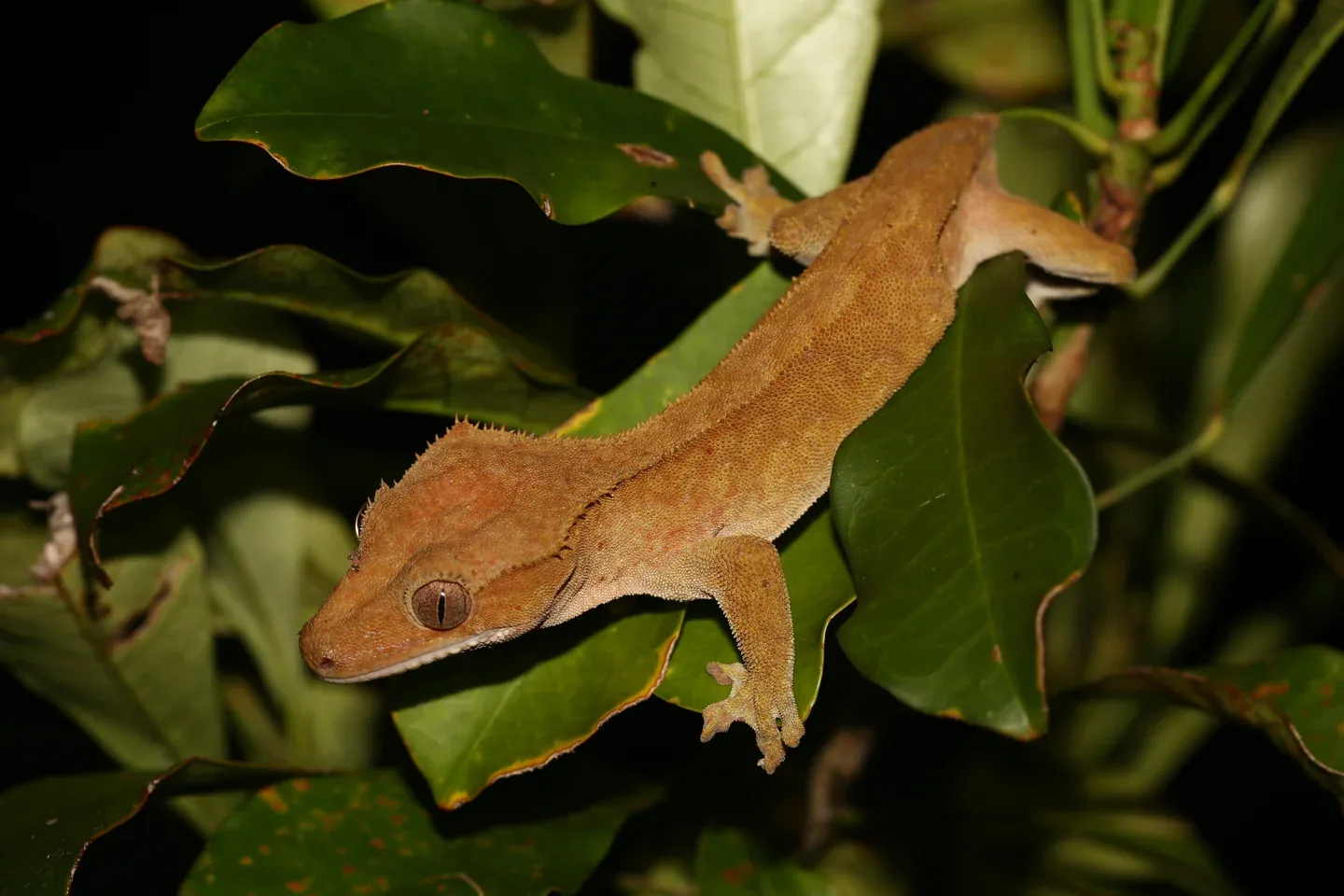
Crested geckos are night-active climbers from New Caledonia. They use branches and foliage for movement and shelter, so usable climbing structure matters as much as enclosure height. Their jumping ability and delicate tail make calm, low handling sessions the sensible approach.
Housing
Choose a tall, secure enclosure with ventilation, branching routes and dense cover at several heights. Include horizontal resting places as well as vertical stems. House individually. Place prepared food and clean drinking water on stable, accessible ledges and keep the floor clear enough to inspect droppings.
Heat and light
Measure temperature near upper perches and in the cool lower area. Provide gentle, controlled daytime warmth and suitable low-output UVB with shaded retreats. ReptiFiles lists a cool area of 21–24°C (70–75°F). Prevent sustained temperatures above 29°C (85°F); summer overheating can be a greater challenge than winter heating.
Humidity
Aim for a daily cycle rather than permanent saturation. ReptiFiles recommends peaks around 60–80%, allowing humidity to fall toward 40–50% before misting again. Mist foliage for drinking droplets, maintain ventilation and use a digital hygrometer. Empty standing drainage water before it reaches the substrate.
Food and routine
Use a nutritionally complete crested-gecko diet prepared according to its label. Offer appropriately sized, gut-loaded and supplemented insects as part of a varied routine. Feeding frequency changes with age. Replace leftover prepared food as directed, wash cups and refresh water; weigh the gecko regularly.
Avoid
Avoid baby food as a staple, an all-fruit diet, unregulated heating and pulling on the tail. A dropped crested-gecko tail does not regrow. Persistent poor appetite, weight loss or abnormal posture needs veterinary assessment.
Hatchlings need accessible routes
A very small gecko needs closely spaced cover, reachable food and a setup where you can check intake and droppings. ReptiFiles distinguishes hatchlings under about 12 g from established juveniles and adults, using 45 × 45 × 90 cm as its taller reference for animals above that stage. A temporary grow-out enclosure requires its own heat and UVB assessment; do not copy adult lamp positions onto a much smaller box.
As the gecko grows, create connected routes from lower foliage to upper shelters, with horizontal resting branches as well as upright stems. Check that feeding ledges remain firmly attached under its weight. Position the food beside a familiar sheltered route so feeding does not require a long crossing of exposed glass.
A practical prepared-diet routine
Using the ReptiFiles feeding framework, offer complete crested-gecko diet daily to juveniles up to twelve months, with suitable insects once or twice a week. Adults generally receive prepared diet every two to three days and insects up to once weekly. Individual growth, body condition and the complete diet’s label still guide portions and frequency.
Mix only as the product directs, in a clean cup, and remove leftovers within the label’s safe period; inspect food daily because warm wet food spoils. Start with the complete diet the gecko already recognizes. Keep meal and weight records before interpreting a barely marked bowl as refusal, since tiny animals eat very small amounts. Do not add extra supplement powders to an already complete diet unless the manufacturer or reptile vet directs it.
Shedding, handling and canopy enrichment
Allow a new arrival time to establish eating before optional handling. Invite it onto a hand, keep movements slow and work close to a safe surface because it may jump. Never grip its tail; a crested gecko cannot regrow a dropped one. Short sessions should end before repeated escape attempts.
Geckos often eat shed skin, making toes and the tail tip more useful to inspect than the floor. Maintain the daily moisture cycle and clean drinking water rather than misting continuously. Leafy cover, different branch diameters and several horizontal resting spots encourage climbing choices. Check new plants and decorations for hazards, secure them, and preserve a known route to food while the animal investigates.
Three common setup problems to investigate
Upper perches overheat in summer: check the room and perch temperatures during the hottest part of the day, not only in the morning. Keep the enclosure out of sun and review supplemental heat and room cooling. The cool lower refuge must actually stay cooler; abnormal weakness or breathing needs prompt veterinary advice.
The glass and substrate never dry: log humidity before misting as well as after it, inspect ventilation and empty drainage water before it reaches the soil. The linked ReptiFiles plan includes a fall between peaks. Shorten misting according to measured conditions instead of following a fixed timer blindly.
Prepared food seems untouched: check cup accessibility, food freshness and whether the animal is active after dark. Keep the familiar formula and record weight and droppings while reviewing the setup. Persistent refusal or weight loss warrants a reptile vet; syringe feeding without guidance can create additional problems.
Lifetime commitment and costs
RSPCA gives 15–20 years in captivity. Individual outcomes vary.
Price a tall enclosure, secure branches and cover, prepared crested-gecko diet, suitable insects and monitoring.
Check the room through summer as well as winter: keeping it cool enough can be a meaningful household cost.
References: RSPCA — crested gecko care
Measure the lighting installation
Check UVI at the gecko’s head height on its highest reachable perch, with the actual lid and foliage in place. RSPCA gives a basking UVI of 0.7 with zero available in shade. Raising a branch changes exposure even when the lamp has not moved.
References: RSPCA — crested gecko care
Arrival and quarantine planning
A simpler separate enclosure still needs usable climbing routes, cover and drinking opportunities; avoid a bare floor box as the entire habitat.
Prepare a separate species-appropriate arrival enclosure and dedicated equipment. Agree observation, screening and release criteria with a reptile veterinarian. Keep the animal’s identity, origin, baseline condition and care history together.
References: The Unusual Pet Vets — reptile quarantine · VCA Animal Hospitals — the new reptile visit
Sources & further reading
Read the full recommendations and check details for your animal, equipment, and local conditions.
- ReptiFiles — crested gecko care overview
- ReptiFiles — heat, light and humidity
- ReptiFiles — crested gecko food
- Adult enclosure starting point — supporting care reference
- RSPCA — climbing, settling and handling
- The Unusual Pet Vets — reptile quarantine
- VCA Animal Hospitals — the new reptile visit
Compiled September 2026. Original summaries; not individually reviewed by a veterinarian.