Independent species review: pending. Source-check date: 2026-09-05.
Report a care correction · Offer a species reviewArticle changes
- 2026-09-05 · Added species-specific planning, measurement, feeding, commitment and equipment guidance. Source disagreements remain visible.
- 2026-09-05 · Aligned the displayed experience level with the finder’s classification.
- 2026-09-08 · Expanded practical preparation, maintenance and observation sections, with scoped sources where applicable. This update checks the new material; independent species review remains pending.
At a glance
- Adult reference used here
- 90 × 60 × 120 cm for a large adult. ↗
- Basking / cool zone
- 32–38°C basking area / 26–29°C cool-zone air. ↗
- Temperament
- Solitary; defensive bites can be severe. ↗
Dimensions are adult planning references in length × depth × height. Sources differ and these summaries have not received independent species review. Read the measurement context and provide more usable space where possible.
Use this guide as a starting point alongside the detailed sources below. Health concerns, unexplained changes in behavior, or feeding problems belong with a reptile veterinarian.
Understand the animal before buying
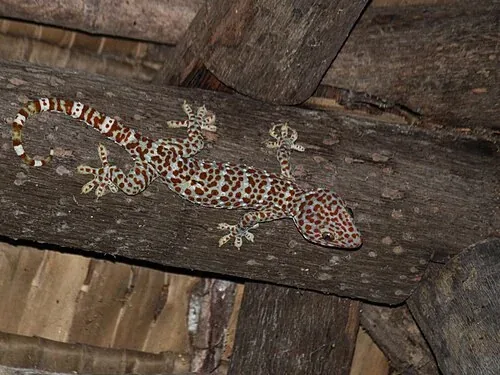
Gekko gecko is a large nocturnal gecko with strong jaws and a conspicuous call. Smithsonian describes territorial solitary behaviour and severe defensive bites when cornered. A keeper needs to enjoy observing the animal without depending on handling. The zoo gives a lifespan around ten years, while ReptiFiles suggests fifteen to twenty; plan for the longer commitment. Choose documented captive breeding and retain the animal’s origin and feeding history.
Housing that anticipates adult size
ReptiFiles starts a typical adult at 60 × 60 × 120 cm, increasing to at least 90 × 60 × 120 cm for large individuals. Smithsonian reports males reaching roughly 35–40 cm. This finder therefore uses the larger reference. Keep one tokay, with secured cork hollows, vertical branches and foliage that create concealed resting places. Locate food, water and service access so daily work does not force the gecko into a confrontation.
A measured warm tropical habitat
The ReptiFiles reference distinguishes a 32–38°C basking area from 26–29°C cool-zone air and 24–26°C nights. Check those locations with secured independent probes, and control and guard heaters. Do not heat the entire enclosure to a basking reading. Provide daytime UVB with shade, following the source’s UVI 1–2 basking reference and measuring at the animal’s height. Humidity is around 60–80%, with variation through the day. Provide ventilation and drinking droplets alongside a clean water cup.
Feeding and records
Smithsonian feeds its tokays insects, including crickets, cockroaches and mealworms. The Bio Dude’s ReptiFiles-authored guide suggests daily insect meals for juveniles and alternate-day meals for adults, adjusted to individual condition. Offer varied, appropriately sized feeders that have been gut-loaded and supplemented. Record acceptance rather than just marking food as offered. A visible feeding station makes it easier to see which insects remain without disturbing sleeping cover or allowing uneaten prey to accumulate.
Make maintenance calm and repeatable
Keep maintenance predictable: approach quietly, open only the access needed and respect a retreating animal. Keep a secure transfer container ready for necessary moves; do not pry the gecko from glass by its tail. Maintain separate quarantine for new arrivals and arrange a reptile-vet assessment. Large heated housing, replacement lamps, livefood and transport arrangements drive costs. Keep readings and caretaker instructions beside the feeding log, including where the animal usually hides and how to replenish water without reaching into that refuge.
Plan servicing around a nocturnal territorial resident
Smithsonian describes tokays as solitary nocturnal hunters that use concealed resting places. Draw a service route through your enclosure from the keeper's perspective: opening the door, replacing water, removing a food container and closing the lock. Identify which step would require reaching directly into the occupied retreat. Reposition service items before arrival if that step can be avoided. During routine work, locate the gecko first and keep the opening as limited as the task allows. A predictable sequence is an original management suggestion, not a taming guarantee. A gecko that tolerates cup replacement may still defend a hide when a hand approaches it.
References: Smithsonian — tokay gecko behavior and shelter
Carry origin and identity information into quarantine
Smithsonian notes geographic and habitat differences between red-spotted and black-spotted tokays and describes pressures from collection and trade. Ask a prospective supplier for the animal's origin, captive-breeding evidence, arrival history and established food rather than relying on a photograph or a friendly handling video. Keep those documents alongside the veterinary intake record. Confirm the animal's identity before applying this page's general tropical setup. Where origin or identification is doubtful, obtain knowledgeable assessment before acquisition. These record requests are a practical response to the source's account; they do not certify legality or prove health, and a seller's assertion should remain identified as an assertion.
References: Smithsonian — tokay forms, distribution and trade
Observe activity without disturbing cover
A useful evening record can include where the gecko waits, whether it takes an offered insect and which routes it uses after feeding. Watch quietly through the enclosure rather than lifting cover to create an encounter. Record calls separately from feeding and activity so you learn the individual's routine; the source describes calling as part of communication, not a simple health score. Household planning matters too: place the enclosure where normal care and vocal activity can coexist with the people who live there. Keep a secure transfer plan for necessary appointments. These suggestions make an observation-oriented relationship practical while respecting the strong bite and escape response described in the species account.
References: Smithsonian — tokay communication and activity
Sources & further reading
Read the full recommendations and check details for your animal, equipment, and local conditions.
- ReptiFiles — tokay housing, climate and lifespan
- Smithsonian — direct zoo experience and natural history
- The Bio Dude — ReptiFiles-authored feeding guidance
Compiled September 2026. Original summaries; not individually reviewed by a veterinarian.