Independent species review: pending. Source-check date: 2026-09-05.
Report a care correction · Offer a species reviewArticle changes
- 2026-09-05 · Added visible editorial status and correction reporting.
- 2026-09-05 · Added lifetime planning, cost drivers, lighting measurement and arrival considerations.
- 2026-09-08 · Expanded practical preparation, maintenance and observation sections, with scoped sources where applicable. This update checks the new material; independent species review remains pending.
At a glance
- Adult enclosure starting point
- 180 × 60 × 60 cm (6 × 2 × 2 ft), the ReptiFiles-authored HappyDragons reference. ↗
- Basking surface target
- 42–45°C (108–113°F); measure the platform, not whole-enclosure air. ↗
- Cool-end humidity
- About 30–40% in the RSPCA care plan. ↗
- Diet
- Leafy greens and supplemented feeder insects; adjust the balance for age. ↗
Enclosure dimensions are adult planning references in length × width × height unless stated otherwise. Larger individuals need larger housing, and usable furnishing space matters. Check the linked source and the full guide for age, subspecies and measurement details.
Use this guide as a starting point alongside the detailed sources below. Health concerns, unexplained changes in behavior, or feeding problems belong with a reptile veterinarian.
Meet the species
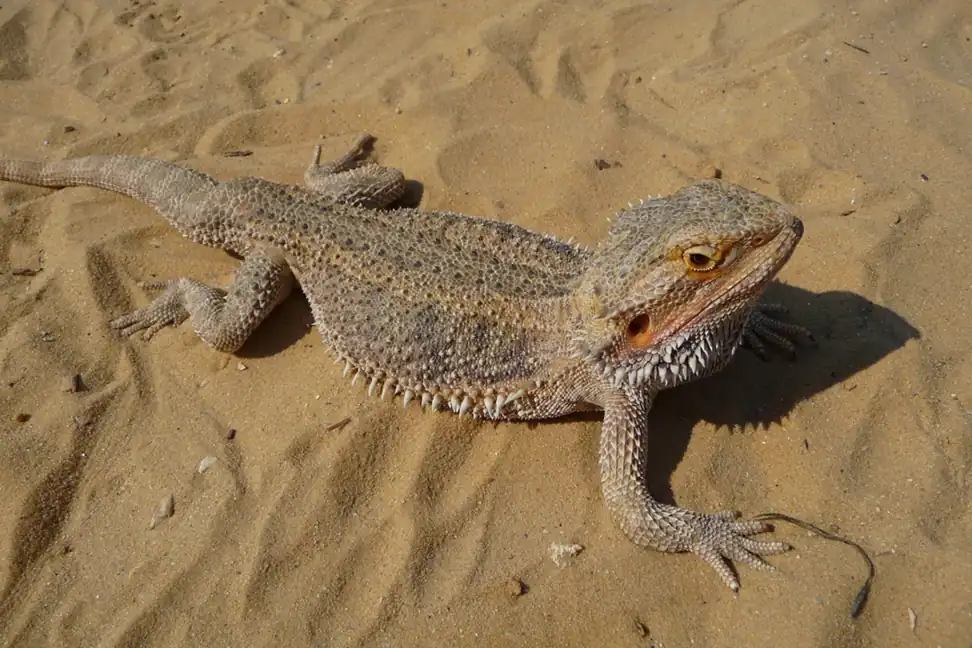
Central bearded dragons are daytime lizards that spend time basking, climbing and watching their surroundings. They need substantial equipment and a carefully planned diet. Before bringing one home, make sure the complete enclosure can maintain an effective temperature and light gradient.
Housing
House individually in a spacious enclosure with a large floor area, secure climbing structures and shelters. Provide a broad basking platform that supports the whole body, alongside shaded routes to the cool end. Anchor heavy furnishings so digging cannot collapse them.
Heat and light
ReptiFiles recommends a basking surface around 42–45°C (108–113°F), measured with an infrared thermometer. This is the surface beneath the dragon, not the air throughout the enclosure. Check cool-side air independently and control heat output with appropriate equipment. Strong, correctly installed UVB and bright daytime illumination are essential, with shade always available and lights off at night.
Humidity
Maintain ventilation and measure humidity instead of assuming an arid species needs a completely desiccated enclosure. Keep drinking water available and remove wet, soiled patches. If humidity stays high, assess airflow, water spills and substrate moisture together.
Food and routine
Offer safe leafy greens and a variety of gut-loaded feeder insects. Young dragons need a different feeding balance from adults; progressively emphasize vegetation and avoid habitual insect overfeeding. Follow a calcium and vitamin plan appropriate to the diet and UVB setup. Remove leftovers and waste daily, and track weight.
Avoid
Avoid an insect-only adult diet, fruit as a daily staple, exposed bulbs and copying lamp distances without checking the fixture and mesh. Do not assume marked lethargy or appetite loss is brumation; have unexplained changes assessed.
Plan the adult setup before the hatchling
A young dragon grows into an active lizard with substantial floor-space and lighting needs. This guide uses the ReptiFiles-authored HappyDragons reference of 180 × 60 × 60 cm for an adult. Build a broad basking platform, secure climbing routes and shaded shelters before arrival. If you start with temporary housing, budget for the larger enclosure and replacement fixtures as one project.
Small animals still need full access to suitable heat, UVB, shade, food and water. A lower platform or a new branch changes the distance from the animal’s back to the lamps. Re-measure after every layout change. House separately at every life stage; a larger or faster-growing cage mate can control food and basking access without an obvious fight.
Feeding that follows growth
The current ReptiFiles feeding framework offers hatchlings aged zero to three months insects daily and vegetables daily, then reduces insect portions through growth. Its juvenile example uses around five to six appropriately sized insects daily; established subadults and adults receive about three to four suitable insects twice a week. Insect sizes vary greatly, so use equivalent portions and the individual’s condition rather than treating the count as universal.
Offer safe leafy greens from an early age. The HappyDragons routine offers fresh vegetables daily, whereas the current ReptiFiles page specifies smaller adult vegetable meals three times weekly. Use a coherent age-aware plan and review portions with a reptile vet. Keep weight and body photographs, rotate suitable greens and gut-loaded feeders, and follow the supplement plan for your diet and UVB arrangement. Do not add extra insects simply because greens were ignored.
Shedding, handling and enrichment
A dragon commonly sheds different body areas at different times. Provide stable textured surfaces and observe toes and the tail tip without pulling loose-looking skin. Persistent constriction, wounds or other concerning changes need veterinary attention. A humid whole enclosure is not a substitute for appropriate drinking water and a reviewed setup.
Once settled, scoop from below with all feet supported and work near a safe surface. Stop if the dragon repeatedly backs away or threatens to bite. The RSPCA recommends digging opportunities as well as climbing and shelters. A secure digging box, low branches and varied safe greens encourage activity within the temperature and light gradient. Keep basking and cooling access available during normal daily routines.
Three common setup problems to investigate
The dragon avoids the basking platform: measure the surface and adjacent air separately, confirm the platform supports its whole body, and check shade and lamp distance. A surface reading says nothing about UVB output. Review the actual fixture, mesh and installation rather than changing several settings at once.
Weight climbs while greens are ignored: audit the total insects and treats offered across the week, including food given by other household members. Compare the record with the selected adult plan. Ask a reptile vet to assess condition before making substantial dietary restriction.
The animal becomes unusually inactive: check temperature records, UVB replacement history and recent intake, but do not assume brumation. Persistent lethargy, weakness, abnormal movement, appetite loss or weight loss needs veterinary assessment. Husbandry checks help provide context for the appointment; they do not establish a diagnosis.
Lifetime commitment and costs
The RSPCA species overview gives 10–15 years or more; lifespan figures in general reptile references can be shorter and should not be treated as an upper limit on the care you may need to provide.
The large adult enclosure, basking equipment, UVB system and electricity are substantial setup and operating items.
Growing dragons need a dependable insect supply; adults still need varied fresh food, appropriate supplementation and replacement lamps.
References: RSPCA — bearded dragon care
Measure the lighting installation
Create a usable basking area with UVB, heat and visible light, then confirm each separately. Measure UV at the animal’s back/head position and surface temperature on the basking material. An infrared temperature reading cannot tell you the UV exposure.
References: RSPCA — bearded dragon care
Arrival and quarantine planning
Keep existing diet and body-weight records; maintain a separate, easy-to-inspect setup with proper heat, light and a retreat.
Prepare a separate species-appropriate arrival enclosure and dedicated equipment. Agree observation, screening and release criteria with a reptile veterinarian. Keep the animal’s identity, origin, baseline condition and care history together.
References: The Unusual Pet Vets — reptile quarantine · VCA Animal Hospitals — the new reptile visit
Include a female laying plan in adult housing
RSPCA explains that a female bearded dragon may develop eggs without mating and needs a suitable digging box for laying. Frequent egg production can also place a substantial demand on her reserves. Establish the laying provision and a veterinary contact before it becomes urgent. Keep a dated record of digging, appetite and any eggs found, alongside the existing diet and lighting details. This is a practical history for the veterinarian, not a way to diagnose retained eggs or choose supplements without an assessment.
References: RSPCA — bearded dragon reproductive provision
Sources & further reading
Read the full recommendations and check details for your animal, equipment, and local conditions.
- RSPCA — bearded dragon care sheet
- ReptiFiles — heat and UVB
- ReptiFiles — bearded dragon food
- Adult enclosure starting point — supporting care reference
- Cool-end humidity — supporting care reference
- HappyDragons — ReptiFiles-authored adult housing and care
- RSPCA — handling, digging and individual housing
- The Unusual Pet Vets — reptile quarantine
- VCA Animal Hospitals — the new reptile visit
Compiled September 2026. Original summaries; not individually reviewed by a veterinarian.