Independent species review: pending. Source-check date: 2026-09-05.
Report a care correction · Offer a species reviewArticle changes
- 2026-09-05 · Added original care summary, preparation checklist, commitment and cost drivers; flagged individual housing assessment.
- 2026-09-08 · Expanded practical preparation, maintenance and observation sections, with scoped sources where applicable. This update checks the new material; independent species review remains pending.
At a glance
- Adult housing
- Extensive secured outdoor ground and a climate-appropriate heated shelter. ↗
- Basking reference
- 38–41°C (100–105°F) in the cited rescue’s indoor plan. ↗
- Winter
- Non-hibernating; maintain appropriate active-care housing. ↗
- Diet
- Grass and other fibrous forage, with a suitable calcium plan. ↗
These are source-specific planning references. Adult size, life stage, climate and measurement location matter. This guide does not certify an enclosure or supply a universal winter-care protocol.
Use this guide as a starting point alongside the detailed sources below. Health concerns, unexplained changes in behavior, or feeding problems belong with a reptile veterinarian.
Decide around the adult, not the hatchling
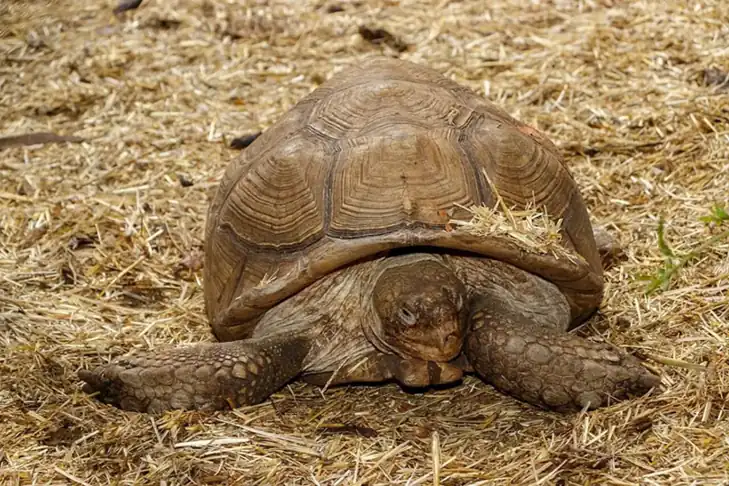
The African spurred tortoise can become a very large, heavy animal. LafeberVet describes adults reaching roughly 80 cm of shell length and a commitment commonly measured in fifty to eighty years. This is appropriate only when permanent space, cold-weather housing and capable backup care are already funded. A sanctuary should not be treated as the eventual adult-housing plan.
Plan outdoor space, shelter and transport access
Provide extensive walking and grazing ground with strong opaque walls, a managed digging area and dependable shade. Review excavations, gates, drains and the route to a heated shelter. A small buried barrier is not proof against a determined burrower. Before building, mark how a heavy adult will move between enclosure, transport container and veterinary vehicle without improvised lifting or passing through an unsuitable doorway.
Heat the whole animal safely
A large shell needs broad basking coverage with a cooler retreat. Badgerland Reptile Rescue uses an indoor basking reference of 38–41°C (100–105°F), with a daytime ambient gradient around 24–31°C (76–88°F). Measure the occupied surfaces and shelter air independently. Guard heat equipment and use suitable control. Confirm the tortoise has entered its safe night shelter; owning a heated building does not ensure the animal uses it.
UVB, moisture and youngsters
Provide effective daytime UVB indoors and record the actual lamp arrangement and clearance above the shell. A hatchling requires a carefully maintained moisture refuge and drinking access; “desert tortoise” does not mean a permanently desiccated baby enclosure. Sources use different juvenile moisture methods. Choose a coherent, monitored approach with experienced support and retain ventilation and clean surfaces.
Grazing and steady growth
Make grasses and appropriate fibrous plants the foundation of feeding. Growing youngsters may need softer, chopped forage as they learn to use coarser material. Avoid relying on fruit, household scraps or rich animal foods. Maintain an appropriate calcium plan. Record weight, shell growth and food offered, then review condition rather than trying to maximize growth speed. Provide clean, accessible shallow drinking water.
The costs that continue
The recurring expenses include substantial forage, heated winter space, electrical maintenance and transport for a heavy animal. This species does not hibernate. Seasonal inactivity deserves a review of conditions and health, not intentional chilling. Inspect barriers and shelter daily, remove spoiled food and waste, and write an emergency plan that another capable keeper can actually carry out.
Inspect burrowing as part of property maintenance
LafeberVet identifies sulcatas as strong burrowers capable of tunneling out of enclosures. Mark gates, drains, foundations and buried services on the property plan before deciding where managed digging can occur. After rain or excavation, inspect the boundary and shelter approaches for newly exposed gaps and unstable ground. Do not assume that a wall which resisted pushing is also secure below ground. Establish who can assess a deep or awkward excavation without entering an unstable space. This is a site-management exercise rather than a buried-fence specification. The plan must fit the actual soil, drainage and structures, with safe access for both the tortoise and its caretakers.
References: LafeberVet — sulcata outdoor security and burrowing
Practise the move into cold-weather housing
The veterinary sheet calls for heated housing when conditions are unsuitable outdoors and states that sulcatas do not hibernate. Before that shelter becomes essential, confirm that the tortoise can enter, turn and leave through the intended doorway. Record shelter use and the temperature where the animal actually rests. Identify how a power failure, flooded entrance or damaged gate would be handled, including a ready alternative location. Test the caretaker's route for these tasks while conditions are ordinary. A heated building on the property is useful only if the tortoise can be brought into it and its occupied area remains suitable throughout the period it is needed.
References: LafeberVet — sulcata cold-weather shelter and no hibernation
Plan forage and transport for a heavy adult
LafeberVet's size and diet account makes two ongoing needs clear: substantial suitable forage and a way to manage an animal that becomes too heavy for casual lifting. Keep a seasonal food-supply plan with storage, reliable sources and what the tortoise accepts when fresh grazing is limited. Separately, measure the path from enclosure to vehicle and arrange appropriate transport equipment with experienced help. Revisit both plans during growth; a hatchling's carrier and grocery routine will not scale automatically. Keep contact details and instructions accessible to the backup caretaker. These are continuity suggestions for the individual project, not a claim that an adult can be safely moved by a fixed number of people.
References: LafeberVet — sulcata size and high-fiber diet
Sources & further reading
Read the full recommendations and check details for your animal, equipment, and local conditions.
- LafeberVet — sulcata husbandry and diet
- Badgerland Reptile Rescue — sulcata care
- Tyler Stewart — keeper-authored sulcata care
- ReptiFiles — sulcata care and life-stage planning
Compiled September 2026. Original summaries; not individually reviewed by a veterinarian.