Independent species review: pending. Source-check date: 2026-09-05.
Report a care correction · Offer a species reviewArticle changes
- 2026-09-05 · Added original care summary, preparation checklist, commitment and cost drivers; flagged individual housing assessment.
- 2026-09-08 · Expanded practical preparation, maintenance and observation sections, with scoped sources where applicable. This update checks the new material; independent species review remains pending.
At a glance
- Adult housing
- A dedicated walking and grazing pen, plus suitable seasonal indoor accommodation. ↗
- Basking reference
- 32–35°C (90–95°F), with cooler retreats. ↗
- Moisture reference
- 40–75% humidity in LafeberVet; assess juvenile retreats separately. ↗
- Diet
- Varied fibrous edible plants with adequate calcium. ↗
These are source-specific planning references. Adult size, life stage, climate and measurement location matter. This guide does not certify an enclosure or supply a universal winter-care protocol.
Use this guide as a starting point alongside the detailed sources below. Health concerns, unexplained changes in behavior, or feeding problems belong with a reptile veterinarian.
Identify the animal and the commitment
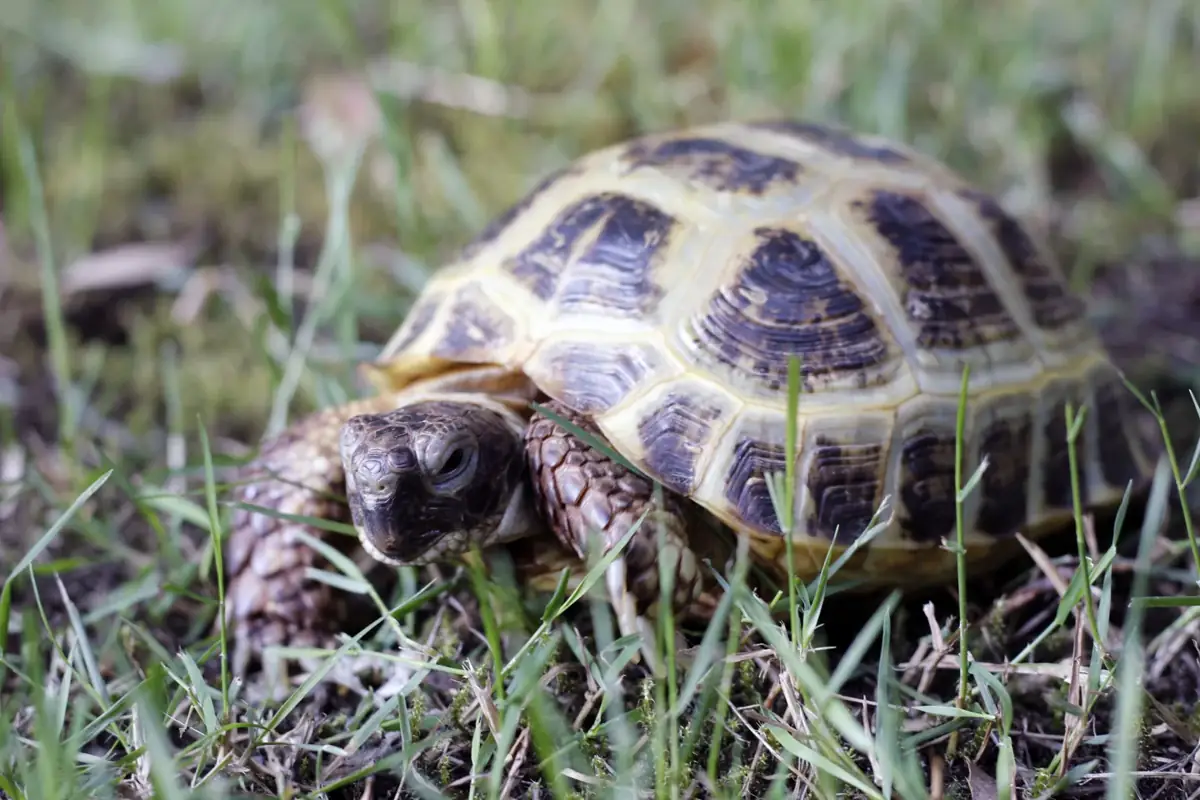
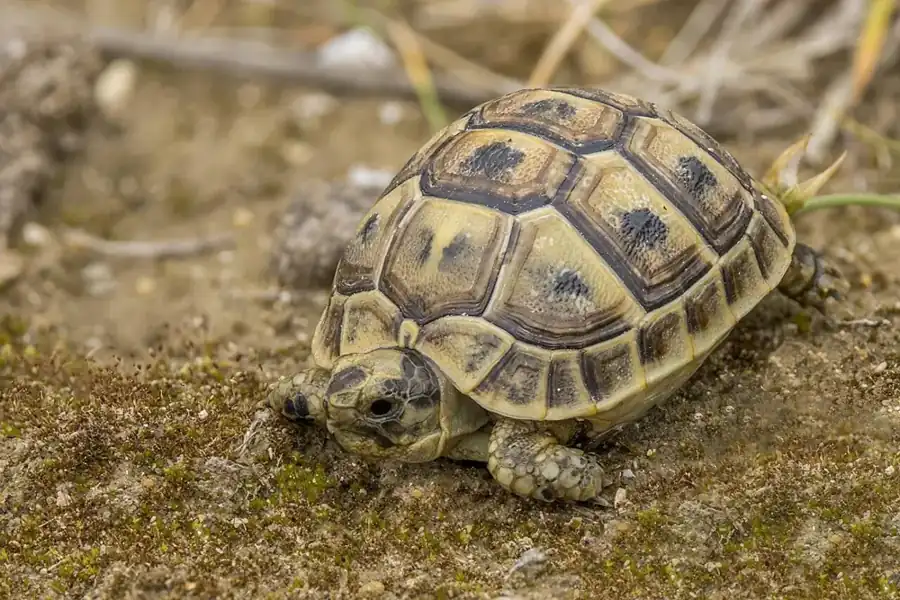
Record whether the animal is eastern or western Hermann’s and retain its origin documents. Eastern animals can become appreciably larger; a hatchling or a color description does not establish adult space. This species suits someone who enjoys growing forage and maintaining a habitat. It gains little benefit from frequent carrying. Plan succession care as well as holiday care: Mediterranean tortoises can live beyond fifty years.
Adult space is a ground-level habitat
Reserve a substantial, enclosed area with several walking routes, separate shelters and room to forage around planting. An indoor tortoise table must accommodate the adult through periods when outdoor conditions are unsuitable. Outdoors, use well-drained terrain, reliable shade and barriers against digging, climbing and predators. Check cover at different times of day; a pen that has shade at breakfast may become entirely exposed later.
Install and measure heat and UVB
LafeberVet gives a basking reference of 32–35°C (90–95°F). Treat that as a localized warm area, with cooler choices elsewhere. Measure the occupied basking site and sheltered air separately. Install daytime UVB using the actual lamp and reflector instructions, allowing for mesh and the top of the shell. Record the installation distance and replacement date; a visibly glowing tube does not establish useful UVB output.
Moisture and growing animals
Keep shallow drinking water accessible and replace it when contaminated. Hatchlings need protected moisture and easy access to food, without a permanently soaked floor. LafeberVet’s broad humidity reference is 40–75%; record temperature alongside humidity and check the refuge separately. Published methods differ, so review a juvenile setup with an experienced adviser instead of combining incompatible moisture schedules.
Forage, growth and daily records
Build meals around varied edible leaves, weeds and flowers with adequate fiber and calcium. Identify plants before harvesting and avoid pesticide exposure. Fruit and animal foods should not become routine staples. Track weight under similar conditions, food accepted and changes in activity; use the trend to review intake and environment. Photograph shell growth without polishing or altering the shell.
Prepare for winter before it arrives
Hibernation requires a health, hydration and temperature-management plan appropriate to the individual. Do not interpret reduced appetite as permission to cool a new arrival. Keep newcomers separate and arrange a reptile-vet examination before seasonal decisions. Budget for indoor winter accommodation, electricity, lamp renewal and dependable forage when the garden stops producing.
Survey the outdoor pen across a whole day
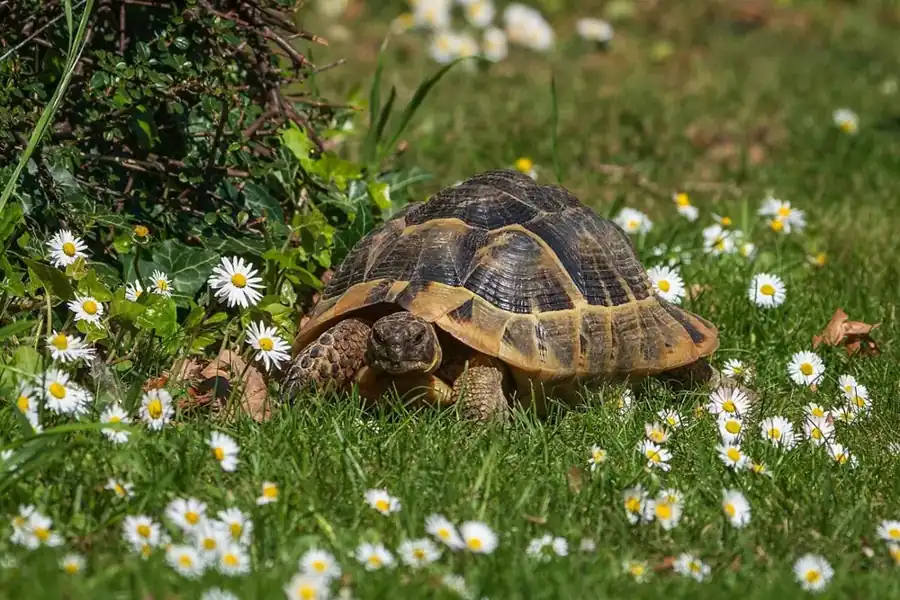
Hermanni Haven describes planted, well-drained outdoor ground with shelter and predator protection. Turn that into a seasonal pen survey: photograph shade at several points during the day, inspect where rain collects and trace the tortoise's route from grazing to shelter. Repeat after a tree is pruned or nearby construction changes the sunlight. Check corners, gates and any raised object that could help an animal reach the boundary. This is a practical survey for your property, not a guarantee that a particular climate permits outdoor keeping for fixed months. The indoor alternative must still be ready when actual conditions fall outside the individual plan.
References: Hermanni Haven — outdoor Hermann's tortoise housing
Make forage identification part of the daily routine
The breeder source emphasizes edible weeds and warns that a seed mixture's label does not replace knowing the plants that grow from it. Keep a small illustrated list of positively identified forage used in your enclosure, including where it is grown and whether treatments have been applied. Separate uncertain plants until identification is resolved. Plan a supply for the season when the garden is unproductive, rather than waiting until the last familiar leaves disappear. Note what the tortoise actually grazes as well as what you place in a bowl. These suggestions turn a varied plant diet into a repeatable routine that another caretaker can follow safely.
References: Hermanni Haven — Hermann's tortoise forage and plant identification
Watch access and competition if more than one is present
Hermanni Haven reports that both males and females can injure other tortoises and that a weaker individual may lose access to food. A group arrangement therefore needs individually identifiable records and complete separation capacity, even when the animals have lived together for a long time. Observe who reaches shelter and food, not only whether an obvious fight occurs. Keep nesting provision and a female's reproductive history in the care file, and obtain experienced help when behavior changes. For a single pet, there is no need to acquire a companion to make these routines meaningful. The useful focus is whether each animal can use the resources provided without repeated interference.
References: Hermanni Haven — competition and separation planning
Sources & further reading
Read the full recommendations and check details for your animal, equipment, and local conditions.
- LafeberVet — Hermann’s tortoise husbandry
- Garden State Tortoise — keeper-authored Hermann’s care
- Tortoise Trust — Mediterranean diet, water and biosecurity
- Tortoise Trust — Hermann’s field observations and size differences
- LafeberVet — Mediterranean tortoise longevity
Compiled September 2026. Original summaries; not individually reviewed by a veterinarian.