Independent species review: pending. Source-check date: 2026-09-05.
Report a care correction · Offer a species reviewArticle changes
- 2026-09-05 · Added original species planning guidance with linked references and explicit evidence limits.
- 2026-09-05 · Aligned the displayed experience level with the finder’s classification.
- 2026-09-08 · Expanded practical preparation, maintenance and observation sections, with scoped sources where applicable. This update checks the new material; independent species review remains pending.
At a glance
- Scope
- Uromastyx geyri only; larger and coastal species require separate plans. ↗
- Diet
- Varied fresh greens form the foundation; plan calcium and vitamin supplementation. ↗
These are attributed adult planning references, not a validated enclosure design. Surface temperature, shaded air temperature and UV Index describe different measurements. Read the full guide before setting equipment. Independent species review is pending.
Use this guide as a starting point alongside the detailed sources below. Health concerns, unexplained changes in behavior, or feeding problems belong with a reptile veterinarian.
Confirm the species behind the sales name
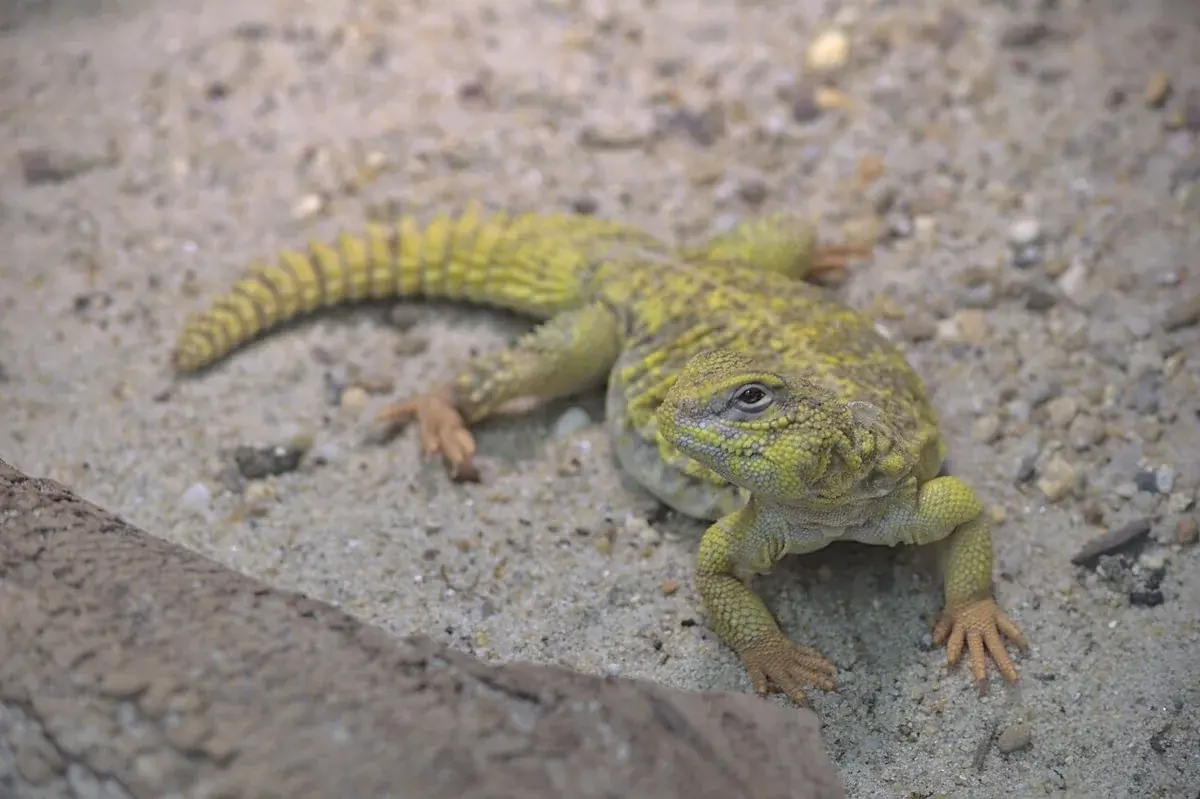
This guide is for Uromastyx geyri, often sold as Saharan uromastyx in yellow or red forms. Uromastyx is a diverse genus: Egyptian and coastal species cannot be assigned this plan from a shared common name. Breeder Phillip Lietz specifically works with geyri and emphasizes verifying captive-bred origin. Treat ownership as a decades-scale possibility; the linked genus-level lifespan reports do not establish a precise geyri-specific maximum.
Create floor space and protected crevices
Arids Only recommends at least about 122 × 61 × 61 cm for one adult of the smaller species, with larger accommodation for larger individuals. Use stable, low climbing structure and snug retreats. Plan the load of substrate and rocks before construction. The animal should be able to investigate the enclosure and disappear into cover without tunneling beneath unsupported heavy furnishings.
Use a broad, measured basking zone
Both Arids Only and ReptiFiles describe a 49–55°C basking reference. ReptiFiles explicitly identifies it as a surface measurement; use an infrared thermometer and measure cooler shaded air separately. UVB, bright daylight and heat have separate jobs. Check lamp-specific installation distances and the animal’s actual basking position. Maintain accessible shade rather than exposing every resting site to the same lighting intensity.
Arid air still needs refuges and water
ReptiFiles gives around 20–30% air humidity for typical non-coastal uromastyx, measured near the cool-side ground. It also describes a more humid burrow and access to fresh drinking water. Keep the surface dry while inspecting deeper conditions. These are genus-level references being applied provisionally to geyri; sustained humidity problems need review of the room, ventilation and microclimate rather than an automatic misting recipe.
Prepare greens throughout life
Chicago Exotics recommends daily varied leafy greens with suitable chopped vegetables. Calcium and vitamins need a consistent plan, and seeds or pellets should not displace the fresh-food foundation. ReptiFiles distinguishes the higher feeding frequency of growing youngsters from adults. Keep a record of greens offered and accepted; a bowl of dry seeds is not an adequate substitute for varied food and hydration.
Set expectations before buying
The main costs are dependable heating, UVB replacement, fresh produce and the initial habitat. Ask who bred the animal and retain the answer with its records. Shyness after relocation is expected in the breeder’s experience, so allow the animal to choose contact. Independent species review is pending. Breeding, seasonal cooling and veterinary treatment require more detail than this planning guide provides.
Inspect the retreat before changing the room humidity
Arids Only describes humid hide boxes as a way to represent the different conditions of a burrow. Keep the retreat's condition separate from the room's humidity reading. Check entrance clearance, cleanliness and the material within the hide; make sure it remains accessible after the animal digs nearby. Photograph the original arrangement and note what changes after maintenance. A dry-looking surface does not tell you everything about the protected interior, while a wet hide is not automatically a useful refuge. This comparison is a practical monitoring suggestion. The source covers several Uromastyx species, so it does not establish a precise moisture prescription for every U. geyri individual.
References: Arids Only — uromastyx humid refuges
Plan seasonal produce access as carefully as heating
The existing feeding plan depends on fresh plant variety. Build a short shopping list from your agreed species diet, and identify alternatives before a regular green becomes unavailable. If you grow forage, identify each plant and keep cultivation products and contamination risks in mind; do not offer an unidentified clipping because it came from outdoors. Record actual acceptance so a large bowl does not hide a menu dominated by a single item. Keep any seeds or pellets separately listed in the log rather than treating them as interchangeable with the fresh-food portion. This is an original food-supply routine, not a new dietary percentage or a claim that all uromastyx eat identically.
References: Arids Only — uromastyx feeding context
Review seasonal care before cooling
Arids Only discusses seasonal management and nesting in the context of experienced breeding. Those sections should not become an automatic cooling program for a newly acquired pet with unknown health. Retain the animal's previous seasonal history and compare activity, food intake and measured conditions before interpreting a change. If you keep a female, ask an experienced species adviser about an appropriate laying provision before there is an urgent concern. A hiding animal should still be observable through its records and environmental checks. Keep unresolved questions written down for professional review instead of adding heat, supplements or disturbance repeatedly in response to a single quiet day.
References: Arids Only — seasonal breeding and nesting context
Sources & further reading
Read the full recommendations and check details for your animal, equipment, and local conditions.
- Arids Only — Phillip Lietz’s first-hand uromastyx guide
- ReptiFiles — uromastyx heat, lighting and moisture
- Chicago Exotics Animal Hospital — uromastyx nutrition
Compiled September 2026. Original summaries; not individually reviewed by a veterinarian.