Independent species review: pending. Source-check date: 2026-09-05.
Report a care correction · Offer a species reviewArticle changes
- 2026-09-05 · Added original care summary, preparation checklist, commitment and cost drivers; flagged individual housing assessment.
- 2026-09-08 · Expanded practical preparation, maintenance and observation sections, with scoped sources where applicable. This update checks the new material; independent species review remains pending.
At a glance
- Adult floor planning
- Beyond 2.4–3.7 × 1.2–1.8 m depending on adult size; assess the individual. ↗
- Basking reference
- 32–35°C (90–95°F) in the cited ReptiFiles plan. ↗
- Moisture
- Sheltered moisture, ventilation and drainage must work together. ↗
- Diet
- Plant-heavy omnivore; some fruit and a small animal-food component. ↗
These are source-specific planning references. Adult size, life stage, climate and measurement location matter. This guide does not certify an enclosure or supply a universal winter-care protocol.
Use this guide as a starting point alongside the detailed sources below. Health concerns, unexplained changes in behavior, or feeding problems belong with a reptile veterinarian.
A tropical tortoise with different feeding needs
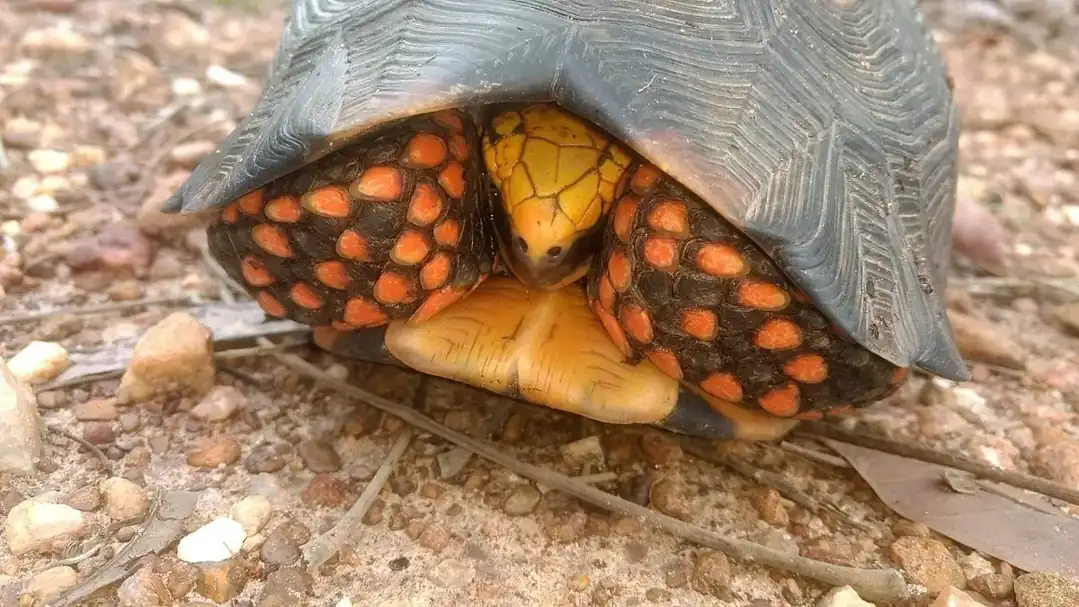
Red-footed tortoises combine plant feeding with some animal food; an arid-tortoise diet cannot simply be copied across. Confirm the animal’s identity and origin, and retain hatch or acquisition dates. This species suits a keeper who can maintain a warm, humid habitat throughout the year. A fifty-year commitment is realistic planning, so include future housing and another capable caretaker.
Scale the enclosure to the adult
ReptiFiles gives adult planning ranges beyond approximately 2.4–3.7 m long and 1.2–1.8 m wide, depending on the individual’s expected size. Treat these as starting references, then assess usable walking routes, shelter and service access. Provide several covered retreats and stable low furnishings. Outdoors, check escape resistance, shade and drainage. A young tortoise’s indoor enclosure is not automatically sufficient for the grown animal.
A warm gradient with effective UVB
The cited ReptiFiles plan uses a basking area of 32–35°C (90–95°F) and ambient choices around 24–29°C (75–85°F). Check both surfaces and air rather than heating everything uniformly. Provide daytime UVB without intervening glass. Use the exact fixture instructions to set distance above the shell, account for mesh, and record replacement dates. Keep shaded routes available alongside the illuminated area.
Humidity without stagnant conditions
ReptiFiles gives a 70–90% humidity reference; Chicago Exotics uses a lower open-air range plus a moist refuge. These are different management approaches, not numbers to average. Record temperature and location with each reading. Maintain clean moisture-retentive substrate and an accessible shallow soaking dish, while removing soiled material and preventing persistent waterlogging.
Variety, portions and growth
Arizona Exotics suggests a plant-heavy plan that includes leafy foods, some fruit and a small animal-food component. Youngsters commonly receive daily food; adults need measured meals adjusted to condition. Keep records of the actual ingredients instead of treating every salad as equivalent. Use a suitable calcium and vitamin plan, and avoid allowing favorite fruit or protein foods to displace the varied plant base.
Winter care and ongoing maintenance
This species does not brumate. Fund winter heating, humidity control, substrate renewal and veterinary care before acquiring one. Keep newcomers separately while their health is assessed. Daily checks should cover water cleanliness, food accepted, retreat conditions and drainage; weight and dated shell photographs add useful longer-term context. A warm, humid enclosure remains a cleaning commitment even when planted attractively.
Keep the humid refuge clean enough to remain useful
Arizona Exotics describes a humid hide with moisture-retaining material and checking that material for soiling. Treat the hide, open substrate and drainage as separate maintenance areas. Record where the tortoise rests, inspect the floor there and remove contaminated material before adding more water. Make the hide removable or accessible without destroying the rest of the planted layout. If moisture accumulates after watering, follow its route to identify a drainage problem rather than simply reducing all humidity. This practical inspection helps preserve a warm, sheltered choice while the rest of the enclosure is cleaned. It does not resolve the numerical differences between published open-air humidity recommendations.
References: Arizona Exotics — red-footed tortoise humid hide and cleaning
Record ingredients and portions
The veterinary source describes red-footed tortoises as omnivores with a plant-heavy diet that includes some fruit and animal food. Keep those categories separately visible in the record rather than treating every bowl as the same mixed meal. Write down the actual ingredients, portion and leftovers, then compare the pattern over several offerings. A favorite item can otherwise grow into most of the menu without an obvious change in feeding frequency. Coordinate any prepared tortoise food and supplements with the individual plan. This record supports review of the ingredients and portions without adding a dietary ratio or treating this species as a grassland grazer.
References: Arizona Exotics — red-footed tortoise diet
Test shade and warm shelter as the seasons change
Arizona Exotics recommends deep shade and monitoring the sleeping area in outdoor accommodation. Walk the pen at different times, checking whether the covered route to shelter remains shaded and whether the entrance stays dry after rain. Repeat the check as vegetation grows or is cut back. Keep the indoor or heated alternative ready before cold weather arrives, with measurements taken where the tortoise will actually rest. Record use of that shelter rather than assuming its availability proves it is being used. These are practical seasonal checks for a tropical species; cooler-month inactivity should not be used as a reason to initiate brumation.
References: Arizona Exotics — red-footed tortoise shade, shelter and seasonal care
Sources & further reading
Read the full recommendations and check details for your animal, equipment, and local conditions.
- ReptiFiles — red-footed tortoise planning references
- Arizona Exotics — red-footed diet, UVB and winter care
- Chicago Exotics Animal Hospital — red-footed tortoise care
Compiled September 2026. Original summaries; not individually reviewed by a veterinarian.