Independent species review: pending. Source-check date: 2026-09-05.
Report a care correction · Offer a species reviewArticle changes
- 2026-09-05 · Added scoped introduction, preparation checklist, source references and individual housing assessment; independent species review remains pending.
- 2026-09-08 · Expanded practical preparation, maintenance and observation sections, with scoped sources where applicable. This update checks the new material; independent species review remains pending.
At a glance
- Scope
- Pituophis melanoleucus; confirm the subspecies and origin. ↗
- Basking surface reference
- Around 32°C (90°F) in Dubia; assess cooler air separately. ↗
- Habitat priority
- Burrowing and concealed resting space are central to the layout. ↗
These are source-specific planning references, not enclosure certification. Identity, adult size, measuring location and the individual animal require review. Blank finder dimensions mean that a manual assessment is necessary.
Use this guide as a starting point alongside the detailed sources below. Health concerns, unexplained changes in behavior, or feeding problems belong with a reptile veterinarian.
Identify the pine snake you are preparing for
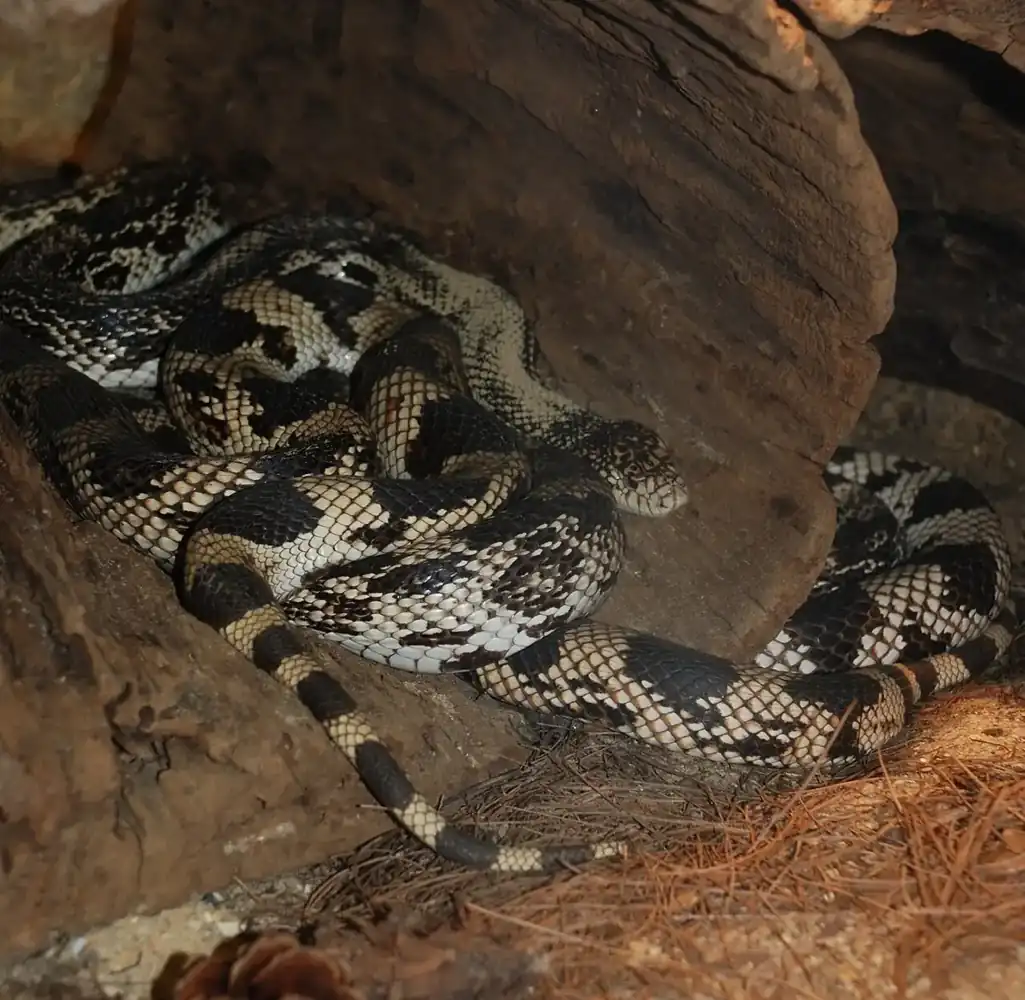
This introduction covers Pituophis melanoleucus, including northern and Florida forms; it does not merge bullsnakes or gopher snakes into the same species. Smithsonian’s northern account describes a powerful digger, while The Orianne Society documents the highly subterranean Florida form. Record the scientific name, subspecies and captive origin before selecting a seasonal or habitat plan.
Make burrowing a real option
Plan construction around the pine snake’s burrowing behavior. Reserve room for burrowing and inspectable retreats, and support heavy furnishings so excavating cannot dislodge them. Plan adult movement and turning above the substrate too. Hiding is normal behavior; a layout should let you maintain the enclosure without repeatedly destroying every concealed resting place.
Keep climate references tied to their source
Dubia lists a basking surface around 32°C (90°F), cool-side conditions of 24–29°C (75–85°F), and average humidity of 60–70%, alongside a humid hide. These are that guide’s references, not universal certification for every locality. Confirm the chosen plan for your animal, distinguish surface measurements from air, and preserve ventilation while managing moisture.
Arrange lighting and daily inspection
Provide controlled, guarded heating and a daytime light cycle. Dubia recommends UVB with suitable lamp placement; the snake also needs shaded cover. Check water, waste and instrument readings during a predictable service routine. Secure furnishings and doors after cleaning. A light that still glows or a thermostat that displays its target does not replace checking the conditions the animal actually encounters.
Carry feeding forward deliberately
Smithsonian records a natural diet including small mammals and birds. Captive planning should start with an established feeding history and suitable thawed whole prey, as described in Dubia’s care account. Avoid adopting a fixed frequency without considering meal size, age and body condition. Record meals and weight, and review sustained changes with a reptile veterinarian rather than repeatedly offering larger prey.
Keep the burrow useful without losing service access
Smithsonian describes northern pine snakes in well-drained, sandy habitats, using covered refuges and occasionally low climbing opportunities. The practical enclosure lesson is to consider the underground and surface routes together rather than treating burrowing as a decorative theme.
On the plan, show inspectable retreats, independent supports under heavy pieces and a route to water that remains usable when bedding shifts. Photograph the structure before filling it. During routine checks, note displaced material and inaccessible areas. Do not repeatedly excavate the snake simply to prove it is present for a photograph. A thoughtfully designed burrowing habitat can permit necessary inspection while preserving concealed choices.
References: Smithsonian's National Zoo — northern pine snake habitat
Check the names even on familiar institutional pages
Keep the pine snake's scientific name, subspecies or locality where documented, and the original breeder label together. Older or general natural-history resources may organise Pituophis differently from current species references. Save the scope and date of the source when recording advice.
Ask an experienced keeper to review whether a seasonal or climate account applies to the specific northern or Florida form in question. A shared genus is not proof that every gopher, bull and pine snake should use one care recipe. Where identity remains uncertain, keep the question open and avoid an automatic finder match.
Build a seasonal history before considering a seasonal program
Record feeding outcomes, comparable weights, visible activity, lighting changes and actual room conditions throughout the year. Note how observations were made, since a deeply concealed snake may simply be seen less often. Keep new equipment and layout changes on the same timeline.
When appetite or activity shifts, consult an experienced reptile veterinarian rather than deciding that the date alone explains it. Retain the agreed current routine clearly for backup carers and specify who should be contacted before cooling or changing feeding. A journal can reveal a repeated individual pattern while still preserving uncertainty. It does not establish a breeding or brumation protocol, and this introductory guide should not be used as one.
Sources & further reading
Read the full recommendations and check details for your animal, equipment, and local conditions.
- Smithsonian National Zoo — northern pine snake behavior and ecology
- The Orianne Society — Florida pinesnake field ecology
- Dubia — pine snake care references
- The Reptile Database — Pituophis melanoleucus identity
Compiled September 2026. Original summaries; not individually reviewed by a veterinarian.