Independent species review: pending. Source-check date: 2026-09-05.
Report a care correction · Offer a species reviewArticle changes
- 2026-09-05 · Added a species-scoped care summary, cited planning references, ownership considerations and setup checks.
- 2026-09-08 · Expanded practical preparation, maintenance and observation sections, with scoped sources where applicable. This update checks the new material; independent species review remains pending.
At a glance
- Adult housing example
- 130 × 65 × 60 cm for a 130 cm common garter; enlarge as needed. ↗
- Climate reference used here
- RSPCA: basking 28–32°C, cool end 22–24°C, humidity 50–60%. ↗
- UVB reference used here
- RSPCA: UVI 1.0 at basking height, with zero-UV shade; see differing guidance. ↗
Dimensions are adult planning references in length × width × height, not a welfare certification. Match housing to the actual snake and retain usable climbing, shelter and temperature choices. Named source targets are starting references, pending independent species review.
Use this guide as a starting point alongside the detailed sources below. Health concerns, unexplained changes in behavior, or feeding problems belong with a reptile veterinarian.
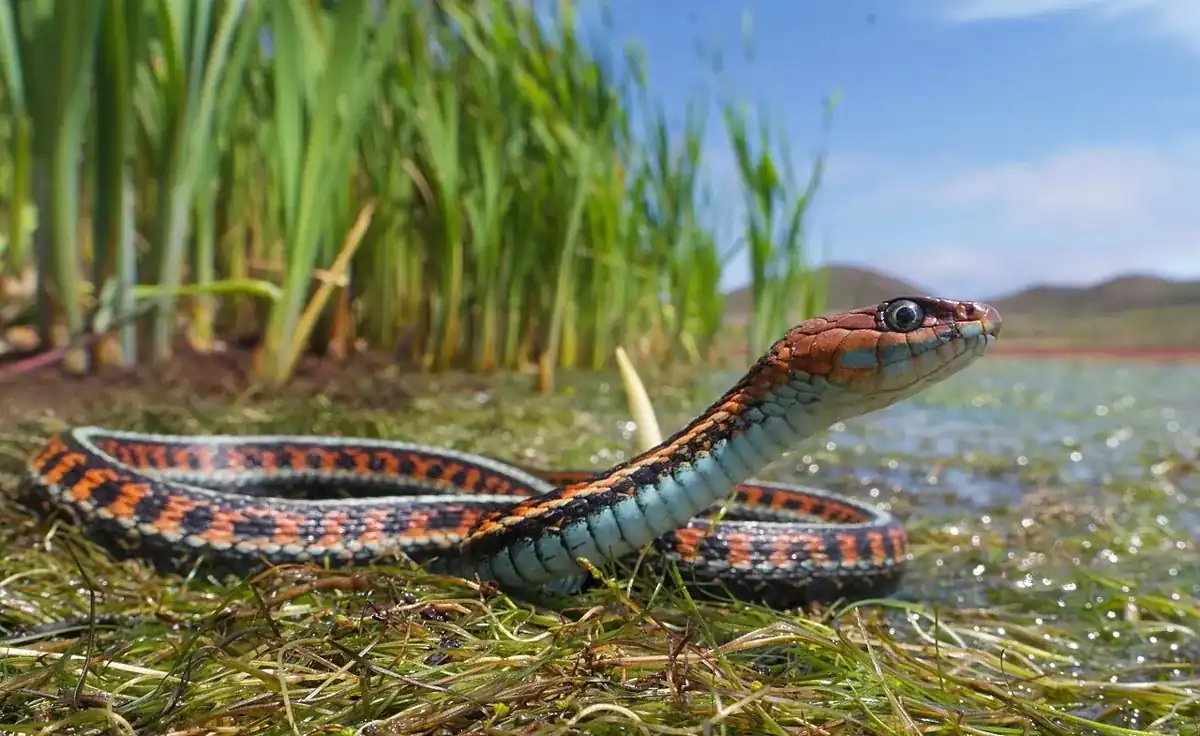
Identify the common garter snake
This entry is for Thamnophis sirtalis. Record the subspecies and locality; a ribbon snake, checkered garter or aquatic specialist is not automatically covered. ReptiFiles lists common garters from roughly 50 to 130 cm, illustrating why a slender body does not establish small housing needs. They are active during the day, and their speed and food choices require preparation.
Heat and UVB: identify the reference
This guide uses the RSPCA’s 28–32°C basking zone, 22–24°C cool end and UVI 1.0 at the basking position, falling to zero in shade. ReptiFiles gives a higher general garter UVI reference; neither generic sheet settles the ideal for every locality. Retain the stated RSPCA plan pending independent review. Regulate heating, measure independently, and use a UVI meter at snake height to check the installed lamp and mesh.
Humidity and water work
The RSPCA uses 50–60% humidity. Keep a named sensor location and record temperature alongside it. Offer clean bathing water with an easy exit, refresh drinking water daily and clean contamination promptly. Dry resting areas matter: an enclosure built around water still needs usable land and ventilation. Budget time for water service, not just feeding days.
Plan a varied, nutritionally complete diet
Use an established feeding record and a varied, appropriately sized diet. Whole thawed rodents can form part of it; fish and earthworms require suitable sourcing. The Exotic Pet Vet Blog documents thiaminase problems when fish choices narrow. Freezing does not reliably remove that enzyme. Avoid goldfish and an exclusive smelt diet. Fish fillets alone are nutritionally incomplete; discuss the overall diet and supplements with a reptile veterinarian.
Commitment and useful records
Plan for 10–15 years or longer. Our standard tier includes an escape-resistant adult enclosure, water-service supplies, heat control, UVB and varied feeders. Keep weight, accepted prey species and actual intake together: offering variety does not prove the snake ate it. A caretaker should be able to follow that record and maintain water quality during absences.
Make water maintenance visible in the routine
Include the bathing basin and the dry-land exits on the enclosure plan. List how the basin is removed, where equipment is cleaned and which surfaces are checked after a spill. Keep a spare vessel or a documented cleaning sequence so an awkward basin does not delay needed service.
In the notebook, separate water replacement from substrate replacement and record unusual contamination. Photograph the layout after substantial changes to show that dry retreat remains available. If the snake's movement redistributes loose material into the water, note the repeated problem and revise the edge or position. These maintenance notes can help identify why the water area is difficult to keep clean.
Know which animal ate which meal
Maintain the single-animal housing plan during cleaning and temporary holding as well as ordinary keeping. Use a clearly labeled holding container, particularly for small, fast youngsters. In a household with several garters, keep meal records linked to the individual profile rather than a shared species checklist.
Write the last successful prey and meal date on the care handoff. A substitute keeper should be able to distinguish a refused item, an eaten item and a food that was never offered. Include the established service sequence and who to contact about a persistent change. These records help nutritional review and reduce the guesswork that can follow a busy feeding day.
Sources & further reading
Read the full recommendations and check details for your animal, equipment, and local conditions.
- ReptiFiles — species distinctions, housing and social caveats
- RSPCA — garter heat, UVB, humidity and lifespan
- The Exotic Pet Vet Blog — thiaminase and real dietary failure
Compiled September 2026. Original summaries; not individually reviewed by a veterinarian.