Independent species review: pending. Source-check date: 2026-09-05.
Report a care correction · Offer a species reviewArticle changes
- 2026-09-05 · Added a species-scoped care summary, cited planning references, ownership considerations and setup checks.
- 2026-09-08 · Expanded practical preparation, maintenance and observation sections, with scoped sources where applicable. This update checks the new material; independent species review remains pending.
At a glance
- Housing
- Manual adult and locality assessment; no universal enclosure dimensions. ↗
- Climate scope
- Locality-specific plan required; the linked keeper accounts use differing approaches. ↗
- Scientific name
- Elaphe taeniura in the Reptile Database; Orthriophis taeniurus remains widely used. ↗
Dimensions are adult planning references in length × width × height, not a welfare certification. Match housing to the actual snake and retain usable climbing, shelter and temperature choices. Named source targets are starting references, pending independent species review.
Use this guide as a starting point alongside the detailed sources below. Health concerns, unexplained changes in behavior, or feeding problems belong with a reptile veterinarian.
Begin with the locality
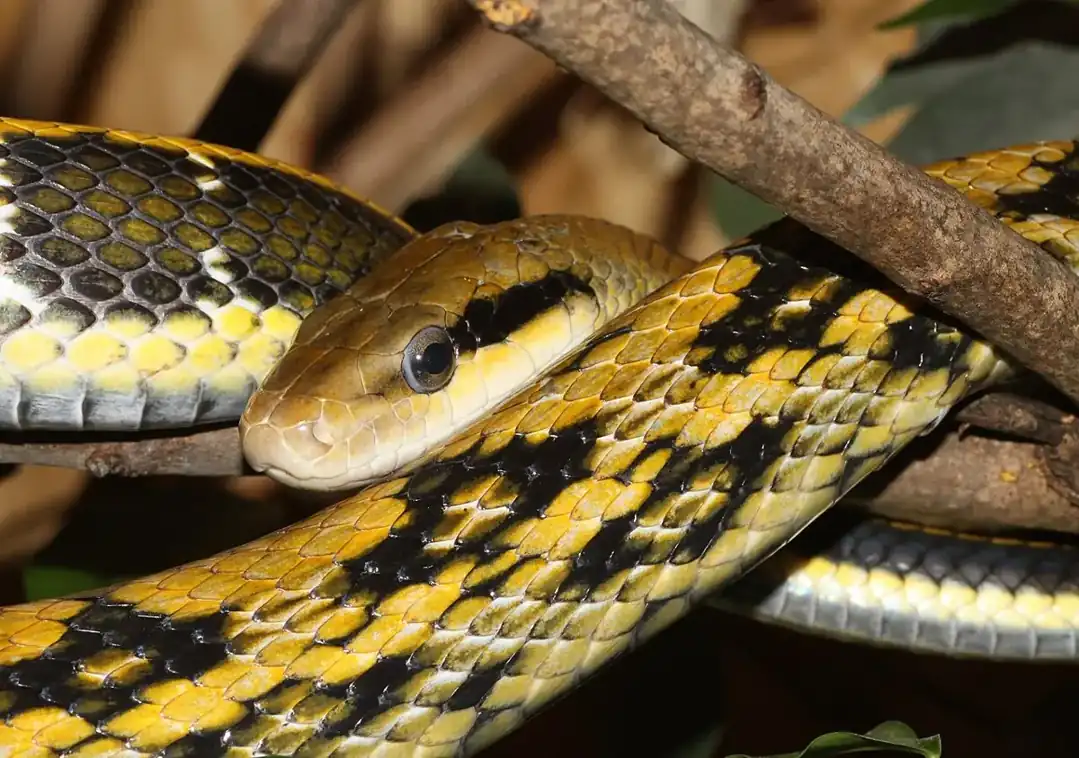
The Reptile Database currently lists Elaphe taeniura; Orthriophis taeniurus remains familiar in keeper literature. Taiwanese, blue and cave-associated beauty snakes are not interchangeable labels for one enclosure plan. Obtain the precise locality or form and captive-breeding history. This is a group introduction with explicit limits, not a universal finished husbandry prescription for every beauty rat snake sold under the name.
Housing is a substantial project
DM Exotics describes active, semi-arboreal animals that can reach 6–9 feet or more depending on origin. The finder therefore makes no automatic space match. Plan full-length movement, turning room and supported elevated routes around the expected adult, with a specialist checking the layout. Visual barriers and multiple refuges let an easily startled animal withdraw while you service water or remove waste.
Do not combine incompatible heat plans
DM Exotics describes warmer spots around 83–85°F (about 28–29°C) with cooler areas for the animals it keeps. Northampton Reptile Centre’s Taiwanese guide describes a warmer general-air approach. Those are different accounts and measurements, not numbers to average. Confirm a locality-specific plan before acquisition. Regulate every heater, guard reachable fixtures, and record air and occupied surfaces at several heights because a climbing snake uses more than the floor.
Light, moisture and usable shelter
Provide a defined day/night cycle and complete shaded retreats. Establish the UVB installation with someone familiar with the identified form; this page does not provide a universal UVI target. Similarly, choose humidity and substrate for the locality rather than importing a tropical average. A large clean water bowl, ventilated enclosure and dry resting choices belong in that discussion. Make hidden wet areas accessible for inspection and cleaning.
Food and safe service routines
DM Exotics notes individual differences in accepting rodents versus birds; the Taiwanese care guide uses thawed rodents. Ask exactly what the offered animal eats and obtain a feeding record. Source suitable whole prey and maintain dated intake and weight notes. Plan cleaning access and secure temporary containment before arrival. A fast, long snake should not have to be restrained through every routine water change.
Commitment and budget
We have not established one reliable lifespan range for this varied group, so the finder does not promise a short commitment. Treat ownership as a long-term specialist responsibility. Budget for a large custom enclosure, strong climbing structures, measurement equipment, whole prey and veterinary care. Identity, adult space and a coherent climate plan are acquisition requirements, not questions to postpone until the animal outgrows a starter tank.
Reduce visual disturbance without losing observation
DM Exotics describes beauty rat snakes as visually alert animals that may be agitated by surrounding movement, especially during feeding. Consider household traffic and sightlines when choosing the enclosure position, alongside its temperature and service access.
Make a front-and-side drawing showing concealed retreats, elevated resting areas and the route to water. Keep a way to observe the animal without repeatedly exposing its shelter. Note whether a change follows moving the habitat, opening nearby doors or removing foliage. Use this as context for a care discussion rather than diagnosing every refusal as stress. The enclosure's location can be a practical part of the keeping plan.
References: DM Exotics — firsthand beauty rat snake acclimation
Build a reference file for the documented locality
Keep the current identification, original trade label and locality evidence together. For every saved care source, state which form the author actually kept and whether the account is ordinary maintenance or breeding. Do not silently transfer a cave-associated form's plan to a Taiwanese animal.
Write down the agreed measurement positions in the enclosure and the person who reviewed unresolved conditions. If two sources conflict, preserve the disagreement while seeking a coherent plan; averaging the numbers creates a protocol that neither author used. This reference file should travel with the animal through veterinary visits and future ownership. Record unknown lineage as unknown; a photograph cannot establish it.
Give a long, active snake a workable service plan
Draw full-length movement routes through the furnished adult enclosure, including elevated connections and room to turn on the floor. Mark where the snake can withdraw from the service opening. Check the route of a full water bowl and the removal of long branches before fixing decorative backgrounds in place.
Keep a separate adult transfer plan with suitable equipment and experienced support. Review it as the snake grows, rather than waiting for an urgent veterinary trip. A useful build journal should show the access doors and removable components as well as the finished display. Those details explain whether a visually impressive habitat will remain practical after years of routine cleaning.
Sources & further reading
Read the full recommendations and check details for your animal, equipment, and local conditions.
- Reptile Database — names and locality forms
- DM Exotics — keeper experience with beauty rat snakes
- Northampton Reptile Centre — Taiwanese-specific husbandry account
Compiled September 2026. Original summaries; not individually reviewed by a veterinarian.