Independent species review: pending. Source-check date: 2026-09-05.
Report a care correction · Offer a species reviewArticle changes
- 2026-09-05 · Added species-specific planning, measurement, feeding, commitment and equipment guidance. Source disagreements remain visible.
- 2026-09-05 · Made the 15-year finder planning horizon explicit beside the lifespan reference.
- 2026-09-08 · Expanded practical preparation, maintenance and observation sections, with scoped sources where applicable. This update checks the new material; independent species review remains pending.
At a glance
- Adult group reference
- 30 × 30 × 45 cm for 2–3 adults; expand with group size. ↗
- Reproduction
- Offspring can be produced without a male. ↗
- Handling
- Best maintained as a display species. ↗
Dimensions are adult planning references in length × depth × height. Sources differ and these summaries have not received independent species review. Read the measurement context and provide more usable space where possible.
Use this guide as a starting point alongside the detailed sources below. Health concerns, unexplained changes in behavior, or feeding problems belong with a reptile veterinarian.
Reproduction and long-term care
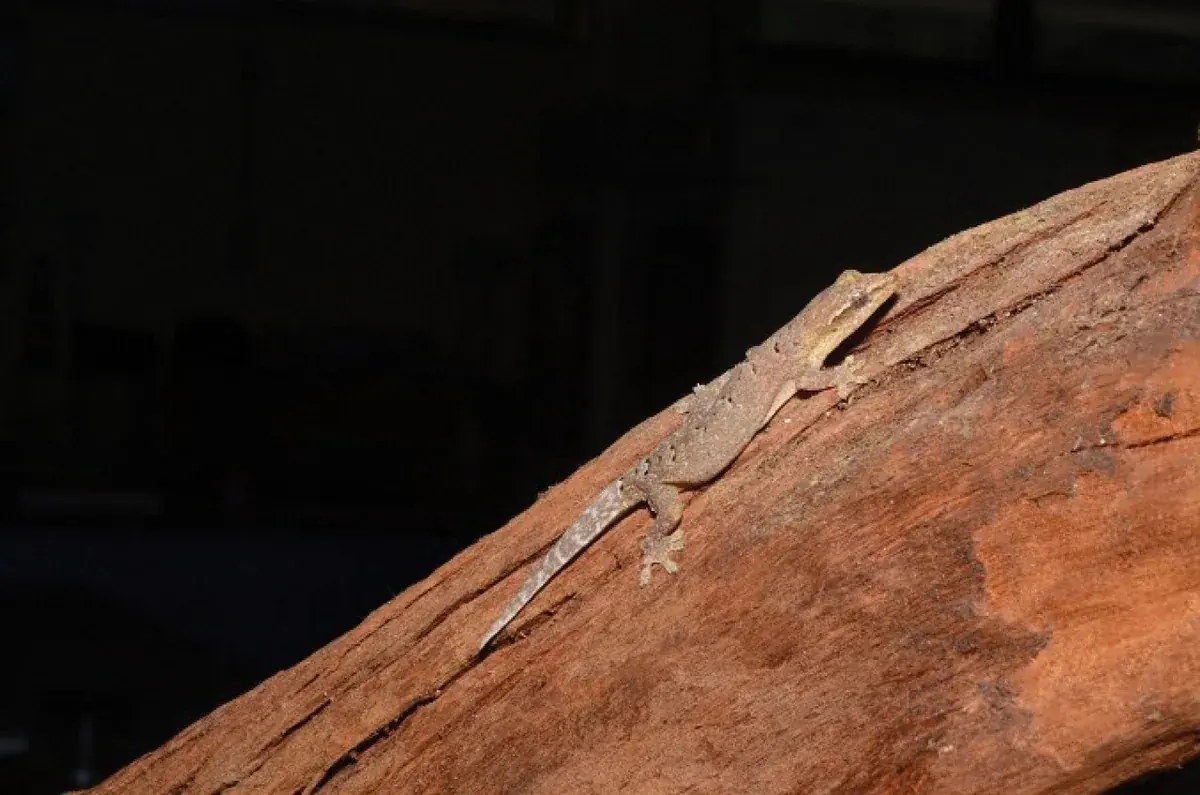
Mourning geckos are Lepidodactylus lugubris, a tiny climbing species able to reproduce without a male. Ali’s Menagerie describes the overwhelmingly female population and rare usually infertile males. Separating sexes therefore does not prevent offspring. ReptiFiles gives a lifespan around ten years, with reports of longer lives. Ownership includes planning for descendants, spare accommodation and responsible rehoming before eggs appear.
Plan the whole group
ReptiFiles gives 30 × 30 × 45 cm for two or three adults; use more space when possible and expand as numbers increase. Pangea reports a higher stocking density, but this page uses the more spacious allowance. Add foliage, fine branches and several concealed resting sites. Check cable ports, ventilation mesh and door overlaps against a hatchling’s size. Retain ventilation while closing escape routes. Count visible individuals during quiet checks, and investigate persistent exclusion from food rather than assuming every social interaction is harmless.
Warmth, light and humid air
ReptiFiles uses 26–29°C at the upper basking area, 21–24°C in the lower cool area and 18–22°C at night. A small enclosure can lose its cool retreat quickly. Use controlled low-output heating with independent probes near warm and cool resting places. Provide daytime UVB with shade, measuring exposure at the nearest reachable surface, including ceiling mesh. Aim for 60–70% ambient humidity with temporary misting peaks, allowing drying between cycles. Observe readings between spray cycles and ensure hatchlings do not dry out unnoticed.
Feeding adults and hatchlings
Keep reliable cultures of tiny feeders; a delivery intended for larger geckos will not solve a hatchling food shortage. Pangea uses small gut-loaded, supplemented insects alongside prepared gecko diet, and highlights fruit flies or pinhead crickets for hatchlings. Adjust prey size to the individual and coordinate supplements with the diet and lighting. Place food where each animal can reach it. Mark offerings in the notebook and occasionally watch actual feeding, since an empty cup cannot identify which gecko ate.
An observation project with extra logistics
Pangea warns that adults may consume hatchlings and that eggs adhere firmly to their chosen surface. Do not peel attached eggs off. Prepare separate hatchling accommodation and an informed reproduction-management plan. Avoid routine handling: speed and fragility make viewing the colony more practical. Quarantine incoming geckos separately. Budget for spare enclosures, feeder cultures, lighting and veterinary care. A useful weekly record includes group counts, egg locations, hatchlings, food use and any displaced animal, so population growth does not outrun available space.
Decide what happens when the next eggs hatch
Pangea describes eggs attached to enclosure surfaces and the possibility of adults eating newly hatched young. Map egg locations without trying to detach them, and identify which furnishings can safely remain undisturbed. Before hatching, prepare the separate accommodation, tiny food and escape-resistant servicing routine already described above. Write down who can take offspring responsibly and how much additional space you can actually maintain. This is a capacity-planning exercise: a vague intention to find homes later does not identify a destination. If the colony exceeds that capacity, seek experienced help with a humane reproductive-management plan; releasing animals outdoors is never an acceptable solution.
References: Pangea Reptile — mourning gecko eggs and young
Make colony observations about access, not just head counts
The breeder source describes a social hierarchy, including conflict that may be easy to overlook among small animals. Keep a sketch of feeding and shelter locations, then occasionally observe which geckos actually reach them. Record repeated displacement, a gecko staying apart and visibly different body condition as separate observations. Add resources or seek advice based on that pattern, with prepared separate housing available when an animal needs protection. A missed sighting is not proof of a death or escape, and a full head count is not proof that everyone has eaten. This approach adds individual context to the colony total without requiring routine capture of fragile geckos.
References: Pangea Reptile — mourning gecko social interactions
Prepare backup food and check for escape gaps
A hatchling's needs expose weaknesses that may not matter for the adults. List the smallest feeder sizes you can obtain reliably, a backup supplier and the time needed to replace a failed culture. Keep the receiving enclosure assembled before bringing in another group. At maintenance time, inspect cup holders, plant pots, removable cork and door channels for animals before carrying them out of the secured room. Recheck any repaired vent for both airflow and escape resistance. These are original operational checks built around the sources' hatchling and housing advice. They make population growth visible in the workload rather than allowing it to emerge as a sudden shortage of food or secure space.
References: ReptiFiles — mourning gecko enclosure planning · Pangea Reptile — mourning gecko hatchling care
Sources & further reading
Read the full recommendations and check details for your animal, equipment, and local conditions.
- ReptiFiles — identity and lifespan
- ReptiFiles — adult group and hatchling housing
- Matt Parks, Pangea — direct keeping and hatchling care
- Ali’s Menagerie — parthenogenesis
- ReptiFiles — measured temperature, lighting and humidity
Compiled September 2026. Original summaries; not individually reviewed by a veterinarian.