Independent species review: pending. Source-check date: 2026-09-05.
Report a care correction · Offer a species reviewArticle changes
- 2026-09-05 · Added species-specific planning, measurement, feeding, commitment and equipment guidance. Source disagreements remain visible.
- 2026-09-08 · Expanded practical preparation, maintenance and observation sections, with scoped sources where applicable. This update checks the new material; independent species review remains pending.
At a glance
- Scope
- Goniurosaurus hainanensis only. ↗
- Adult reference
- 90 × 60 × 60 cm from the species-focused source. ↗
- Daytime gradient
- Warm area about 26°C; cooler refuge about 20–22°C. ↗
Dimensions are adult planning references in length × depth × height. Sources differ and these summaries have not received independent species review. Read the measurement context and provide more usable space where possible.
Use this guide as a starting point alongside the detailed sources below. Health concerns, unexplained changes in behavior, or feeding problems belong with a reptile veterinarian.
Resolve the name first
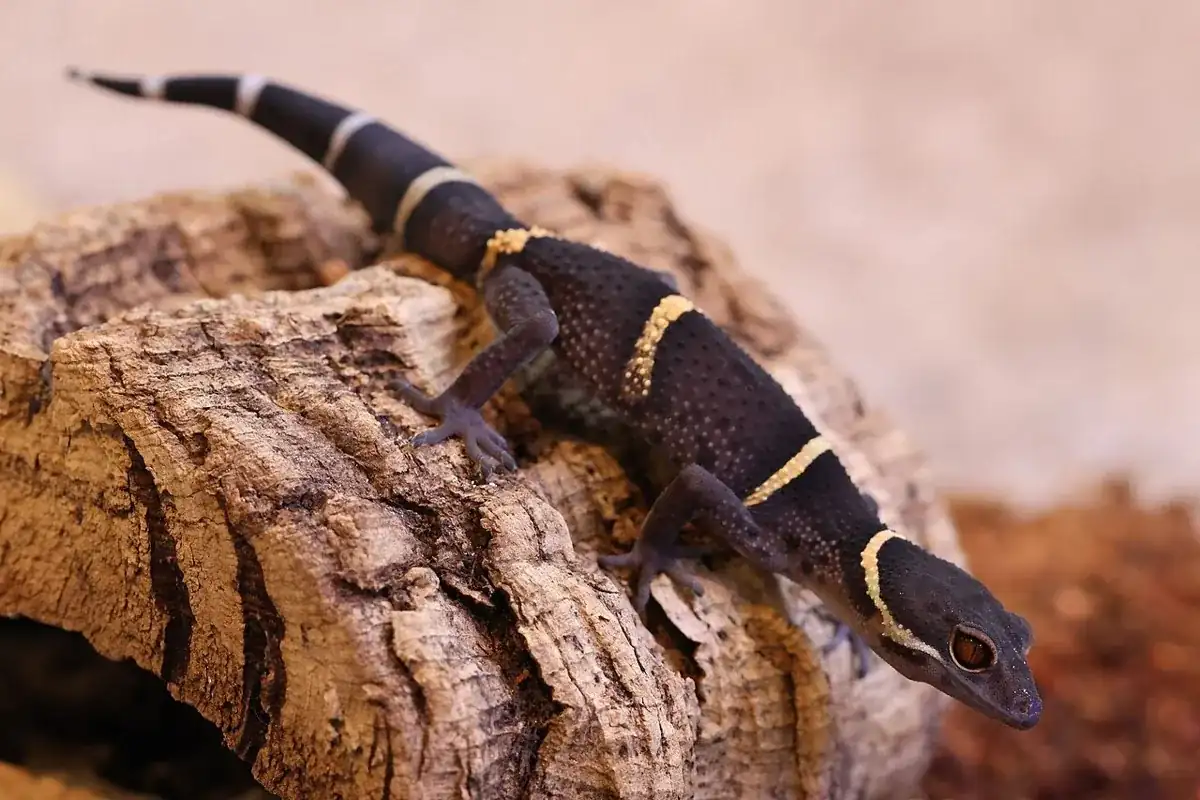
Chinese cave gecko is a trade label used for several Goniurosaurus species. This page covers G. hainanensis only. Ask for its scientific name and captive-breeding history before choosing a setup. ReptiFiles itself groups several cave geckos in one summary, which limits how precisely its numbers transfer. The species-focused Swell guide gives a 10–15-year lifespan; prepare for that scale of commitment.
A cooler, sheltered enclosure
For planning, this page chooses Swell’s more generous 90 × 60 × 60 cm adult reference, rather than the smaller enclosure in the genus-wide ReptiFiles summary. Fit one animal’s enclosure with low cork cover, secure rock refuges, leaf litter and accessible water. Keep the gecko separately so intake and body condition can be followed individually. Humidity retention must coexist with air exchange and easy access for removing waste.
Keep temperature and moisture distinct
Swell gives a warm area near 26°C and a cooler daytime area around 20–22°C, with 60–70% humidity. Place independent probes in occupied shelters and read humidity away from direct spray. ReptiFiles warns that ambient heat above 28°C creates heat-stress risk; its general cave-gecko temperature plan is warmer than Swell’s. This page follows the cooler species-focused daytime plan. Before acquiring the animal, check whether your room can remain cool in summer. Extra spraying is not a dependable cooling plan.
Light and a growing insect eater
Provide daytime light, gentle UVB and dense shaded refuges. Swell’s UVI reference is 1–2; confirm exposure at the gecko’s back and account for the actual lamp, mesh and furnishings. Do not select a bulb by percentage alone. Feed varied gut-loaded insects with a coordinated calcium and vitamin schedule. Youngsters need more frequent meals than mature animals; ReptiFiles uses daily juvenile feeding and alternate-day adult feeding. Record the previous keeper’s schedule, then adjust to measured condition rather than appetite alone.
Observation and daily care
This animal suits a keeper who enjoys quiet evening observation more than handling. The veterinary-reviewed PetMD guide stresses a cool, moist habitat and hand hygiene after contact with the animal or equipment. Keep new arrivals in separate quarantine and arrange veterinary assessment. Record hiding-site use, meals, weight and shed completion. Budget for room cooling if necessary, replacement UVB, livefood and veterinary access. If summer measurements cannot maintain the cooler refuge, postpone acquisition until that environmental problem is solved.
Observe a night-active animal without dismantling shelter
The species-focused Swell guide describes a gecko that uses rock crevices and becomes active at night. Give yourself a repeatable viewing routine: watch briefly from outside near the animal's usual active period and note where it emerges, hunts and returns to cover. A daytime photograph of an empty enclosure does not show whether its routes work. Keep at least one familiar refuge in place when cleaning and avoid moving every item together. Arrange removable cover so waste can still be reached. Use this exercise to review the layout while allowing for variation in when the gecko is active.
References: Swell Reptiles — Hainan cave gecko housing and behavior
Keep a summer cooling decision ready
ReptiFiles specifically warns about excessive ambient heat in its broader cave-gecko guidance. A useful room check is to compare occupied-refuge readings on an ordinary day with those during the warmest part of a hot spell. Record room conditions, enclosure readings and the equipment running at the time. Decide in advance where the animal could be housed temporarily if the cool refuge cannot be maintained, and test that alternative before it is needed. Adding more water can change humidity without solving overheated room air. If you change the cooling arrangement, verify the whole day-night cycle again; a single improved afternoon reading does not establish a stable habitat.
References: ReptiFiles — cave gecko heat-stress warning
Separate damp refuge care from whole-enclosure wetness
ReptiFiles recommends a humid refuge and checking its contents, while Swell emphasizes shelter across the temperature gradient. Label the retreats in your notes so you can distinguish the gecko's choices instead of reporting only that it is hiding. During servicing, check the refuge material, adjoining floor and ventilation path separately. Replace contaminated material and investigate why a shelter stays saturated rather than repeatedly spraying the entire enclosure to chase a humidity reading. Record the timing of misting beside measurements. These practical comparisons help explain how your setup behaves; the two sources do not agree on every environmental target, and the existing species-specific temperature choice should remain explicit.
References: ReptiFiles — cave gecko humidity and humid refuge · Swell Reptiles — Hainan cave gecko shelter placement
Sources & further reading
Read the full recommendations and check details for your animal, equipment, and local conditions.
- Swell Reptiles — Goniurosaurus hainanensis care
- ReptiFiles — broader cave-gecko reference and limitations
- PetMD — veterinary-reviewed cave-gecko care
Compiled September 2026. Original summaries; not individually reviewed by a veterinarian.