Independent species review: pending. Source-check date: 2026-09-05.
Report a care correction · Offer a species reviewArticle changes
- 2026-09-05 · Added original care summary, preparation checklist, commitment and cost drivers; flagged individual housing assessment.
- 2026-09-08 · Expanded practical preparation, maintenance and observation sections, with scoped sources where applicable. This update checks the new material; independent species review remains pending.
At a glance
- Adult housing
- Substantial outdoor pen or dedicated indoor accommodation, sized to the individual. ↗
- Adult basking reference
- 35–40°C (95–104°F) in the cited veterinary guide. ↗
- Winter
- Non-hibernating; fund suitable active housing year-round. ↗
- Diet
- Grass and other coarse, fibrous edible vegetation. ↗
These are source-specific planning references. Adult size, life stage, climate and measurement location matter. This guide does not certify an enclosure or supply a universal winter-care protocol.
Use this guide as a starting point alongside the detailed sources below. Health concerns, unexplained changes in behavior, or feeding problems belong with a reptile veterinarian.
Adult size and long-term housing
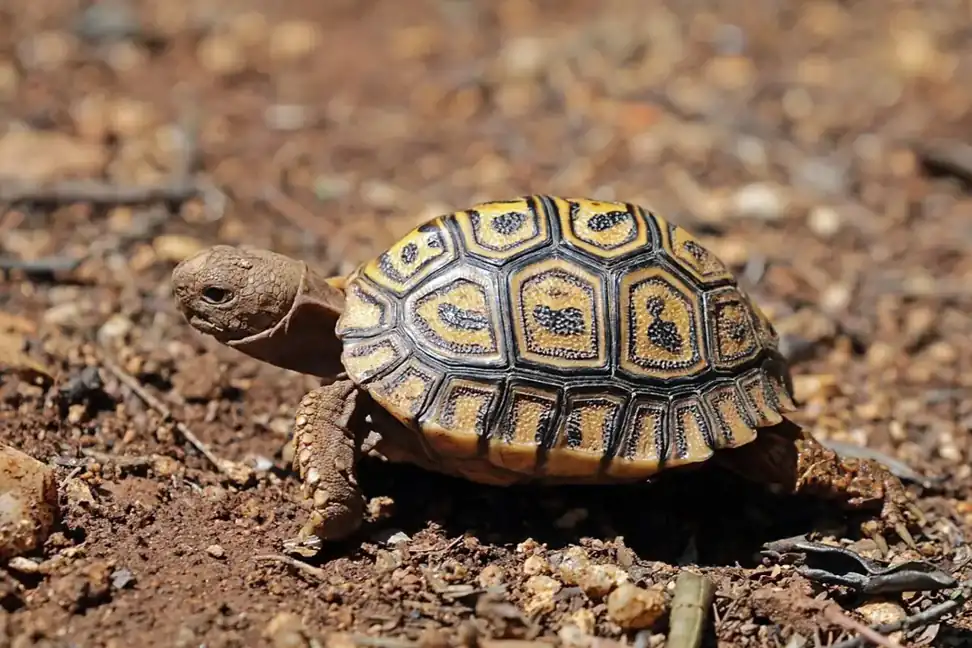
Adult size varies, and the small animal offered for sale may eventually require a dedicated room or substantial outdoor pen. This is a long-term grazing habitat project for an experienced keeper. Oregon Zoo notes that individuals may reach a century. Keep origin and growth records; neither a trade locality label nor present shell size guarantees the eventual size of the animal.
Walking space through every season
Plan broad ground-level routes around shelters, feeding sites and a shallow water dish. Use solid, securely built boundaries; furnishings must remain stable when pushed by a heavy adult. Outdoor space needs both sun and shade, drained soil and suitable protection from weather and predators. In a cold climate, the winter enclosure must permit real activity rather than functioning as a months-long storage box.
Practical heat and light
Chicago Exotics describes an adult basking reference of 35–40°C (95–104°F). Provide a broad area that can warm the whole tortoise while allowing it to move to cooler space. Measure at the occupied surface and check air in shelters. Large indoor pens may need several carefully arranged UVB fixtures. Record the actual lamp, reflector and shell clearance; check manufacturer guidance and measure UV output where possible.
Moisture needs an age-aware plan
Published recommendations disagree about juvenile humidity and enclosure methods. Do not combine a permanently dry hatchling setup with occasional soaking and assume hydration is solved. Provide drinking access, protected moisture and ventilation, and monitor the refuge as well as open air. Have the full juvenile plan reviewed before acquisition. Wet, cool bedding and a warm humid refuge are different conditions.
Plan a varied forage supply
This is a grassland grazer. Offer varied grasses, edible weeds and appropriate fibrous leaves; dried meadow hay can help bridge seasonal shortages. Tortoise Trust cautions against reliance on watery produce and fruit. Arrange calcium support with the diet and UVB plan. Track accepted forage and body weight so a growing animal receives enough suitable food without chasing rapid weight gain.
The ongoing responsibility
Leopard tortoises do not hibernate. Budget for winter heating, substantial enclosure construction, forage production and veterinary transport. A change in activity during cold weather needs a temperature and health review. Keep a new arrival separate from existing chelonians with its own tools. Daily checks should include food, water, shelter conditions and any loosened barrier or furnishing before it becomes an escape or injury problem.
Make winter forage a planned crop or supply
Tortoise Trust describes the difficulty of feeding large grazers when natural forage becomes scarce and reports using winter-grown plants and dried meadow hay. Make a seasonal inventory of suitable forage you can produce or obtain, and record how your individual accepts it before shortages occur. Store dry material where it remains clean and unspoiled, and keep unknown plants out of the food supply until identified. Include the time needed to source replacements in the ongoing budget. This is a practical supply plan, not a recommendation to copy a particular greenhouse system. Arrange winter feeding while suitable forage is still available.
References: Tortoise Trust — leopard tortoise grazing and winter feeding
Review the heated area at the grown shell's scale
The Tortoise Trust account emphasizes strong furnishings and substantial indoor and outdoor space. During growth, compare the tortoise with its basking area, shelter entrance and main turning routes. Check that fixed objects remain secure when pushed and that the whole animal can occupy a warm area without losing access to a cooler choice. Revisit measurements after raising a lamp or adding a larger shelter. Keep dated photographs of the installation so a future adviser can see how the animal's position relates to the equipment. These checks evaluate the actual enclosure; old care accounts describing another collection's heating system do not establish a safe design for your building.
References: Tortoise Trust — leopard tortoise facility and furnishings
Keep a long-term identity and handover record
Use Stigmochelys pardalis in the animal's records, the spelling given by Oregon Zoo. Retain any older names, locality claims and breeder documents as historical information, without assuming that a trade label predicts adult size. Add the accepted forage, shelter routine, transport arrangements and veterinary history to a handover file. Update it when the tortoise moves to a larger enclosure or a different home. A species for which a zoo reports possible century-long survival can outlast several ordinary household arrangements. This continuity plan should identify a capable successor and suitable housing.
References: Oregon Zoo — leopard tortoise identity and lifespan
Sources & further reading
Read the full recommendations and check details for your animal, equipment, and local conditions.
- Chicago Exotics Animal Hospital — leopard tortoise care
- Tortoise Trust — leopard tortoise diet and husbandry
- Oregon Zoo — leopard tortoise natural history and longevity
- Tortoise Trust — critical discussion of humidity advice
- Royal Veterinary College — leopard tortoise care, December 2024
Compiled September 2026. Original summaries; not individually reviewed by a veterinarian.