Independent species review: pending. Source-check date: 2026-09-05.
Report a care correction · Offer a species reviewArticle changes
- 2026-09-05 · Added species-specific planning, measurement, feeding, commitment and equipment guidance. Source disagreements remain visible.
- 2026-09-08 · Expanded practical preparation, maintenance and observation sections, with scoped sources where applicable. This update checks the new material; independent species review remains pending.
At a glance
- Adult planning reference
- 120 × 60 × 120 cm for larger mainland forms. ↗
- Basking / ambient
- 30–31°C at basking area / 22–26°C ambient. ↗
- Interaction
- Brief supported handling; temperament varies. ↗
Dimensions are adult planning references in length × depth × height. Sources differ and these summaries have not received independent species review. Read the measurement context and provide more usable space where possible.
Use this guide as a starting point alongside the detailed sources below. Health concerns, unexplained changes in behavior, or feeding problems belong with a reptile veterinarian.
Identify the adult you are planning for
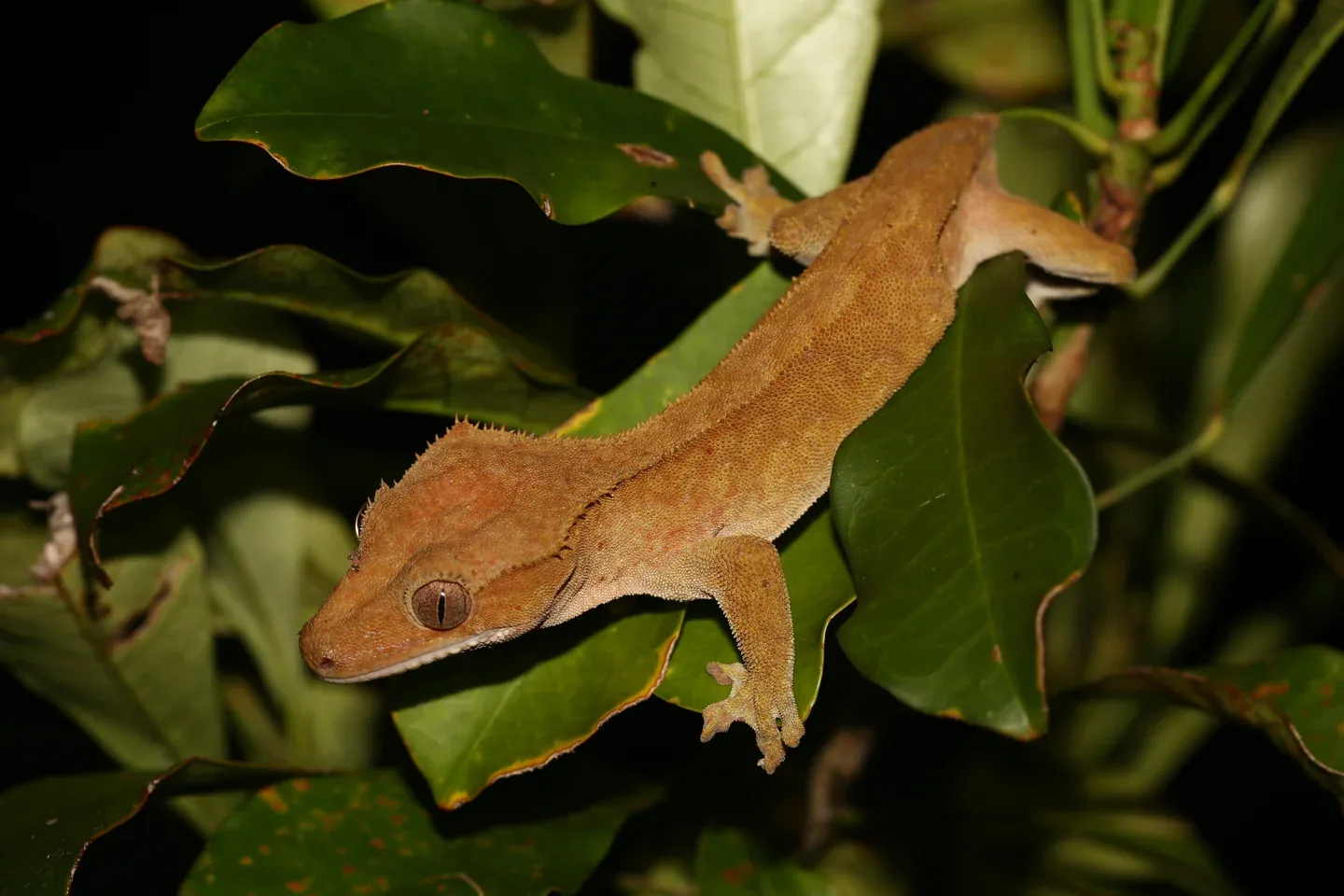
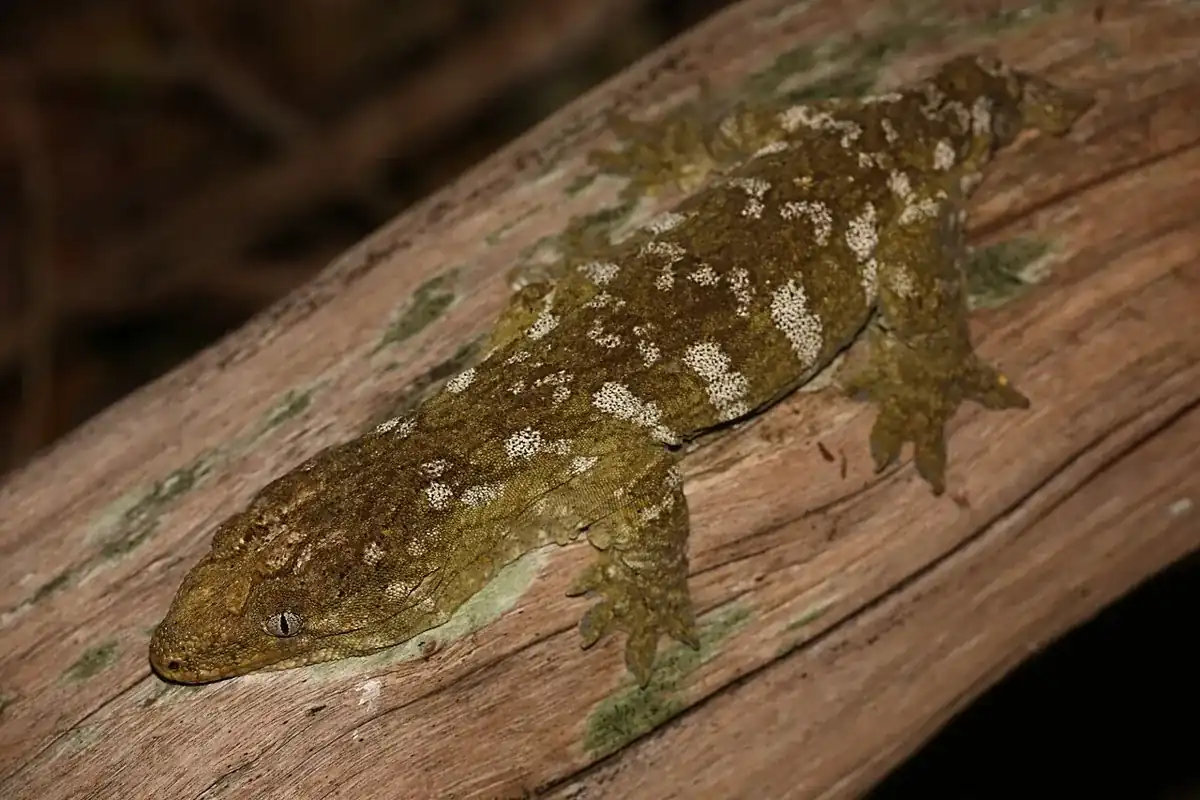
Leachianus, leachie and New Caledonian giant gecko refer to Rhacodactylus leachianus. Adult size varies substantially between lineages. Ask for parent measurements and the animal’s growth history; a young gecko’s present size can hide the eventual housing requirement. ReptiFiles gives a 20–30-year lifespan. Include an alternative caretaker in a commitment this long.
Build for weight and reach
For the larger mainland form, the ReptiFiles reference is 120 × 60 × 120 cm. The source gives a smaller reference for island forms, but this finder uses the larger option until the individual’s needs are established. Support substantial horizontal and diagonal branches mechanically, with large cork retreats. Keep one animal. Breeder Foster Reves describes pairs becoming incompatible after years together, so apparent tolerance does not remove separation risk.
Warmth without a hot enclosure
ReptiFiles provides a 30–31°C basking area, 22–26°C ambient air and 19–22°C nights. These are distinct measurement locations. Put probes at the occupied warm perch and shaded retreat, and control heat with suitable equipment. Provide daytime UVB and deep shade. Swell also specifies a basking UVI of 2–3 and humidity of 60–80%; its temperature recommendations differ, so keep the complete chosen reference with your readings. The whole habitat must not stay hot and wet.
Feeding and body condition
Use a complete commercial gecko diet with appropriately sized, gut-loaded insects. Reves reports that juveniles may accept insects later than expected and individuals vary; obtain the established menu before arrival rather than insisting on a sudden conversion. Younger growing animals require a different feeding rhythm from mature adults. Fresh water belongs in a stable dish. Check frequently for contamination because a large gecko can foul a cup quickly. Log actual consumption and compare weights before increasing portions.
Interaction and realistic running costs
Swell highlights delicate loose skin; Reves notes that handling tolerance varies and a bite can lacerate skin. Keep interaction short, support the animal and return it when distressed. Arrange a transport container before an emergency. The large enclosure, robust furniture, replacement lamps, prepared food and veterinary access drive the resource tier. Budget for them alongside the purchase price. Quarantine separately on arrival, recording the first reliable meals and waste. In the notebook, retain maintenance notes about loose fixtures and cleaning access so a beautiful canopy remains usable as the gecko gains weight.
Design cleaning access around occupied hides
Foster Reves reports that his leachianus geckos soil glass and furnishings throughout their enclosures, creating substantial cleaning work. Before installing a permanent background, reach every wall, the underside of feeding ledges and the area beneath each retreat. A practical design lets you remove a dirty component without dismantling the whole canopy. Keep a spare washable food ledge or container so cleaning does not eliminate access to a meal or water. Write down which panels and furnishings can be removed safely, and where the gecko is likely to shelter during servicing. This turns the source's maintenance observation into a useful commissioning check for your particular enclosure.
References: Foster Reves — leachianus enclosure maintenance
Choose supports that remain useful at adult size
The same breeder describes stabilized heavy wood, substantial hides and a choice between dry and moister shelter. Translate that into a furniture inventory with each item's purpose: resting, crossing, hiding or reaching food. Check that a large adult can enter, turn and rest without becoming wedged. Avoid a layout in which every route depends on one small suction fitting. When replacing a hide, install the new option before removing a familiar one if space allows. Record the change and subsequent shelter use. Preserve the animal's shelter choices while furnishings are serviced.
References: Foster Reves — leachianus hides and stabilized furnishings
Make individual history useful to the next keeper
A locality label cannot tell a future caretaker how this particular gecko eats, moves or responds to maintenance. Create a short handover page with current body measurements, accepted prepared-food formulas, insect acceptance, usual sleeping sites and the exact positions of temperature probes. Add photographs of the occupied enclosure and the secure transport container. Record a calm transfer method agreed with the breeder or veterinarian; do not improvise a grab when an appointment is already urgent. Review the page after an enclosure upgrade. These are original continuity suggestions, especially valuable for a heavy-bodied gecko whose reported captive lifespan extends across many changes of home and caretaker.
References: ReptiFiles — leachie identity and long-term care
Sources & further reading
Read the full recommendations and check details for your animal, equipment, and local conditions.
- ReptiFiles — leachianus housing and lifespan
- Foster Reves — direct keeping and breeding experience
- Swell Reptiles — leachianus care
Compiled September 2026. Original summaries; not individually reviewed by a veterinarian.