Independent species review: pending. Source-check date: 2026-09-05.
Report a care correction · Offer a species reviewArticle changes
- 2026-09-05 · Added scoped introduction, preparation checklist, source limits and manual housing assessment.
- 2026-09-08 · Expanded practical preparation, maintenance and observation sections, with scoped sources where applicable. This update checks the new material; independent species review remains pending.
At a glance
- Scope
- Nephrurus group introduction; identify the species first. ↗
- Moisture
- Requirements differ between smooth and rough-skinned species. ↗
- Housing assessment
- No universal dimensions or climate protocol provided. ↗
This introduction identifies its scope and source limitations. A specialist must assess the actual adult animal and finished enclosure; these references do not certify a setup.
Use this guide as a starting point alongside the detailed sources below. Health concerns, unexplained changes in behavior, or feeding problems belong with a reptile veterinarian.
Which knob-tail?
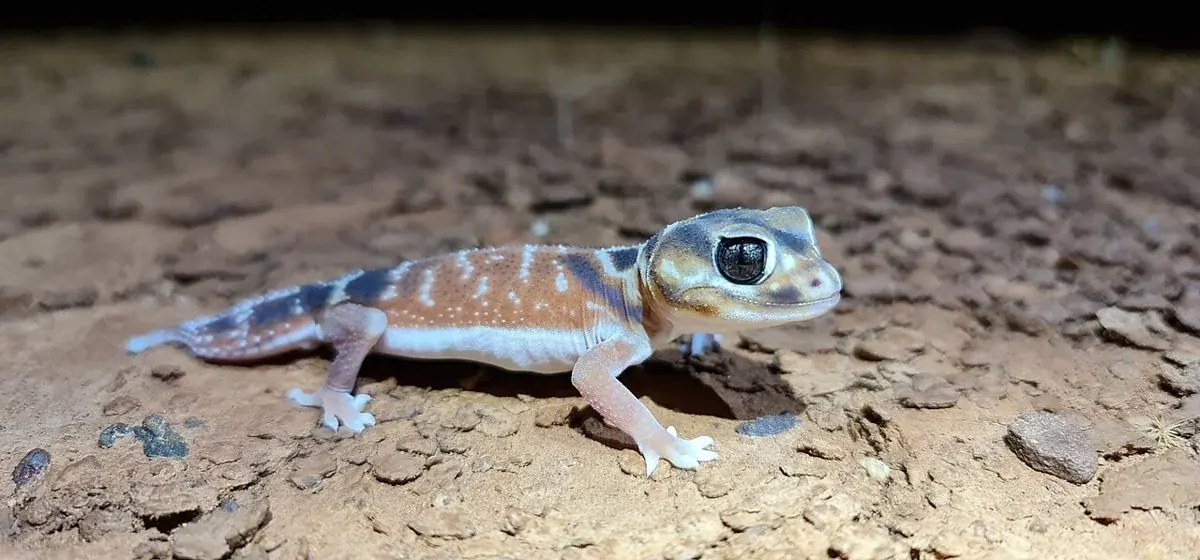
Knob-tailed gecko describes multiple Australian Nephrurus species. This is a group introduction, not a shared care recipe. The university DigiMorph account describes the characteristic tail tip and terrestrial habitats; breeder Steve Sykes distinguishes smaller smooth species from the larger N. amyae. Record the full scientific name and locality supplied by the breeder. Older care pages also use names and species counts that may no longer reflect current taxonomy.
Species differences change the setup
Sykes describes N. levis and N. deleani excavating burrows in slightly moist sand, while N. amyae and N. wheeleri use and close sheltered retreats differently. His watering advice distinguishes smooth from rough-skinned species. Consequently, a generic desert tank label cannot establish the right moisture provision. Good Life Herps’ N. levis account provides warm and cool shelters with moisture retained locally, while avoiding a soaked enclosure. Keep animals individually and obtain a current plan for the identified species.
Measure before arrival
An appropriate enclosure must fit hiding, movement and the species’ digging behaviour while maintaining a usable temperature gradient. This group page intentionally supplies no universal minimum dimensions, heat setting or UVI target. Agree those details before buying equipment. Install independent temperature probes at occupied shelters and measure UVB at the animal’s reachable height when provided. Keep the equipment list and chosen source together so later lamp or substrate changes can be checked against the same plan.
Food and everyday observation
These are primarily insect-eating geckos. Sykes recommends well-nourished, appropriately supplemented prey; ask the breeder for juvenile and adult schedules rather than applying one feeding interval to the entire group. Good Life Herps describes N. levis as skittish, making observation more suitable than frequent handling. Track meals eaten, shed completion and weight without repeatedly uncovering a resting animal. Quarantine new arrivals separately and arrange an experienced reptile-vet assessment.
Commitment and resource planning
Sykes reports knob-tails living beyond ten years but notes incomplete longevity information. Budget for species-appropriate housing, livefood, monitoring equipment and veterinary care. A keeper’s first milestone is an identified animal with a documented setup and feeding plan. Until then, the finder cannot responsibly confirm a match.
Choose the species before choosing the moisture method
Steve Sykes describes differences among knob-tails in burrowing and use of moist material around shelter. Keep the exact scientific name on the care plan and ask the breeder which observations concern that species, life stage and locality. Record how moisture is maintained in the occupied retreat, not just how often the enclosure is sprayed. Preserve the chosen method when the animal moves, then have any proposed change reviewed alongside heat and ventilation. The group page cannot resolve those choices, and the source's older blanket statements about lighting or water provision should not be treated as a complete contemporary prescription.
References: Steve Sykes — differences among knob-tailed geckos
Make burrow observation possible without destroying it
Sykes reports that some species excavate tunnels while others close retreat entrances with substrate. Treat those structures as part of the animal's habitat, not clutter to flatten whenever you look inside. Note changed entrances, surface tracks, waste and food acceptance from outside where practical. Plan how necessary cleaning can occur while retaining familiar cover elsewhere. If health is uncertain, those observations belong with a professional assessment; they do not prove that a hidden animal is well. This practical observation method helps preserve the behaviors described by the breeder while maintaining useful records, without specifying a universal sand depth or assuming identical habits across Nephrurus.
References: Steve Sykes — knob-tail burrow and shelter behavior
Require a complete individual handover
Before arrival, obtain the gecko's established insect types and sizes, actual feeding frequency, supplement products, previous environmental readings and comparable weight history. Keep the receiving enclosure separate and ready, with secure service access and a transport container suitable for necessary veterinary visits. Identify a backup source for the small feeders used by the individual rather than assuming that food sold for larger geckos will be suitable. Use the handover record to identify missing care information before purchase. It still requires review by an experienced keeper.
References: Steve Sykes — knob-tail insect feeding and individual keeping
Sources & further reading
Read the full recommendations and check details for your animal, equipment, and local conditions.
- Steve Sykes — firsthand knob-tailed gecko husbandry
- Good Life Herps — N. levis keeping experience
- University of Texas DigiMorph — Nephrurus anatomy and habitat
Compiled September 2026. Original summaries; not individually reviewed by a veterinarian.