Independent species review: pending. Source-check date: 2026-09-05.
Report a care correction · Offer a species reviewArticle changes
- 2026-09-05 · Added species-specific planning, measurement, feeding, commitment and equipment guidance. Source disagreements remain visible.
- 2026-09-08 · Expanded practical preparation, maintenance and observation sections, with scoped sources where applicable. This update checks the new material; independent species review remains pending.
At a glance
- Adult reference
- 60 × 60 × 120 cm or larger. ↗
- Basking / cool zone
- 29–32°C / 25–28°C. ↗
- Interaction
- Observe; avoid grabbing delicate skin. ↗
Dimensions are adult planning references in length × depth × height. Sources differ and these summaries have not received independent species review. Read the measurement context and provide more usable space where possible.
Use this guide as a starting point alongside the detailed sources below. Health concerns, unexplained changes in behavior, or feeding problems belong with a reptile veterinarian.
Know which day gecko
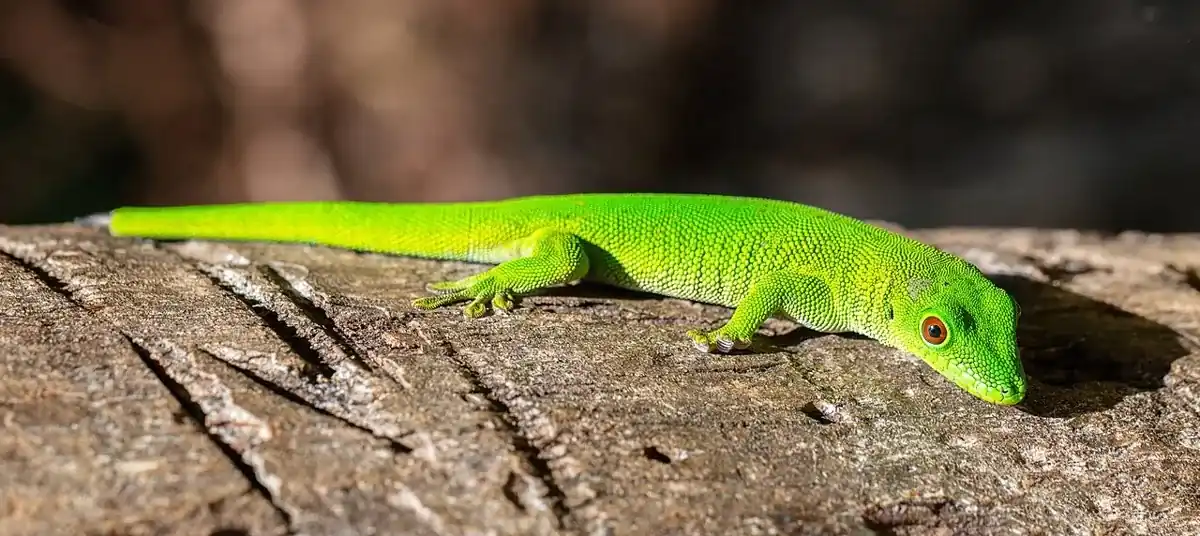
This guide covers Phelsuma grandis. Dublin Zoo distinguishes it from the Madagascar day gecko, of which it was previously considered a subspecies. It is active by day, climbing and basking among vegetation. ReptiFiles gives a 15–20-year lifespan; Smithsonian reports up to fifteen years in zoos. Plan for the longer possibility and keep the provenance record with the animal’s profile.
Tall housing and maintenance access
ReptiFiles uses 60 × 60 × 120 cm as an adult starting point, with more space encouraged. Keep one animal. Dublin Zoo describes the species as solitary, and Phelsuma Farm warns that incompatible animals can injure each other. Provide secure vertical and diagonal travel routes, broad resting surfaces and dense foliage. Inspect door tracks before moving the glass. Young geckos can exploit gaps that appear harmless for adults, so a future grow-out enclosure requires its own escape check.
A bright canopy with genuine shade
The linked species plan provides a 29–32°C basking area, a 25–28°C cool zone and 23–25°C nights. Secure temperature probes at occupied perches and protect the animal from hot fixtures. Provide daytime UVB alongside bright visible light; ReptiFiles uses UVI 3–4 at the basking location. Measure the installed lamp at the gecko’s back height and retain densely shaded alternatives. Average humidity spans roughly 40–75%, with higher readings after misting and at night. Ventilation must allow surfaces to dry.
Feeding through growth
Phelsuma Farm emphasises small daily insect meals for babies and suggests twice-weekly crickets for many adults, while warning against treating sugary fruit products as the whole diet. Offer a complete gecko diet alongside varied insects and adjust the frequency with growth and body condition. Gut-load and supplement insect prey in a plan compatible with UVB and the chosen diet. Maintain accessible clean water and misting droplets. Keep a record of what was eaten so an attractive planted habitat does not conceal a decline in intake.
A display keeper’s daily practice
Handling is limited by delicate skin and speed. Phelsuma Farm advises against routine handling; never grab a gecko that is trying to leave. Prepare a secure transfer container for necessary moves. Quarantine new arrivals apart from other reptiles and arrange a health check. The substantial costs are tall housing, bright lighting, UVB replacement, livefood and veterinary care. Daily observation becomes useful when you note perch choice, feeding response and changes to plants that alter shade or lamp distance.
Use daytime activity to assess the habitat
Smithsonian describes day geckos resting and basking on relatively smooth surfaces. Watch how yours uses those surfaces across the day: the first occupied perch, later shade, routes to food and the place it chooses to rest. Keep a dated sketch of perch use throughout the day. If one area is never used, check its access, cover and measured conditions. Keep observations comparable after pruning plants or replacing branches. Perch choice alone cannot diagnose a health problem or prove that UVB exposure is correct.
References: Smithsonian — Madagascar giant day gecko activity
Service a planted canopy without creating an exit
Adhesive toe structures allow this gecko to use smooth vertical surfaces, so the door and nearby glass are part of its accessible habitat. Before opening, locate the animal and prepare the cups or tools you need. Open only the service area necessary, with the surrounding room secured against an accidental escape. Check behind removable containers before taking them out. After plant growth or pruning, review whether new stems let the gecko approach lamps more closely, and whether feeding locations remain accessible. These are practical applications of its climbing ability. They also make routine work less disruptive than searching through every leaf after the door is already open.
References: Smithsonian — Madagascar giant day gecko climbing anatomy
Separate a natural-history diet from a complete feeding plan
Smithsonian's account mentions wild arthropods, occasional sweet foods and its own zoo feeding routine. Those observations are useful context, but they are not a recipe for making a nutritionally complete home diet from honey and fruit. Keep the complete prepared food named in your feeding plan, and track insect offerings separately so an empty fruit cup does not stand for the whole week's nutrition. If the gecko consistently rejects one part of the established menu, record actual intake and consult the breeder or reptile veterinarian before replacing it with favored treats. A short food log can also show whether a ledge change, rather than a new ingredient, altered feeding.
References: Smithsonian — Madagascar giant day gecko feeding account
Sources & further reading
Read the full recommendations and check details for your animal, equipment, and local conditions.
- ReptiFiles — Phelsuma grandis husbandry and lifespan
- Dublin Zoo — species identity and solitary behaviour
- Phelsuma Farm — first-hand day-gecko husbandry
- Smithsonian — giant day gecko natural history
Compiled September 2026. Original summaries; not individually reviewed by a veterinarian.