Independent species review: pending. Source-check date: 2026-09-05.
Report a care correction · Offer a species reviewArticle changes
- 2026-09-05 · Added an original scoped planning introduction with source caveats, preparation checklist and individual housing assessment. Numerical environmental settings remain subject to specialist review.
- 2026-09-08 · Expanded practical preparation, maintenance and observation sections, with scoped sources where applicable. This update checks the new material; independent species review remains pending.
At a glance
- Exact scope
- Black roughneck, V. rudicollis; excludes V. dumerilii care. ↗
- Habitat use
- Provide elevated shelter and usable ground-level routes. ↗
- Food planning
- Maintain varied insect availability; review additions as the animal grows. ↗
Scope is V. rudicollis. Direct keeper reports are useful observations, with variable and sometimes dated equipment advice; numerical settings require fresh specialist review. Independent species review pending.
Use this guide as a starting point alongside the detailed sources below. Health concerns, unexplained changes in behavior, or feeding problems belong with a reptile veterinarian.
One trade label, different animals
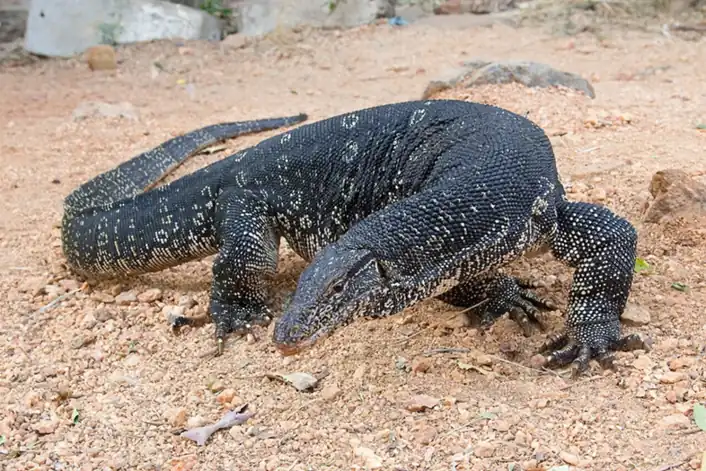
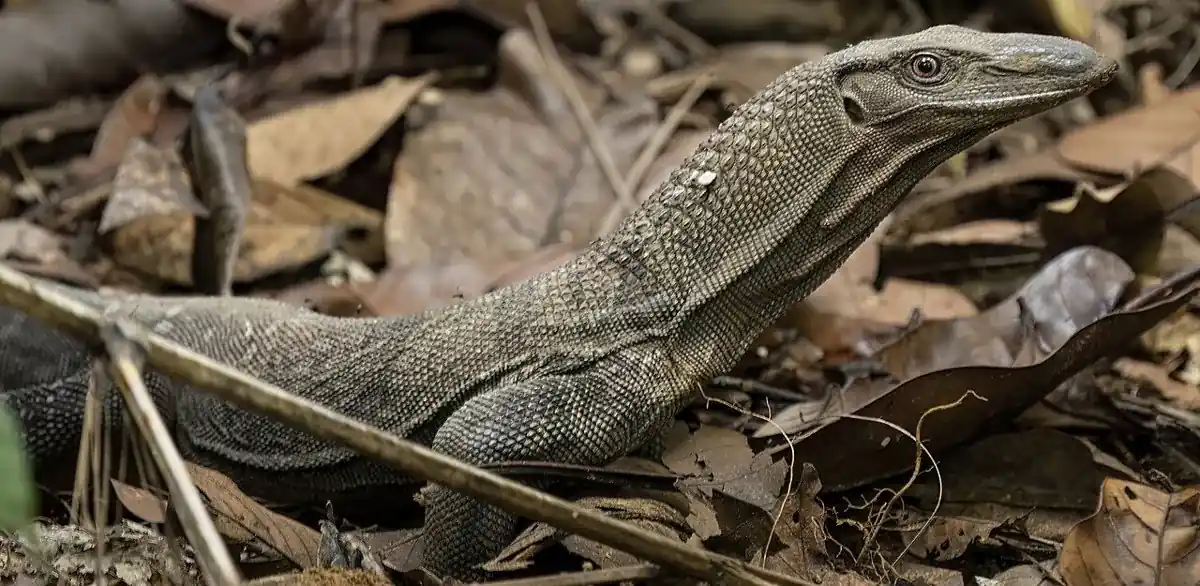
This introduction covers the black roughneck, Varanus rudicollis. Brown roughneck or Dumeril’s monitor refers to Varanus dumerilii. LLLReptile distinguishes their feeding ecology, so a crab-focused Dumeril’s plan should not automatically be assigned to a black roughneck. Record the scientific identity before interpreting a seller’s care advice or ordering the permanent enclosure.
Provide both height and usable ground
The firsthand ReptileTalk account describes movement between elevated positions and ground-level foraging. Plan connected branches, climbable surfaces and sheltered resting options at different levels. Floor space remains useful. Specify attachment points before adding heavy décor, and show how a hidden animal can be checked without routinely taking the entire habitat apart.
Manage humidity and water as maintenance
Provide a soaking opportunity and a practical cleaning route; the keeper account reports frequent defecation in water. Moisture-retaining substrate brings its own monitoring workload. Check drainage and ventilation together and note how quickly different areas change after watering. A single humidity display cannot tell you whether every retreat is suitable or whether drinking is occurring.
Review the heat and light installation
Published keeper sheets differ and include older equipment advice. This introduction therefore does not adopt their numerical temperatures, lamp choices or enclosure minima. Prepare a species-specific plan with an experienced keeper, label occupied basking and refuge locations, and measure surface and air conditions separately. Confirm that equipment remains inaccessible from the completed climbing network.
Keep an insect supply through growth
LLLReptile describes black roughnecks as primarily insect-oriented; the ReptileTalk keeper adds other appropriate whole prey as animals grow. Plan varied feeders, their nutrition and a reviewed supplement routine. Record intake individually. Food refusal needs context from weight, behavior and enclosure records, rather than being answered automatically by increasingly rich or larger meals.
A quiet display still needs active care
Secretive behavior should influence expectations: provide cover and let observation guide interaction. LLLReptile warns that social dominance can suppress feeding, supporting individual housing as the practical starting point here. Budget for a large furnished enclosure, recurring feeders and experienced veterinary support. Independent species review is pending, and this page does not provide complete care for every animal labeled roughneck.
Review the day across more than one height
The ReptileTalk keeper describes roughnecks using elevated positions and ground-level foraging at different parts of the day. Make an observation sketch that marks both, including a covered route between them. Record the animal's location during quiet checks instead of repeatedly lifting a hide to establish presence. If one level is never used, review access, cover and measured conditions before changing the whole habitat. Use these observations to assess movement between levels. The source describes one keeper's experience and does not establish a universal timetable.
References: ReptileTalk — firsthand black roughneck habitat use
Treat water changes and substrate care as separate jobs
The same account reports frequent defecation in the water container and uses moisture-retaining substrate. Check the basin, surrounding floor and concealed drainage separately so a clean-looking pool does not hide a saturated patch beneath it. Mark removable parts on the enclosure drawing and keep a spare container if that allows uninterrupted water access during cleaning. Remove visible waste and food regardless of whether the floor is planted or contains cleanup organisms. A bioactive label does not measure how well this individual enclosure processes its waste, and a running mister does not show that every refuge has suitable moisture.
References: ReptileTalk — roughneck water and substrate management
Keep the black-roughneck plan separate from Dumeril's advice
Create a care folder labeled Varanus rudicollis, with the animal's provenance, identification and established food history. When a new reference uses only roughneck, confirm which species it addresses before adopting anything. Attach any proposed environmental value to its measurement location and source date, then have the whole plan reviewed for the actual enclosure. The articles here include older equipment guidance and differing husbandry judgments, so a familiar lamp brand or confident breeder tone should not stand in for verification. Complete the plan for the identified animal and record unresolved items before acquisition.
References: ReptileTalk — Varanus rudicollis care account
Sources & further reading
Read the full recommendations and check details for your animal, equipment, and local conditions.
- LLLReptile — roughneck identification and keeper guidance
- ReptileTalk — direct V. rudicollis husbandry account
- The Reptile Database — Varanus rudicollis identification
Compiled September 2026. Original summaries; not individually reviewed by a veterinarian.