Independent species review: pending. Source-check date: 2026-09-05.
Report a care correction · Offer a species reviewArticle changes
- 2026-09-05 · Added visible editorial status and correction reporting.
- 2026-09-05 · Added lifetime planning, cost drivers, lighting measurement and arrival considerations.
- 2026-09-05 · Clarified the specialist animal-prey diet in the finder.
At a glance
- Adult enclosure starting point
- Dedicated room-scale enclosure with climbing structure and a pool sized to the adult individual. ↗
- Water access
- Pool large enough for full submersion; protect filter suction points and provide easy exits. ↗
- Humidity reference
- 60–70% in the cited keeper’s plan, with ventilation and clean resting areas. ↗
- Diet
- Insect-rich juvenile diet, progressing to varied whole prey as the monitor grows. ↗
Enclosure dimensions are adult planning references in length × width × height unless stated otherwise. Larger individuals need larger housing, and usable furnishing space matters. Check the linked source and the full guide for age, subspecies and measurement details.
Use this guide as a starting point alongside the detailed sources below. Health concerns, unexplained changes in behavior, or feeding problems belong with a reptile veterinarian.
Meet the species
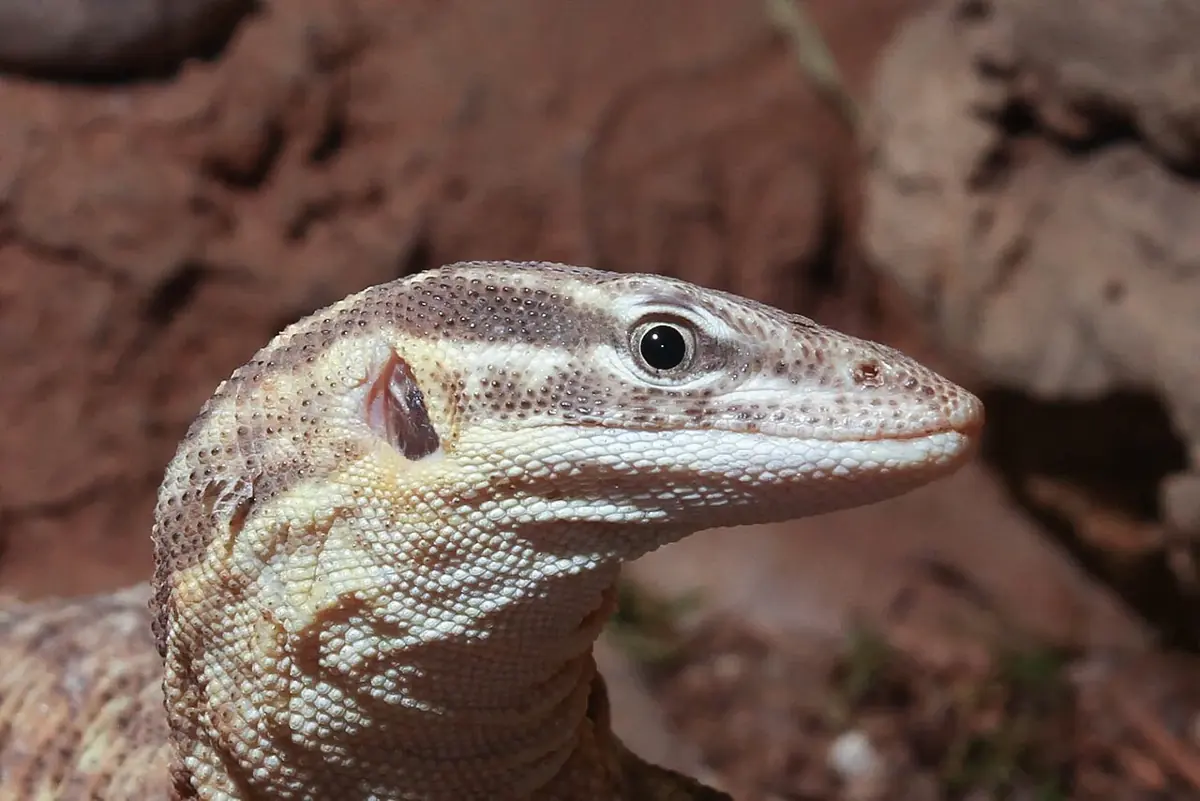
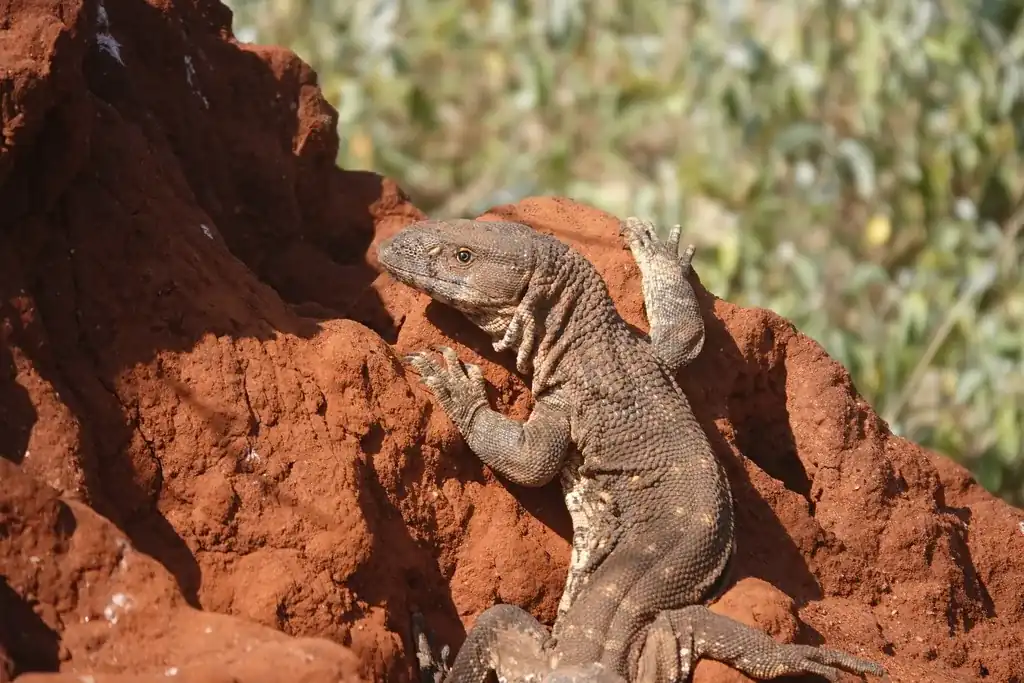
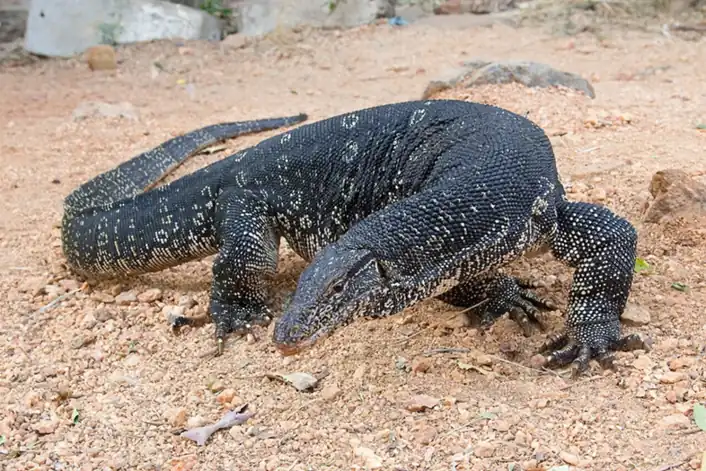
Asian water monitors are large tropical predators and scavengers with aquatic and climbing abilities. Housing must accommodate those behaviors, and experienced keepers need to plan adult housing, ongoing running costs, transport and veterinary support before acquisition.
Housing
Plan dedicated, room-scale accommodation around the adult individual. Supply strong climbing structures, hiding areas and usable ground space. The pool must permit full submersion, with straightforward entry and exit. Engineer drainage and maintenance access from the beginning; a pool that is difficult to empty will be difficult to keep clean.
Heat and light
Provide a broad basking zone that warms the whole animal, alongside cooler retreat space. Measure surface and air temperatures separately. Heating and UVB design for such a large enclosure should be checked with an experienced monitor keeper or reptile vet. Secure lamps and electrical fittings beyond the animal’s reach.
Humidity and water
Maintain tropical humidity with effective ventilation. Refresh polluted pool water promptly and use appropriate filtration. Protect all suction points against entrapment. A large water area does not excuse stale air or permanently soiled resting surfaces.
Food and routine
Juveniles use insect-rich diets; larger animals need an appropriately varied whole-prey plan. Adjust intake to growth and body condition because opportunistic feeding can become obesity. Use predictable routines and protected feeding tools. Remove waste and inspect furnishings, doors and water equipment every day.
Avoid
Avoid buying a hatchling before funding adult housing, relying on a tank-size formula, forcing social contact or assuming a calm animal is harmless. Build a care and emergency plan with experienced support.
Plan for adult growth before acquiring a hatchling
Fast growth can make a small enclosure temporary within months. Establish the funded adult accommodation, transport arrangements and experienced support before acquisition. Juvenile furnishings must offer cover and safe climbing without openings that trap a limb or head. As the monitor grows, inspect every branch fixing, panel joint and pool exit again.
Adults are both swimmers and climbers, so the enclosure must provide usable space in water, on land and above ground. This guide does not give universal minimum enclosure dimensions. A specialist should review the individual’s likely size, turning room, pool dimensions, heating coverage and safe keeper access. Photograph the empty installation and retain its measurements to make later changes easier to assess.
An age-aware whole-prey plan
Keeper-authored guidance describes hatchling meals daily or every other day, yearlings roughly three or four times weekly, and fully grown adults commonly two or three times weekly. These are starting intervals rather than feeding targets. Meal size, growth, exercise and body condition determine the actual schedule; an eager feeding response can continue after energy needs are met.
Youngsters use many appropriately sized insects. Growing animals progress to a varied whole-prey plan that may include suitable rodents, fish and poultry. Plain muscle meat is not equivalent to whole prey. Work with an experienced reptile vet on the composition and supplements. Log meal weights and body condition, and review trends before increasing portions. Use protected feeding equipment and a consistent routine.
Cooperation, shedding and enrichment
Build predictable, short interactions that allow the animal to choose distance. An experienced keeper can teach a consistent cue for moving to a safe area, making routine maintenance less disruptive. Do not interpret tolerance of one person as permission for visitors to handle the animal. Necessary transfers need a planned route and appropriate containment.
Offer opportunities to investigate, climb and swim, maintaining familiar retreat areas when changing furnishings. Observe shedding from outside and check that rubbing surfaces, humidity and clean water remain available. Do not restrain a large monitor to pull skin. Persistent retained material, wounds or changed movement should be assessed by a reptile vet.
Three setup problems to investigate
The pool becomes dirty immediately: note waste events, filter flow and the time required to drain and refill. Inspect accessible waste traps and cleaning access. Improve the maintenance design with specialist help; clear-looking water and powerful suction are not proof of a safe system.
The animal cannot warm its whole body evenly: map the basking surface across the occupied area and measure cooler retreats. Have lamp spacing, guards and control reviewed instead of concentrating more heat in one small spot.
Doors or climbing structures loosen: stop using the compromised area and secure the animal elsewhere before repairs. Check load-bearing attachments, hinges and locks as a system. Keep dated inspection notes so repeated movement at the same joint prompts redesign rather than repeated tightening.
Lifetime commitment and costs
Keeper Joshua Ortiz reports at least 15 and potentially 20+ captive years. The 2022 bioprofile reviews shorter historical records, including 10 years 8 months; these are documented observations rather than a current maximum. The longer figure is a keeper estimate, not a measured population average.
Obtain a specialist adult-housing plan before acquisition: structural space, robust climbing furniture, service access and an easily cleaned water system dominate the project.
Large food requirements, water changes or filtration, substantial heating and a veterinarian able to examine and transport a large monitor remain ongoing costs.
References: Joshua Ortiz — Asian water monitor breeding and care · Briggs-Gonzalez et al. 2022 — Asian water monitor bioprofile
Measure the lighting installation
A large monitor needs a broad usable basking area, so evaluate heat coverage across the body rather than one hot point. Have a specialist review the complete heat and UV installation; a generic floor plan does not certify monitor housing.
References: Joshua Ortiz — Asian water monitor breeding and care
Arrival and quarantine planning
Confirm the origin and individual size, and prepare a separate enclosure and dedicated water equipment that can safely contain the animal throughout quarantine.
Prepare a separate species-appropriate arrival enclosure and dedicated equipment. Agree observation, screening and release criteria with a reptile veterinarian. Keep the animal’s identity, origin, baseline condition and care history together.
References: The Unusual Pet Vets — reptile quarantine · VCA Animal Hospitals — the new reptile visit
Sources & further reading
Read the full recommendations and check details for your animal, equipment, and local conditions.
- Reptiles Magazine — keeper-authored Asian water monitor husbandry
- Briggs-Gonzalez et al. — species bioprofile
- Jade Reptiles — hatchling water monitor care
- Columbus Zoo — water monitor swimming and climbing behavior
- The Unusual Pet Vets — reptile quarantine
- VCA Animal Hospitals — the new reptile visit
Compiled September 2026. Original summaries; not individually reviewed by a veterinarian.