Independent species review: pending. Source-check date: 2026-09-05.
Report a care correction · Offer a species reviewArticle changes
- 2026-09-05 · Added an original scoped planning introduction with source caveats, preparation checklist and individual housing assessment. Numerical environmental settings remain subject to specialist review.
- 2026-09-08 · Expanded practical preparation, maintenance and observation sections, with scoped sources where applicable. This update checks the new material; independent species review remains pending.
At a glance
- Activity
- Day-active forager with strong swimming and climbing abilities. ↗
- Water maintenance
- Plan frequent cleaning of water used for defecation. ↗
- Adult enclosure
- Room-scale housing needs individual review. ↗
Planning introduction rather than a validated heating or enclosure recipe. The zoo lifespan reference describes wild animals and is not used as a captive lifespan limit. Independent species review pending.
Use this guide as a starting point alongside the detailed sources below. Health concerns, unexplained changes in behavior, or feeding problems belong with a reptile veterinarian.
Judge the adult rather than the hatchling
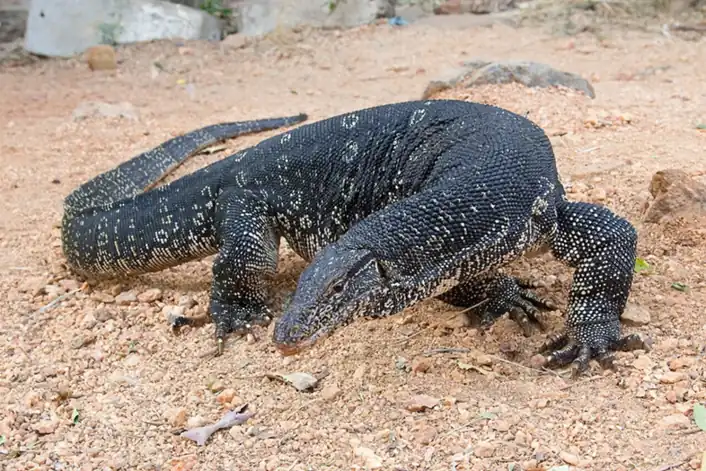
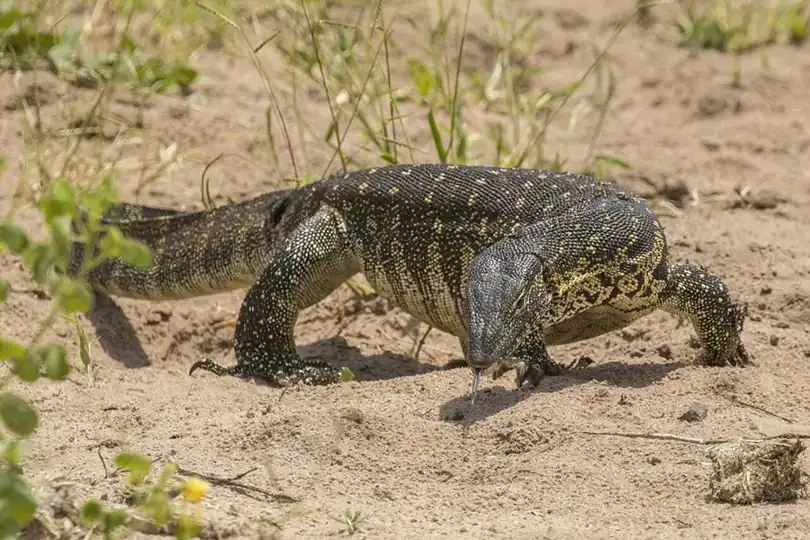
Reptilia identifies Varanus niloticus as a large, active African monitor associated with water. It uses its jaws, claws and tail defensively when threatened. A small juvenile does not predict easy adult handling. This introduction is tailored to experienced keepers assessing a dedicated facility and assumes routine observation rather than a pet that must tolerate being carried.
Housing has three connected jobs
Chicago Exotics calls for adult room-scale housing. Ken Foose also emphasizes swimming, soaking and elevated furnishings. Draw open ground for movement, supported climbing routes and a water area the animal can enter and leave easily. Add refuges that conceal the whole monitor. Deep diggable substrate creates another maintenance requirement; the habitat needs a workable cleaning route after it is furnished.
Make water servicing repeatable
The veterinary care source notes that monitors commonly foul their water. Design drainage, refilling and basin access around that recurring task. A large water installation that is difficult to clean will soon become an ownership problem. Check doors, fittings and service penetrations after every change to the layout, and keep a separate secure holding arrangement available.
Use measurements to check the plan
Nile monitors bask, forage, climb and swim, so one reading on an enclosure wall cannot describe their choices. Have the heat and UVB installation assessed for the actual geometry. Label air and surface measurements separately and include retreats in the log. Numeric settings are intentionally unresolved here pending specialist review of the individual and proposed facility.
Feed through growth without overfeeding
Foose’s keeper overview distinguishes insects and small prey for youngsters from a wider animal-food menu as they grow. Arrange reliable feeders and an appropriate supplement plan with your veterinarian. Record portions and body condition; constant willingness to eat does not establish nutritional need. Keep food preparation equipment distinct from household use and include freezer capacity in the budget.
Plan long-term adult care
Cleaning, substrate replacement and water service continue long after initial construction. Confirm a veterinarian and transport arrangement suited to an adult, and find a substitute keeper who understands the barriers and feeding routine. Reptilia’s stated lifespan is explicitly a wild estimate, so it is not presented here as a captive limit. Independent species review is pending.
Test the water-service route at adult scale
Chicago Exotics describes complete-immersion water containers and frequent defecation in them. Draw the path for dirty water and cleaning equipment before installing a permanent basin. Rehearse reaching the drain, cleaning the far edge and replacing water with the monitor securely elsewhere. Include the space needed for the keeper to work without leaning into an occupied retreat or leaving the exterior door open. Check the route again when a larger basin replaces the juvenile container. These service checks follow from the source's observations. A large pool adds a recurring job as well as an animal resource, and its maintenance must remain workable after the rest of the enclosure is furnished.
References: Chicago Exotics — Nile monitor water and adult housing
Make growth visible before a doorway becomes too small
The veterinary account emphasizes the rapid change from a small juvenile to an adult requiring a room-scale facility. Keep dated body measurements with photographs of the hide entrance, main turn and transfer route. Review whether the animal can occupy cover completely and use the water exit without twisting around obstacles. Assess the transport arrangement during that same review; a carrier may become unsuitable before the owner notices that ordinary handling has become difficult. Use these growth records to help the facility reviewer assess when a planned upgrade must be completed. The checks do not establish enclosure dimensions.
References: Chicago Exotics — Nile monitor growth and full-body shelter
Keep feeding and keeper access distinct
Chicago Exotics warns that confinement can provoke frantic escape attempts and defensive behavior. Make essential maintenance possible without requiring the monitor to tolerate close manual contact. Record the sequence used for food delivery separately from cleaning access, and keep any trained cues consistent among capable caretakers. Include a fallback for days when the animal remains in the service area rather than moving as expected. This is a management-design task for an experienced keeper, not instructions for physically restraining a monitor. Combine behavior notes with actual space and temperature observations so a defensive response prompts a review of context rather than an assumption that repeated forced handling will solve it.
References: Chicago Exotics — Nile monitor behavior and confinement
Sources & further reading
Read the full recommendations and check details for your animal, equipment, and local conditions.
- Chicago Exotics Animal Hospital — Nile monitor care
- Reptilia Zoo — Nile monitor behavior and natural history
- Ken Foose — Nile Monitor, keeper-authored habitat and age-related feeding overview
Compiled September 2026. Original summaries; not individually reviewed by a veterinarian.