Independent species review: pending. Source-check date: 2026-09-05.
Report a care correction · Offer a species reviewArticle changes
- 2026-09-05 · Added original care summary, preparation checklist, commitment and cost drivers; flagged individual housing assessment.
- 2026-09-08 · Expanded practical preparation, maintenance and observation sections, with scoped sources where applicable. This update checks the new material; independent species review remains pending.
At a glance
- Adult floor reference
- At least about 1.6 × 0.8 m of indoor floor; larger strongly favored. ↗
- Basking reference
- 29–31°C (84–88°F), with a cooler sheltered area. ↗
- Moisture
- Moisture-retentive cover and a humid refuge; avoid uniform dryness. ↗
- Diet
- Omnivorous; juveniles favor animal foods more strongly. ↗
These are source-specific planning references. Adult size, life stage, climate and measurement location matter. This guide does not certify an enclosure or supply a universal winter-care protocol.
Use this guide as a starting point alongside the detailed sources below. Health concerns, unexplained changes in behavior, or feeding problems belong with a reptile veterinarian.
A woodland turtle, not a small aquarium pet
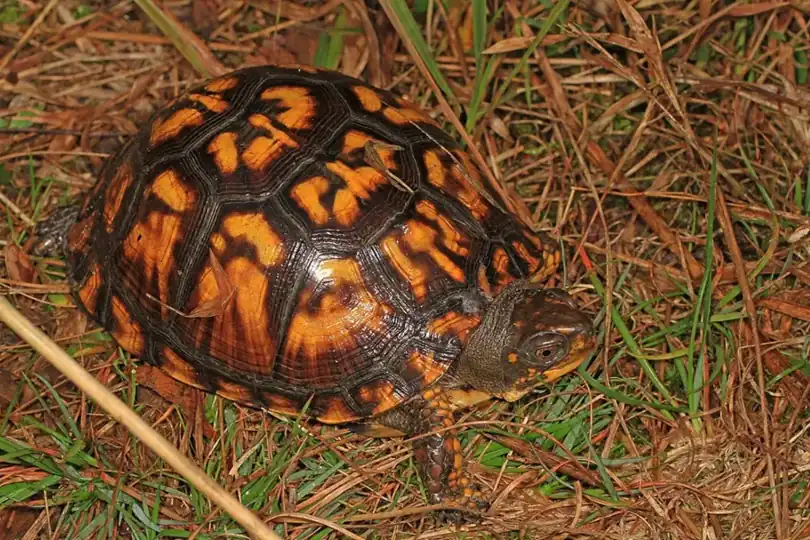
This guide covers the eastern box turtle specifically. Ornate, Gulf Coast and three-toed box turtles should not inherit every setting here. Eastern box turtles spend much of their time on land and use cover, moisture and changes in activity to manage conditions. Choose documented captive origins or a suitable rescue. Native wildlife should remain in the wild; check local possession requirements before acquisition.
Build a foraging floor
ReptiFiles gives an adult indoor starting reference around 1.6 × 0.8 m, with larger strongly favored. The functional test is whether the turtle can walk, forage and choose separate retreats after everything is installed. Provide diggable soil, leaf litter and low stable cover. Outdoor pens need drained ground, sun and shade, predator protection and boundaries that resist both climbing and digging.
Heat, light and moisture choices
The ReptiFiles eastern-specific plan uses a basking area around 29–31°C (84–88°F), a cool area around 21–24°C (70–75°F), and average humidity of 60–80%. Retain a moist refuge. Install daytime UVB over the warm area, considering the actual lamp, reflector, mesh and height above the shell. Measure sheltered air separately from the basking surface; a bright lamp alone does not prove a useful gradient.
Shallow water and clean cover
Use an easy-entry water dish that permits soaking without forcing swimming or trapping the turtle. These dishes become contaminated quickly, so inspect them daily and replace dirty water promptly. Remove waste and spoiled food from leaf litter. Keep substrate damp enough to support the intended refuge while maintaining drainage; repeatedly misting a dirty, waterlogged bed does not fix its condition.
Feeding a changing omnivore
Young box turtles favor animal foods more strongly, while adults use more plant material. Offer varied appropriately sized invertebrates together with suitable leafy vegetables and other foods in a balanced plan. A lettuce-only or insect-only routine is incomplete. Record accepted foods and leftovers, and assess weight trends with body condition. Quiet feeding near cover may work better than repeatedly lifting a shy turtle into the open.
Long-term care and seasonal planning
Sources describe several decades of life, with exceptional animals living much longer. Budget for adult housing, UVB renewal, substrate, varied food and veterinary care. Brumation depends on origin, health and the actual outdoor climate; obtain a plan before cooling a captive animal. Keep newcomers separate and observe activity and appetite. Regular notes make seasonal changes easier to distinguish from an unexplained decline.
Observe the conditions that bring the turtle into view
Smithsonian describes eastern box turtles changing their activity with weather and season, using cover when conditions are too hot. Keep a brief record of time, weather or room readings, shelter use and foraging. After outdoor rain, check both activity and drainage; a more active turtle does not prove that every part of a flooded pen is usable. Indoors, compare food access and covered routes before deciding that a hidden animal needs more handling. This is a practical observation routine rather than a diagnostic schedule. It helps you learn how the turtle uses the ground-level choices you provided, while leaving its sheltered resting places available.
References: Smithsonian — eastern box turtle activity and refuges
Keep captive care separate from wild release
Smithsonian identifies collection and habitat loss as conservation concerns and warns that releasing pet turtles may introduce disease to native populations. Retain the animal's origin and transfer documents with its health record, and plan a responsible captive destination if you can no longer keep it. An outdoor pen should still prevent escape; living within the species' natural range does not make an escaped pet an appropriate addition to local wildlife. If you find a wild turtle, seek local wildlife guidance instead of bringing it into contact with your captive animal. These are practical boundaries for ownership, with current possession requirements still checked through the relevant local authority.
References: Smithsonian — eastern box turtle conservation and release risks
Include reproductive history in the arrival record
Smithsonian notes that females can retain sperm and later lay fertile eggs after an earlier mating. A female arriving alone may have mated previously. Ask about past companions, nesting behavior and previous clutches, and retain any uncertainty in the record. Arrange an appropriate laying provision with an experienced adviser before it becomes urgent. Keep dated observations of digging and changes in food intake without assuming either proves a specific reproductive problem. This preparation does not require breeding the animal or incubating eggs from this overview; it gives the veterinarian and caretaker the history needed when a turtle's behavior changes after a move.
References: Smithsonian — eastern box turtle sperm storage and nesting
Sources & further reading
Read the full recommendations and check details for your animal, equipment, and local conditions.
- ReptiFiles — eastern box turtle housing and environment
- Smithsonian National Zoo — eastern box turtle natural history
- Chicago Exotics Animal Hospital — box turtle water, diet and care
- Tortoise Trust — observed box turtle environment and seasonal pitfalls
Compiled September 2026. Original summaries; not individually reviewed by a veterinarian.