Independent species review: pending. Source-check date: 2026-09-05.
Report a care correction · Offer a species reviewArticle changes
- 2026-09-05 · Added original care summary, preparation checklist, commitment and cost drivers; flagged individual housing assessment.
- 2026-09-08 · Expanded practical preparation, maintenance and observation sections, with scoped sources where applicable. This update checks the new material; independent species review remains pending.
At a glance
- Water planning reference
- At least 10 US gallons of actual water per inch of shell length; assess swimming geometry too. ↗
- Adult water reference
- 21–24°C (70–76°F) in ReptiFiles; age and origin matter. ↗
- Drying requirement
- The whole animal must leave the water on an accessible basking platform. ↗
- Diet
- Varied omnivore; adult feeding emphasizes more plant material. ↗
These are source-specific planning references. Adult size, life stage, climate and measurement location matter. This guide does not certify an enclosure or supply a universal winter-care protocol.
Use this guide as a starting point alongside the detailed sources below. Health concerns, unexplained changes in behavior, or feeding problems belong with a reptile veterinarian.
Identify the form before sizing the home
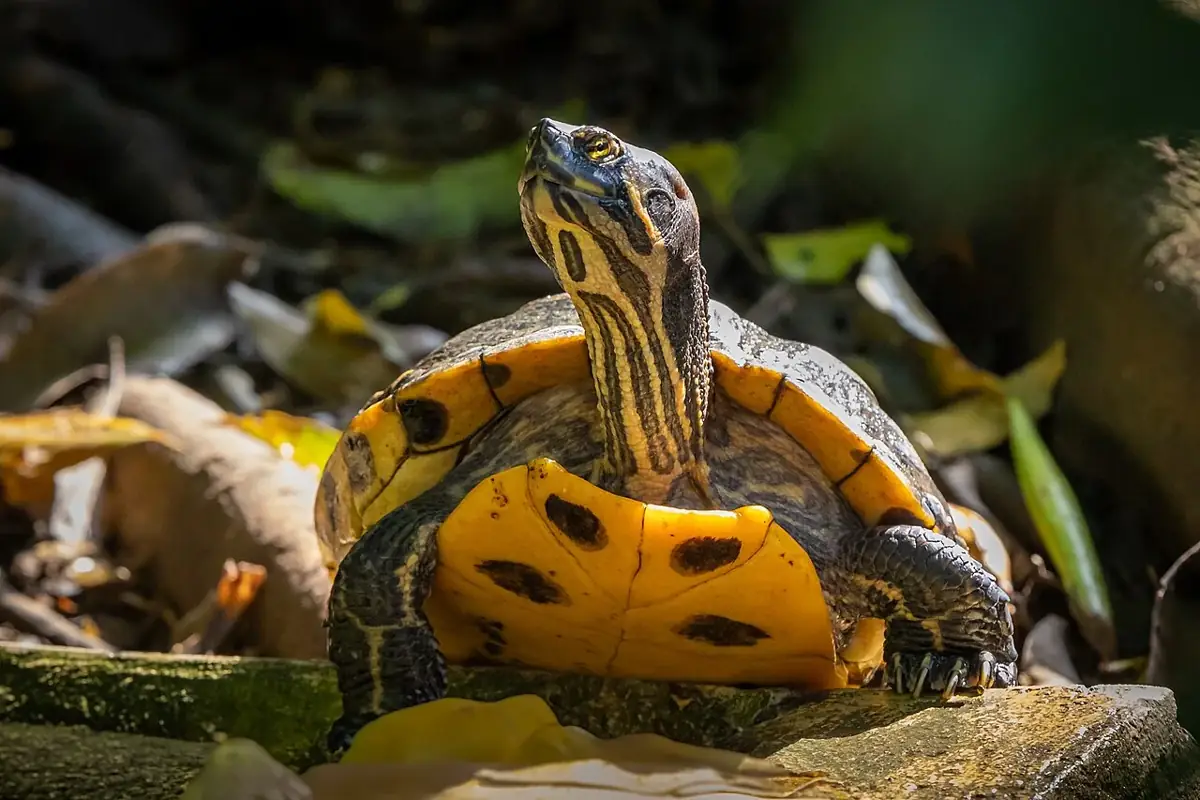
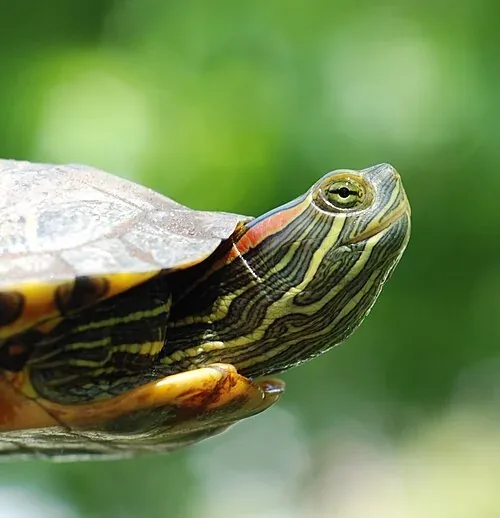
Painted turtles sold under one common name differ in adult size and geographic origin. Record the subspecies and sex when known, and do not automatically transfer this plan to animals sold as southern painted turtles without checking their identity. Females generally grow larger. This is a long-term aquatic project for a keeper prepared to maintain substantial water volume and a dry basking area.
Calculate water, then review the habitat
ReptiFiles uses at least ten US gallons of actual water per inch of shell length as a planning reference. A ten-inch animal therefore points to at least one hundred gallons of water, before accounting for dry land and displaced volume. This is a starting calculation, not certification. Check depth, unrestricted swimming and turning room, filtration access, floor loading and a safe route for partial water changes.
Basking is a daily habitat function
Provide a stable ramp and platform large enough for the entire turtle to dry. Chicago Exotics gives a basking-site reference of 32–35°C (90–95°F); ReptiFiles specifies a hotter surface range. Measurement location and the chosen plan matter. Install daytime UVB over the occupied dock using fixture-specific guidance and appropriate shell clearance. Guard lamps from splashes and retain shaded water and resting options.
Water measurements belong in the routine
Set water temperature for age and origin, independently of the basking lamp. ReptiFiles distinguishes juveniles at 25–27°C (78–80°F) from older animals at 21–24°C (70–76°F). Establish biological filtration, test water quality and remove uneaten food. Record changes and filter service. A stronger filter cannot create missing swimming room or eliminate the need to replace contaminated water.
Feed for growth and adult condition
Offer a varied aquatic-turtle plan using suitable pellets, leafy plants and appropriate animal foods. Younger animals receive animal foods more frequently; mature turtles should use a greater plant component. Feed in water, record portions and avoid interpreting begging as evidence of hunger. Periodic shell-length and weight records help identify when feeding or housing needs reassessment. Dried shrimp alone is not a complete diet.
Housing, health and seasons over decades
Plan for up to forty years of care or longer. Costs include a large enclosure or pond, filtration, electricity, water changes and veterinary care. Quarantine new arrivals with separate tools. Keep underwater hides free of trapping gaps and observe full drying on the dock. Do not improvise outdoor brumation: health, local winter conditions and oxygen management need experienced assessment.
Record water chemistry alongside the cleaning
RSPCA Australia's aquarium guidance explains the biological conversion of ammonia through nitrite to nitrate. That general water-system principle helps explain why a filter's presence is not proof that a new habitat is established. Record the test result, kit, time, feeding and recent water or filter service together. Keep the kit instructions and ask an experienced aquatic-reptile adviser to interpret unexpected results in the actual turtle system. Clear-looking water can still need attention. This recordkeeping approach does not transfer fish toxicity thresholds to turtles or prescribe a universal water-change percentage; it makes the outcome of your maintenance visible and easier to review.
References: RSPCA Australia — freshwater biological filtration principles
Check the dock after growth and water-level changes
ReptiFiles emphasizes land where the turtle can warm and dry completely. Observe the climb from water to dock, the resting position and whether the whole shell and underside can leave the water. Recheck after changing the water level, replacing a ramp or adding a heavier animal to an older platform. Inspect the spaces around supports so swimming routes do not become traps. Measure the occupied basking position again when the dock height changes. A platform that remains attached may still be too small, too slippery or partially submerged for the turtle now using it.
References: ReptiFiles — painted turtle land and basking requirements
Separate the outdoor pond plan from a winter experiment
The California Turtle & Tortoise Club account describes painted turtles across a broad geographic range and discusses natural seasonal behavior. That context does not establish a safe winter procedure for an individual pet or an ornamental pond. Keep identity, origin, age, health history and local pond conditions available for an experienced adviser before any seasonal decision. Maintain a usable indoor alternative and identify how the turtle can be retrieved without dismantling the entire pond. Record activity before conditions change, rather than beginning observations only when the turtle disappears. This is a contingency plan that respects the gap between natural history and a managed overwintering protocol.
References: California Turtle & Tortoise Club — painted turtle natural history
Sources & further reading
Read the full recommendations and check details for your animal, equipment, and local conditions.
- ReptiFiles — painted turtle housing, temperatures and feeding
- Chicago Exotics Animal Hospital — painted turtle care
- Chicago Exotics Animal Hospital — aquatic filtration and maintenance
- RSPCA — terrapin environment and long-term preparation
- California Turtle & Tortoise Club — painted turtle natural history and keeper observations
- RSPCA Australia — freshwater biological filtration principles
Compiled September 2026. Original summaries; not individually reviewed by a veterinarian.