Independent species review: pending. Source-check date: 2026-09-05.
Report a care correction · Offer a species reviewArticle changes
- 2026-09-05 · Added an original scoped planning introduction with source caveats, preparation checklist and individual housing assessment. Numerical environmental settings remain subject to specialist review.
- 2026-09-08 · Expanded practical preparation, maintenance and observation sections, with scoped sources where applicable. This update checks the new material; independent species review remains pending.
At a glance
- Identity
- V. albigularis microstictus; ionidesi is an older name with taxonomic caveats. ↗
- Social planning
- Published breeding observations include competition and aggression. ↗
- Adult project
- Heavy-bodied, powerful monitor; arrange individual housing assessment. ↗
Planning introduction for V. albigularis microstictus, not every V. albigularis form. Historical breeding conditions are not validated enclosure minima. Independent species review pending.
Use this guide as a starting point alongside the detailed sources below. Health concerns, unexplained changes in behavior, or feeding problems belong with a reptile veterinarian.
Resolve the name and the commitment
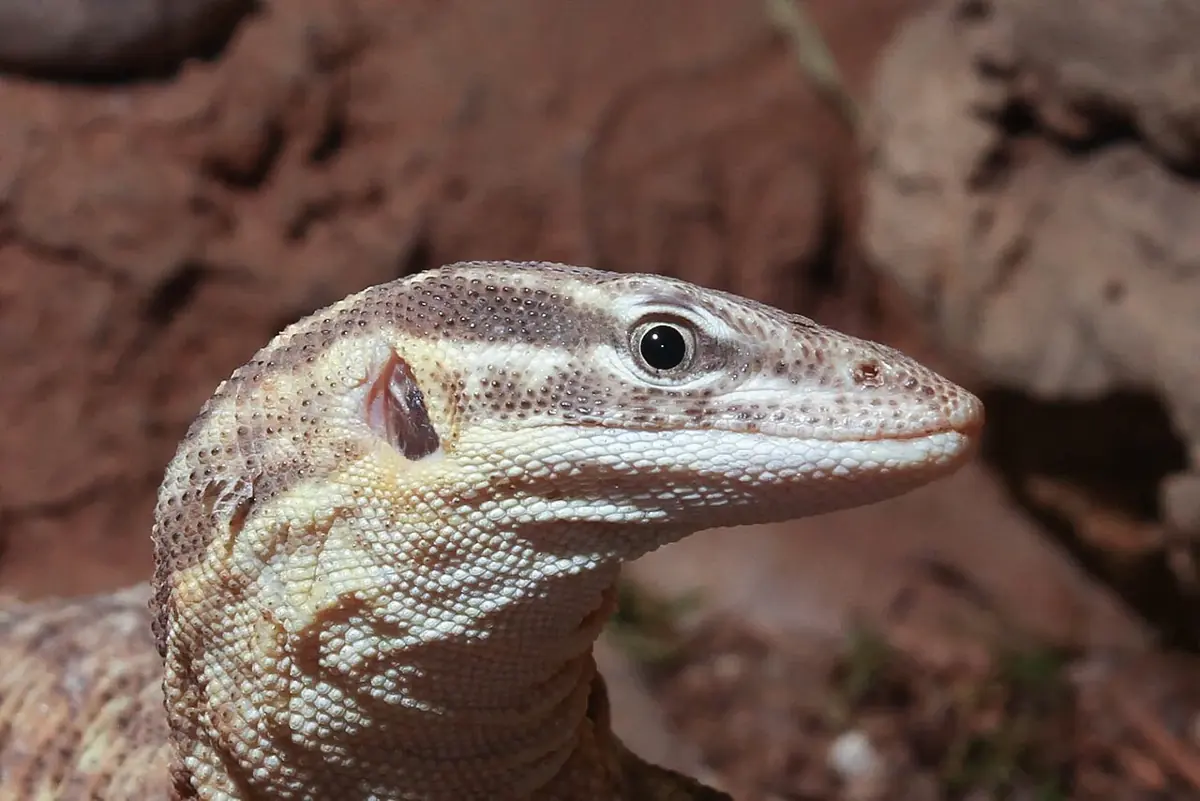
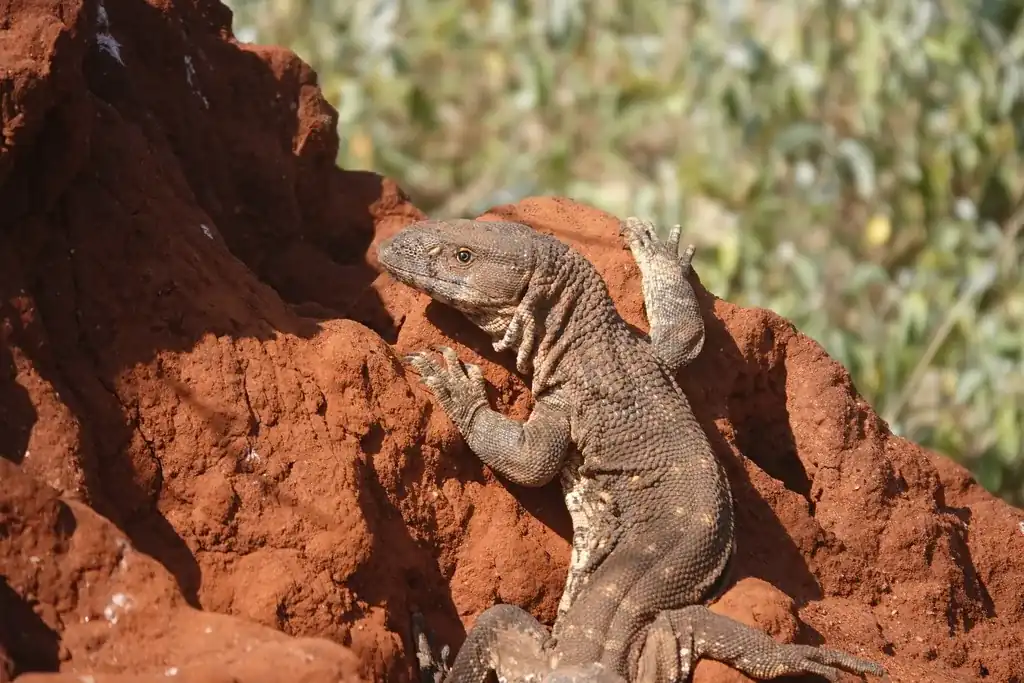
This introduction covers the East African form usually called Varanus albigularis microstictus. The Reptile Database places the older name ionidesi within its synonymy while noting taxonomic uncertainty. Keep the seller’s identification and origin records. Black-throated and white-throated monitors belong to the same broader species; their trade labels do not establish interchangeable care.
Build for the animal you will have
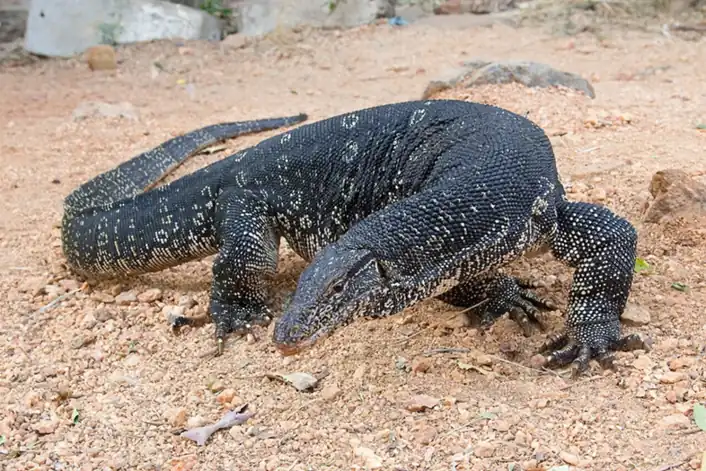
Twin Falls Zoo describes a strongly built monitor with substantial limbs and tail. Assess an adult enclosure as a construction project: walking routes, turning space, secure doors and service access must work together. Király’s breeding report includes large climbing limbs and a submersion basin. Its historical enclosure measurements are observations, not a modern minimum endorsed here.
Make the environment measurable
Prepare a written heat and UVB plan with an experienced monitor keeper. Mark where the animal’s back and feet will sit at the basking station, then record air and surface readings separately. Review humid retreats alongside open activity areas. Electrical protection, accessible probes and replacement-lamp access should be resolved before filling the enclosure.
Plan variety and individual feeding
Wild feeding includes invertebrates and other animal prey. Király documented varied captive foods and food competition among young monitors; a group feeding session cannot establish each animal’s intake. Arrange an age-appropriate menu with supplementation assessed by a reptile veterinarian, retain insect availability and record portions. An impressive appetite is not a reason to keep increasing meals.
Retreats and separation matter
The breeding account also records aggression around nesting space. Routine individual housing and a separate secure holding area make food tracking and maintenance easier to manage. A female’s digging or appetite change deserves a review of reproductive needs and health. Do not copy seasonal fasting or breeding procedures from a case report without experienced support.
Budget for maintenance over years
Price the finished adult facility, heating, feeder supply, waste removal and a veterinarian able to work with large monitors. Rehearse how a substitute keeper would refill water and secure the animal during your absence. This is a specialist planning introduction; independent species review is pending, and a complete environmental specification is still required before acquisition.
Read a breeding report as a case history
Király's report describes successful reproduction alongside difficulties, including food competition among juveniles. Keep both kinds of observation together when reading it. Make a brief source table identifying which animal, life stage and circumstance each practice concerned; do not extract an enclosure size or feeding sequence while discarding the reported problems. A successful clutch demonstrates what happened in that collection, not that every element is optimal for a solitary pet. This source review is especially useful when limited published records recur under several historical names.
References: János Király — black-throated monitor breeding case report, pp. 72–78
Make separation capacity work during ordinary care
The report's account of competition supports treating individual access to food and refuge seriously. Draw the separate holding space into the facility plan and show how doors can be secured before anyone enters the main enclosure for a major clean. Rehearse the empty-enclosure sequence, including lock checks and where equipment will be placed. The holding area needs its own appropriate environmental provision when occupied; an empty transport crate is not automatically a suitable place for prolonged maintenance. These are facility-review questions rather than a training protocol. A keeper should be able to explain how care continues if the monitor does not cooperate with an expected movement on a particular day.
References: János Király — individual feeding and competition observations
Document identity before commissioning the climate
The Reptile Database records historical names and unresolved taxonomic discussion within Varanus albigularis. Keep the supplied name, origin claim and any expert identification together with photographs. Ask the specialist reviewing the habitat to state which population or form their recommendations address, then attach the source and actual measurement location to each target. Include the digging refuge, the whole basking area and the highest reachable point near a fixture. These records give the specialist specific points to assess. If identification or the environmental plan remains unresolved, keep that item open and delay acquisition; a different monitor's familiar care sheet does not fill the missing evidence.
References: The Reptile Database — Varanus albigularis taxonomy
Sources & further reading
Read the full recommendations and check details for your animal, equipment, and local conditions.
- The Reptile Database — Varanus albigularis taxonomy
- János Király, Biawak 8(2), 2014 — direct breeding and husbandry observations
- Twin Falls Zoo — black-throated monitor natural history and ownership demands
Compiled September 2026. Original summaries; not individually reviewed by a veterinarian.