Independent species review: pending. Source-check date: 2026-09-05.
Report a care correction · Offer a species reviewArticle changes
- 2026-09-05 · Added a species-scoped care summary, cited planning references, ownership considerations and setup checks.
- 2026-09-05 · Added three practical care sections with linked sources; individual-assessment and independent-review status remain unchanged.
- 2026-09-08 · Expanded practical preparation, maintenance and observation sections, with scoped sources where applicable. This update checks the new material; independent species review remains pending.
At a glance
- Adult housing example
- 90 × 45 × 45 cm for a snake up to 90 cm; larger individuals need more space. ↗
- Basking reference
- 32–35°C at the basking zone; separate cooler retreats. ↗
- Humidity reference
- 30–50%, with access to a clean humid retreat. ↗
Dimensions are adult planning references in length × width × height, not a welfare certification. Match housing to the actual snake and retain usable climbing, shelter and temperature choices. Named source targets are starting references, pending independent species review.
Use this guide as a starting point alongside the detailed sources below. Health concerns, unexplained changes in behavior, or feeding problems belong with a reptile veterinarian.
Identify the animal and the fit
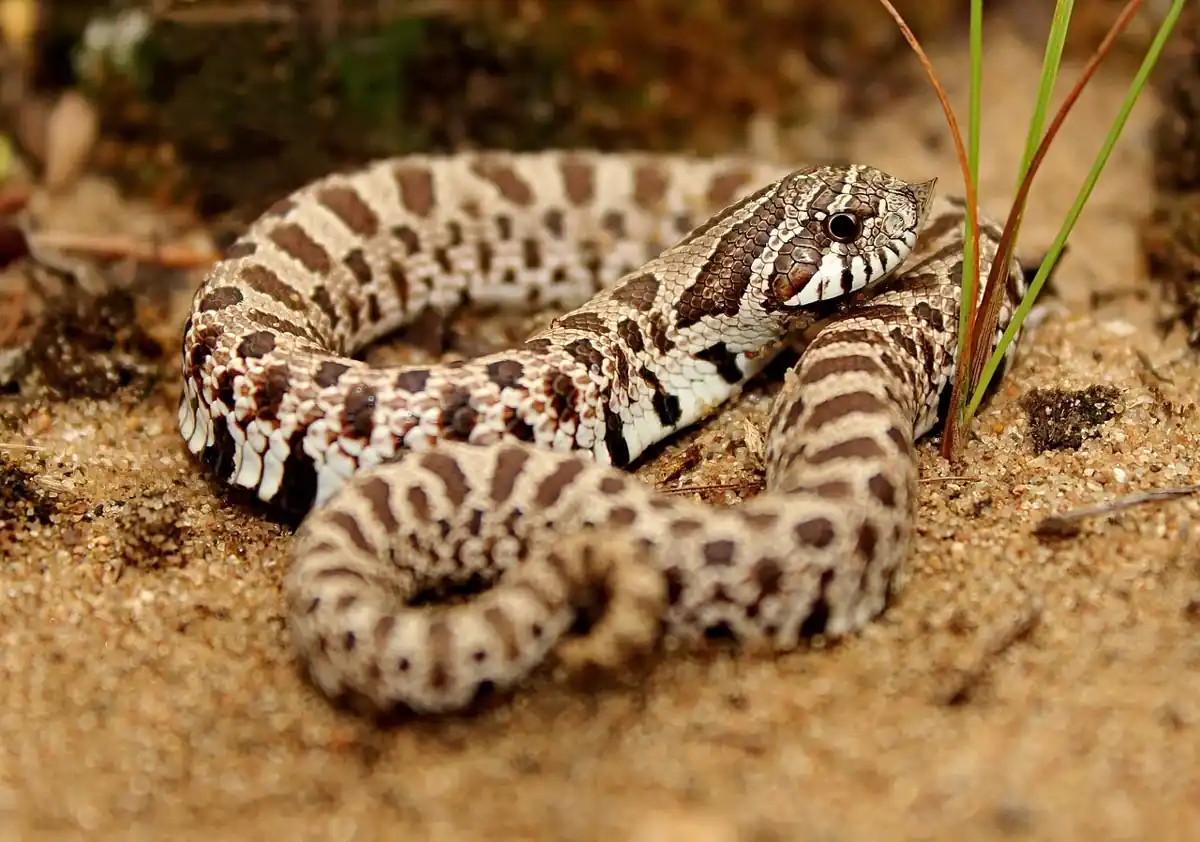
This guide covers the plains or western hognose, Heterodon nasicus. Eastern, southern and Madagascar hognoses need separate research. Hognoses dig, investigate and give conspicuous defensive displays; repeated hissing or playing dead is a reason to reduce disturbance. They are rear-fanged venomous snakes, so choose one with informed handling expectations and keep fingers away from feeding interactions.
Housing that rewards digging
Use 90 × 45 × 45 cm as a planning example for a western hognose up to 90 cm long, enlarging it for a longer individual. ReptiFiles bases space on the snake’s length and distinguishes smaller males from larger females. Include deep, burrowable substrate, several snug shelters and supported branches. Place heavy furnishings on a stable base before adding substrate. A digging snake should not be able to undermine its shelter.
Heat, UVB and measurement
ReptiFiles gives western hognoses a 32–35°C basking zone and a 24–29°C middle range. Create these as separate locations, with cooler retreat space; do not heat the entire enclosure to the basking value. Use regulated, guarded overhead heat and independent probes. Provide timed daylight and UVB with full shade. Lamp model, reflector, mesh and distance to the snake’s back determine exposure, so follow the linked installation guidance and verify with a UVI meter where available.
Humidity and shelter
The same source uses 30–50% humidity for western hognoses. Record readings with their location and temperature, and offer a clean humid retreat without soaking every burrow. Do not transplant the higher eastern-hognose humidity recommendation into this guide merely because the common name is similar.
Food and daily decisions
Choose a captive-bred animal already taking an appropriate thawed diet and obtain its dated feeding record. Established western hognoses commonly accept whole mice; prey size and intervals must match age and condition. Record refusals and weight instead of repeatedly disturbing an unsettled snake with new feeding attempts. Persistent refusal with weight loss needs a reptile veterinarian, not an improvised force-feeding method.
Commitment, costs and pitfalls
Plan for approximately 10–15 years, potentially longer. Our standard budget tier still includes the adult enclosure, thermostat, measuring tools, replacement lighting, frozen prey and a veterinary reserve. Before buying, write down who will check water and equipment during absences. Small adult size does not reduce the need for shelter, adequate substrate or measured heating.
Give the substrate a maintenance plan
ReptiFiles distinguishes substrates by how they hold burrows and moisture. It also notes that removing visible droppings does not remove all urine-soaked bedding, so ordinary substrate requires periodic replacement as well as spot cleaning.
Keep a record of the substrate product or ingredients and its replacement date. During cleaning, inspect areas beneath hides and around the water dish. Afterwards, check that the finished depth still permits full burrowing and that the new surface has not changed access to heat or lighting.
References: ReptiFiles — Hognose Substrate Options
Assess nutritional completeness before adding variety
ReptiFiles’ current feeding guide encourages dietary variety and warns that some frog-based products contain legs rather than whole prey. It also distinguishes occasional pieces of meat or egg from a nutritionally adequate routine diet.
Treat a change of prey as a nutrition decision. Save the ingredient description and ask your reptile vet how it fits with the established menu. Continue recording accepted portions and condition during transitions, so enthusiasm for a novel item does not become the only measure of success.
References: ReptiFiles — How to Feed Your Pet Hognose Snake
Avoid provoking defensive displays
Chicago Exotics identifies playing dead as a stress response and explains that mistaken feeding interactions can cause bites. These behaviours are relevant to how a keeper approaches the snake, even when the individual usually tolerates handling.
Agree on handling rules with anyone who helps care for it: use feeding tools for prey and avoid provoking displays for photographs. Record what immediately preceded repeated defensive behaviour. That context makes it easier to review disturbance, shelter and handling with an experienced keeper or veterinarian.
References: Chicago Exotics Animal Hospital — Western Hognose Care, Melissa Giese DVM · ReptiFiles — How to Feed Your Pet Hognose Snake, feeding tools
Ask what established feeding means for this youngster
Chicago Exotics recommends choosing a youngster that has already eaten several meals with its breeder. Ask for the actual dates, prey type and presentation method, including whether feeding was voluntary. A sale description that says eating well is less useful than a short record you can continue.
Save this information with the arrival date and initial enclosure measurements. Record food offered and food eaten separately. If a new animal is hesitant, retain the documented routine while checking the overall setup, rather than introducing multiple new prey types and frequent handling at once. Mouth swelling, scabs around the lips, breathing changes or declining condition need veterinary assessment. The purpose of preparation is to avoid making an inexperienced keeper responsible for establishing a reluctant feeder from scratch.
References: Chicago Exotics Animal Hospital — western hognose feeding establishment and health
Sources & further reading
Read the full recommendations and check details for your animal, equipment, and local conditions.
- ReptiFiles — hognose identity and lifespan
- ReptiFiles — western hognose climate and lighting
- ReptiFiles — size and enclosure security
- ReptiFiles — feeding hognose snakes
- ReptiFiles — Hognose Substrate Options
- Chicago Exotics Animal Hospital — Western Hognose Care, Melissa Giese DVM
Compiled September 2026. Original summaries; not individually reviewed by a veterinarian.