Independent species review: pending. Source-check date: 2026-09-05.
Report a care correction · Offer a species reviewArticle changes
- 2026-09-05 · Added a scoped introductory guide with sources, commitment and ownership planning.
- 2026-09-05 · Aligned the displayed experience level with the finder’s classification.
- 2026-09-08 · Expanded practical preparation, maintenance and observation sections, with scoped sources where applicable. This update checks the new material; independent species review remains pending.
At a glance
- Adult space
- Full extension plus climbing, bathing and cover; individual assessment required. ↗
- Lifespan uncertainty
- Sources describe differing maxima; plan for a multi-decade commitment. ↗
Planning references apply only to the species and life stage described. They do not certify an enclosure, temperament or veterinary fitness.
Use this guide as a starting point alongside the detailed sources below. Health concerns, unexplained changes in behavior, or feeding problems belong with a reptile veterinarian.
A label is not an adult-size guarantee
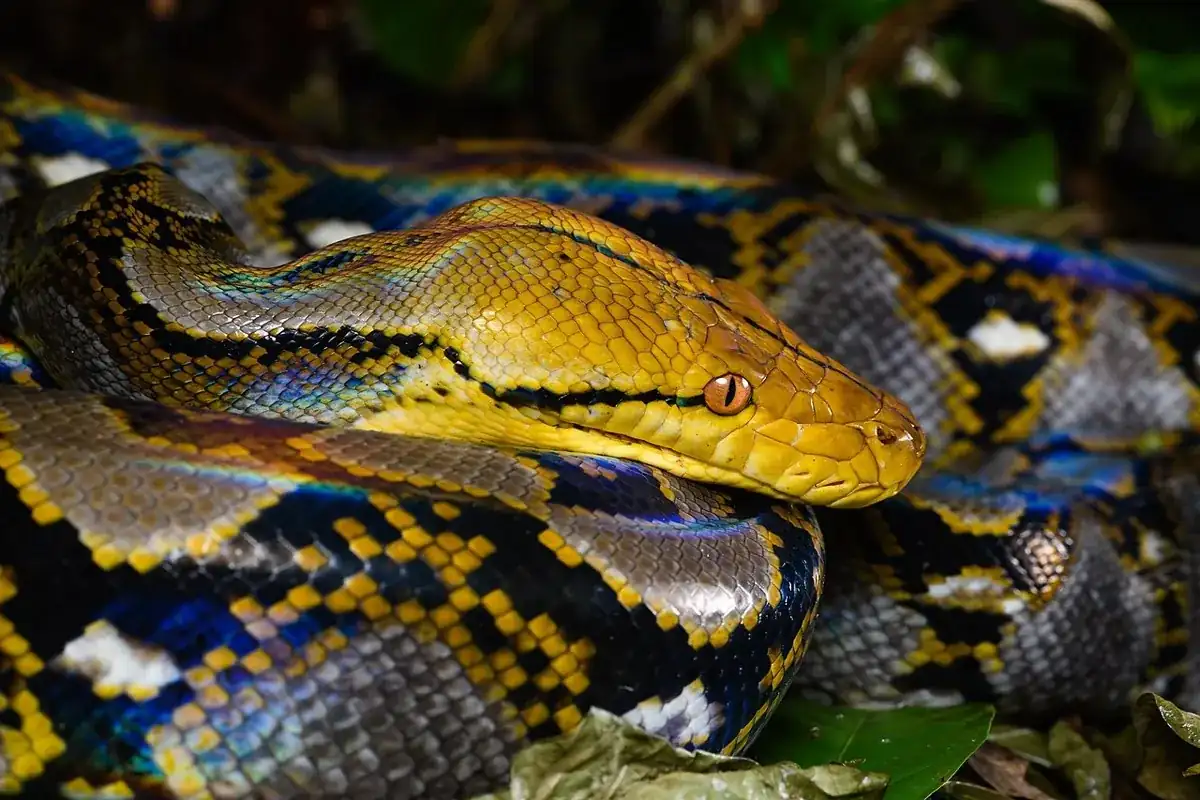
Reticulated pythons vary greatly. Ask for documented lineage and parental sizes rather than relying on a dwarf or super-dwarf sales label. ReptiFiles distinguishes smaller lineages from standard giants, but this page does not make an automatic beginner recommendation on that basis. Plan for the actual animal, and obtain experienced assessment of adult care capacity before purchase.
Provide room to move
Wild Welfare emphasises full extension, climbing, bathing and concealment. A secure habitat therefore needs useful horizontal and vertical routes, strong supports and a basin the animal can enter voluntarily. Floor area alone cannot describe these resources. Include a reliable way to separate the snake from service work; check how water, substrate and the animal itself will move through doorways during cleaning or veterinary transport.
Document heat and lighting
The ReptiFiles plan gives a basking surface of roughly 31–33°C (88–92°F) with cooler air around 24–26°C (76–80°F). These are separate measurement locations. Thermostatic control, independent probes and an infrared surface check all serve different jobs. In a large enclosure, measure several reachable positions beneath lamps rather than assuming one reading represents the whole snake. Provide daytime light, shaded cover and guarded equipment.
Humidity and water require infrastructure
ReptiFiles describes a humid environment with ventilation and surfaces that can dry between mistings. Design the soaking basin so you can remove contaminated water promptly, inspect the liner and clean hidden edges. A water feature that cannot be serviced becomes a recurring problem. Record your minimum and maximum readings along with the time of misting; an isolated peak reading is not a climate history.
Routine means more than feeding
Wild Welfare recommends appropriate non-live prey and discourages crowding solitary pythons together. A workable routine includes observation of movement, cover use, body condition and enclosure integrity. Save feeding results and changes in behaviour. Arrange an experienced care team for adult maintenance and transport; written notes complement practical competence but cannot replace it.
Make the lifetime plan explicit
Published lifespan estimates differ: ReptiFiles reports 15–20 years commonly and 25–30 possible, while Wild Welfare describes a longer potential commitment. Plan for decades of care while allowing for uncertainty in lifespan. Our specialist budget includes a substantial permanent facility, heating, drainage, large prey storage and capable backup care. Reassess the plan at each growth milestone; no generic planner layout on this site certifies giant-python housing.
Turn lineage information into a realistic space decision
Keep the breeder's exact ancestry claim, parent measurements and dated photographs with the animal's record. Label the evidence as documented, reported or unknown. Do not use a percentage or sales label as a confirmed adult size in the planner.
Build more than one housing scenario: the expected adult and a larger-than-expected individual. For each, identify the room, service access, furnishing strength, water management and costs you can actually provide. Discuss both scenarios with an experienced reticulated-python keeper before acquisition. If the larger possibility is impossible in your home, the uncertainty itself is a reason to reconsider. The purpose is an honest capacity check, not a genetic prediction.
Give movement a place in the weekly review
Wild Welfare includes opportunities for stretching, climbing, concealment and bathing in its reticulated-python welfare guidance. Use those categories when reviewing the habitat instead of treating a large empty footprint as a complete environment.
In a short observation record, note which routes and resting areas are used and whether the snake can choose cover while moving between resources. Add the time of observation; one sleeping daytime view does not represent all activity. When changing an item, save the earlier layout and compare later observations. These notes can identify a blocked route or inaccessible basin without claiming that a single behaviour proves the animal is comfortable.
References: Wild Welfare — reticulated python welfare resources
Record the maintenance method with the build
A completed construction journal should explain the normal water-change route, where contaminated water goes, how service access is secured and how the snake is separated from maintenance. Include photographs of those features with the facility empty, so a substitute keeper can understand them without improvising around an adult.
Track recurring problems such as hidden standing water, awkward bowl removal, damaged seals or supports that obstruct the doors. Record the fix and check it again during the next service. Obtain experienced review where a change affects containment or structural strength. This operating history is more useful to another keeper than a finished-enclosure photograph that conceals the work required to keep it functioning.
Sources & further reading
Read the full recommendations and check details for your animal, equipment, and local conditions.
- ReptiFiles — reticulated python care and lineage planning
- Wild Welfare — behaviour, housing and lifetime welfare
Compiled September 2026. Original summaries; not individually reviewed by a veterinarian.