Independent species review: pending. Source-check date: 2026-09-05.
Report a care correction · Offer a species reviewArticle changes
- 2026-09-05 · Added a species-scoped care summary, cited planning references, ownership considerations and setup checks.
- 2026-09-08 · Expanded practical preparation, maintenance and observation sections, with scoped sources where applicable. This update checks the new material; independent species review remains pending.
At a glance
- Adult housing example
- 180 × 90 × 90 cm; size to actual length and enlarge for longer animals. ↗
- Basking-area reference
- About 29–32°C; cool side about 21–27°C. ↗
- Humidity reference
- 60–80% ambient, with a humid retreat and ventilation. ↗
Dimensions are adult planning references in length × width × height, not a welfare certification. Match housing to the actual snake and retain usable climbing, shelter and temperature choices. Named source targets are starting references, pending independent species review.
Use this guide as a starting point alongside the detailed sources below. Health concerns, unexplained changes in behavior, or feeding problems belong with a reptile veterinarian.
Know what “Honduran” means
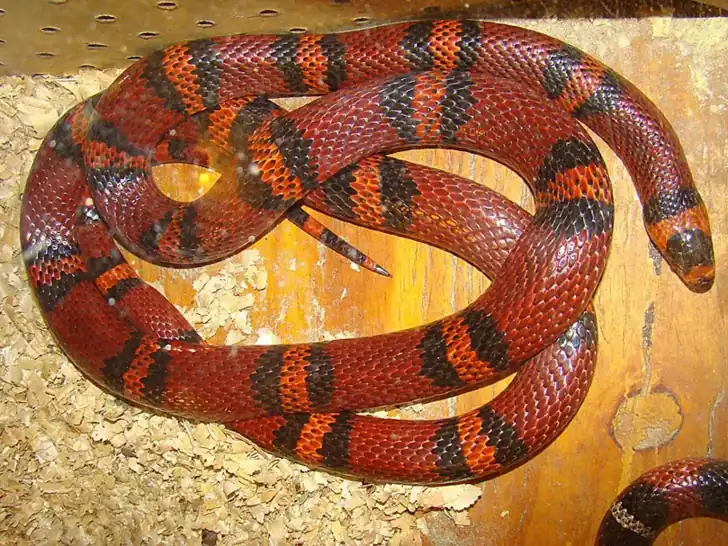
This entry covers the captive Honduran form historically sold as Lampropeltis triangulum hondurensis. The Reptile Database includes hondurensis under L. abnorma; classification within the wider milk-snake complex has been debated. Keep lineage and seller documentation. This guide is not a universal climate plan for every milk snake. Hondurans are active and can grow considerably longer than a small starter enclosure suggests.
Adult space and cover
Use 180 × 90 × 90 cm as an adult planning example, corresponding approximately to the six-foot enclosure class in ReptiFiles’ length-based recommendations. Check the actual animal’s length and increase housing as needed. Supply covered ground routes, stable branches, several snug hides and substrate that permits exploration. House singly: related kingsnakes and milk snakes can eat other snakes. Dense cover should make a large enclosure usable without obstructing inspection.
Heat and light
The Bio Dude’s Honduran guide uses a basking area of 85–90°F (about 29–32°C), a cool side of 70–80°F (about 21–27°C), and nights no colder than 66°F (about 19°C). Measure these separate locations before introducing the animal. Regulate and guard heaters. Provide UVB alongside daytime basking light, plus full shade. Fixture, mesh and distance to the snake determine exposure; check the assembled setup rather than choosing a tube by percentage alone.
Humidity with ventilation
The same guide uses 60–80% ambient humidity and an accessible humid retreat for this tropical form. Log humidity with temperature and location. Retain ventilation and clean, dry resting surfaces; a wet floor is not a substitute for appropriate air humidity. Check the hidden substrate around the water bowl for persistent saturation.
Food and settling
Obtain the snake’s recent meal history and use appropriately sized thawed whole rodents. Northampton Reptile Centre describes fortnightly adult feeding as a starting routine, with younger snakes fed more often. Adjust with growth and body condition, not color morph or enthusiasm. Keep records of meals, refusals, weight and sheds. Give an unsettled youngster covered space and time rather than repeatedly lifting hides to look for it.
Commitment and likely expenses
Reptile Cymru describes a lifespan exceeding 20 years. The substantial budget tier reflects the large adult enclosure, moisture-resistant materials and the cost of heating and furnishing that space. Include replacement lighting and veterinary provision. The key buying question is whether the adult home, daily monitoring and an informed holiday keeper are already realistic for your household.
Keep the Honduran form attached to every saved plan
The commercial guides linked here are explicitly about Honduran milksnakes, while other milksnake pages may cover several different forms. Save the animal's original breeder label and current scientific identification with the care plan, and retain uncertainty where lineage was not documented.
When comparing equipment lists, check the adult size and form assumed by each author. Do not merge a dry-climate milksnake setup with this page's moisture plan simply because both say milk snake. Ask for an experienced review when the identification or projected adult size is unclear. Use these records to distinguish advice for the identified animal from information on a broad category page.
Give a planted enclosure a service diagram
Draw the water-removal route, the accessible humid refuge and the positions used for temperature and humidity measurements. Mark any area where plant pots or roots could make the floor hard to inspect. An enclosure can look lush while concealing a persistently soaked corner.
After watering or changing substrate, record the next ordinary readings rather than only the immediate humidity peak. Note spills separately from deliberate misting. Keep a spare washable refuge or water vessel in the supply list if replacement would otherwise interrupt daily care. The notebook should tell a backup keeper which items are routinely serviced and which planted areas should be left undisturbed during a simple check.
Plan adult housing before the current enclosure is outgrown
Reptile Cymru notes substantial eventual size and long life in its Honduran care account. Use the actual snake's growth and the breeder's adult information when reviewing space, rather than relying on a small sale photograph.
On the build plan, include clear internal dimensions after furnishing, room for full extension, and the cost of the next suitable habitat. Record when you will review the plan again while the current enclosure is still adequate. Keep a photograph showing the available movement routes. If a planned upgrade involves new lighting or a different substrate system, allow time to establish and measure it before transferring the animal. A growth milestone should trigger preparation, not a rushed purchase.
References: Reptile Cymru — Honduran milksnake growth and commitment
Sources & further reading
Read the full recommendations and check details for your animal, equipment, and local conditions.
- Reptile Database — Honduran form and taxonomy
- ReptiFiles — milk-snake housing by adult length
- The Bio Dude — Honduran heat, UVB and humidity
- Reptile Cymru — size, solitary housing and longevity
- Northampton Reptile Centre — feeding Honduran milk snakes
Compiled September 2026. Original summaries; not individually reviewed by a veterinarian.