Independent species review: pending. Source-check date: 2026-09-05.
Report a care correction · Offer a species reviewArticle changes
- 2026-09-05 · Added a scoped introductory guide with sources, commitment and ownership planning.
- 2026-09-05 · Aligned the displayed experience level with the finder’s classification.
- 2026-09-08 · Expanded practical preparation, maintenance and observation sections, with scoped sources where applicable. This update checks the new material; independent species review remains pending.
At a glance
- Basking perch reference
- 27–30°C (80–86°F); probe at the perch, with cooler shade available. ↗
- Scope
- Morelia viridis and M. azurea; identify the animal before detailed planning. ↗
Planning references apply only to the species and life stage described. They do not certify an enclosure, temperament or veterinary fitness.
Use this guide as a starting point alongside the detailed sources below. Health concerns, unexplained changes in behavior, or feeding problems belong with a reptile veterinarian.
Best for an observant keeper
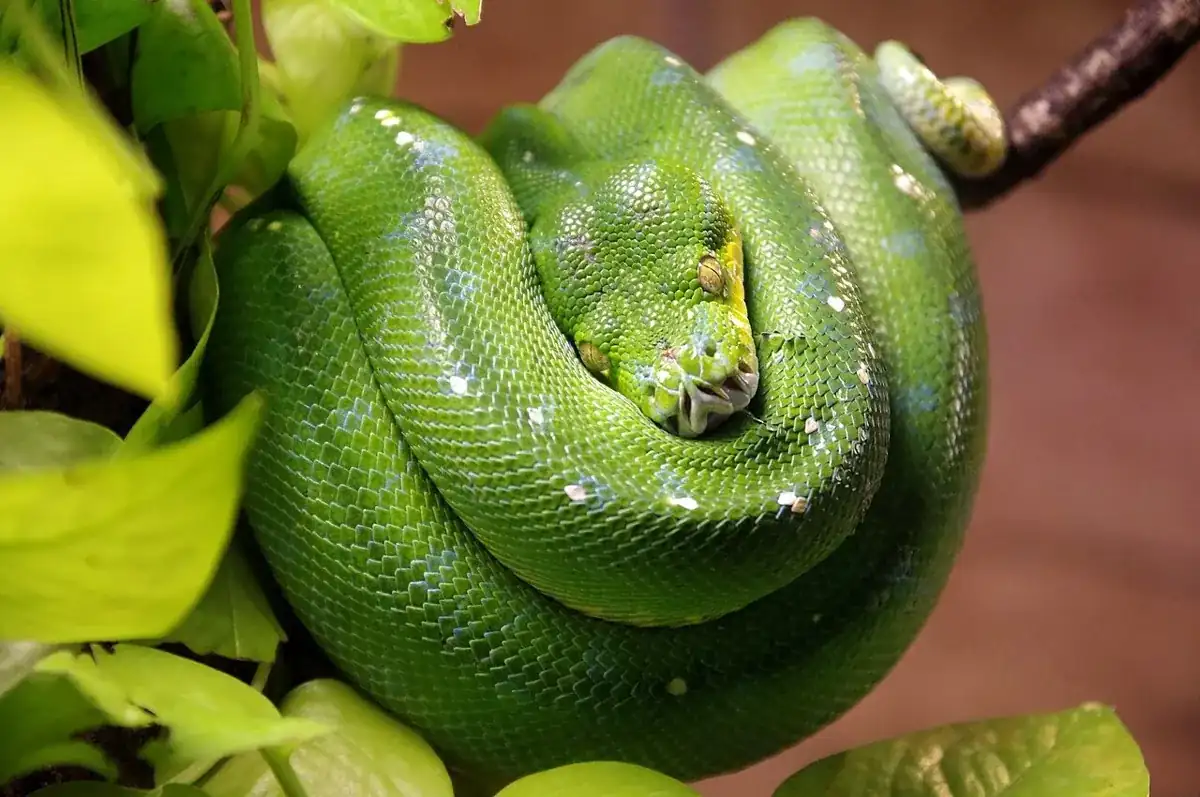
Green tree python is a keeper label spanning Morelia viridis and Morelia azurea. The Reptile Database recognises both; many older care sources use viridis broadly. Record documented species and lineage before choosing a detailed plan. This group introduction suits someone interested in observing resting and hunting choices. It is a poor fit if frequent handling is the main attraction. Brookfield Zoo describes a solitary ambush hunter camouflaged among foliage.
Build choices into the branches
Give the snake enough horizontal room to stretch and a connected network of secure perches. Include screened resting positions at different conditions, not one exposed branch beneath a heater. Design removable supports so essential cleaning does not require pulling a tightly coiled animal free. The housing assessment should include the adult’s actual length, the reach needed to change water and the nearest possible approach to equipment.
Measure at the occupied perch
ReptiFiles uses a basking-perch range of 27–30°C (80–86°F), measured with an attached probe, with a cooler shaded zone. This is not a whole-enclosure thermostat setting. Guard and control heaters, provide shaded escape routes and check UVB at the animal’s reachable back height. Save actual readings after each change to branches or lighting.
Humidity needs a daily cycle
The ReptiFiles plan allows humidity to fluctuate roughly 40–70%, with temporary rises after misting and drying between cycles. Young animals are more vulnerable to dehydration. Check the low reading before the next spray as well as the immediate peak, and preserve clean drinking water. A wet glass wall tells you little about conditions at a perch.
Feeding and colour changes
The Los Angeles Zoo describes juveniles that begin yellow or reddish and change colour as they mature. Keep dated photographs; colour alone is not a health assessment. Zoo accounts describe vertebrate prey in nature. For a new captive-bred animal, ask for the established prey type and meal record, then use suitable thawed whole rodents and track refusals together with weight. Persistent decline requires veterinary assessment.
Commitment and practical costs
The Los Angeles Zoo estimates 15–20 years. Our specialist budget reflects a carefully furnished arboreal enclosure, reliable climate instruments, replacement lighting and a vet comfortable with tree pythons. Before purchase, write down how a substitute carer would check the animal without unnecessary removal. Include perch maintenance and misting-equipment inspection in the notebook so the enclosure remains functional as it ages.
Plan care around the occupied perch
Design the essential jobs on paper while imagining the python already coiled on its favourite branch. Show how water is changed, visible waste is removed, and the occupied support can be transferred when necessary. A spare compatible perch and secure temporary enclosure can be listed with the supplies before they are needed.
Photograph the perch network from the front and side, naming warm and cooler resting positions. After changing a support, record both its location and the measurements at the snake's reachable body height. An attractive replacement branch can alter exposure even if the thermostat setting and lamp remain unchanged. Preserve the original arrangement in the journal for comparison.
Record the meal, not just the feeding date
For each meal, note prey type and approximate size, whether it was actually taken, and the occupied perch at presentation. Record a refusal as a refusal, then keep the normal environment stable while reviewing the wider history. A caretaker should be able to see the last successful meal without mistaking an offered meal for an eaten one.
Before acquisition, ask the breeder to describe the individual's established feeding presentation and normal response to routine care. Save that account beside your own notes. Avoid assuming that a different green tree python's feeding video provides an equivalent method for your youngster. The handover should describe the specific animal's demonstrated routine.
Observe development without turning it into a disturbance
Los Angeles Zoo describes the conspicuous change from juvenile yellow or reddish colouring to adult green. That makes dated photographs a useful developmental record, but it does not make colour a substitute for assessing condition or behaviour.
Take comparable photographs during ordinary observation, keeping the animal on its perch. Add a short note on resting position, visible movement and whether cover was used. Occasional evening observations can answer questions a daytime photograph cannot. Review several observations together before deciding a perch is unused. If a change follows rearranged foliage or a moved sensor, record the connection as a possibility, not a proven diagnosis.
References: Los Angeles Zoo — green tree python development
Sources & further reading
Read the full recommendations and check details for your animal, equipment, and local conditions.
- ReptiFiles — green tree python care and measured conditions
- Los Angeles Zoo — development and lifespan
- Brookfield Zoo — behaviour and natural diet
- The Reptile Database — northern green tree python species
Compiled September 2026. Original summaries; not individually reviewed by a veterinarian.