Independent species review: pending. Source-check date: 2026-09-05.
Report a care correction · Offer a species reviewArticle changes
- 2026-09-05 · Added a scoped introductory guide with sources, commitment and ownership planning.
- 2026-09-05 · Aligned the displayed experience level with the finder’s classification.
- 2026-09-08 · Expanded practical preparation, maintenance and observation sections, with scoped sources where applicable. This update checks the new material; independent species review remains pending.
At a glance
- Adult housing
- Facility assessment required; no generic enclosure default. ↗
- Commitment
- At least 20 years; longer survival is possible. ↗
Planning references apply only to the species and life stage described. They do not certify an enclosure, temperament or veterinary fitness.
Use this guide as a starting point alongside the detailed sources below. Health concerns, unexplained changes in behavior, or feeding problems belong with a reptile veterinarian.
Start with adult capacity
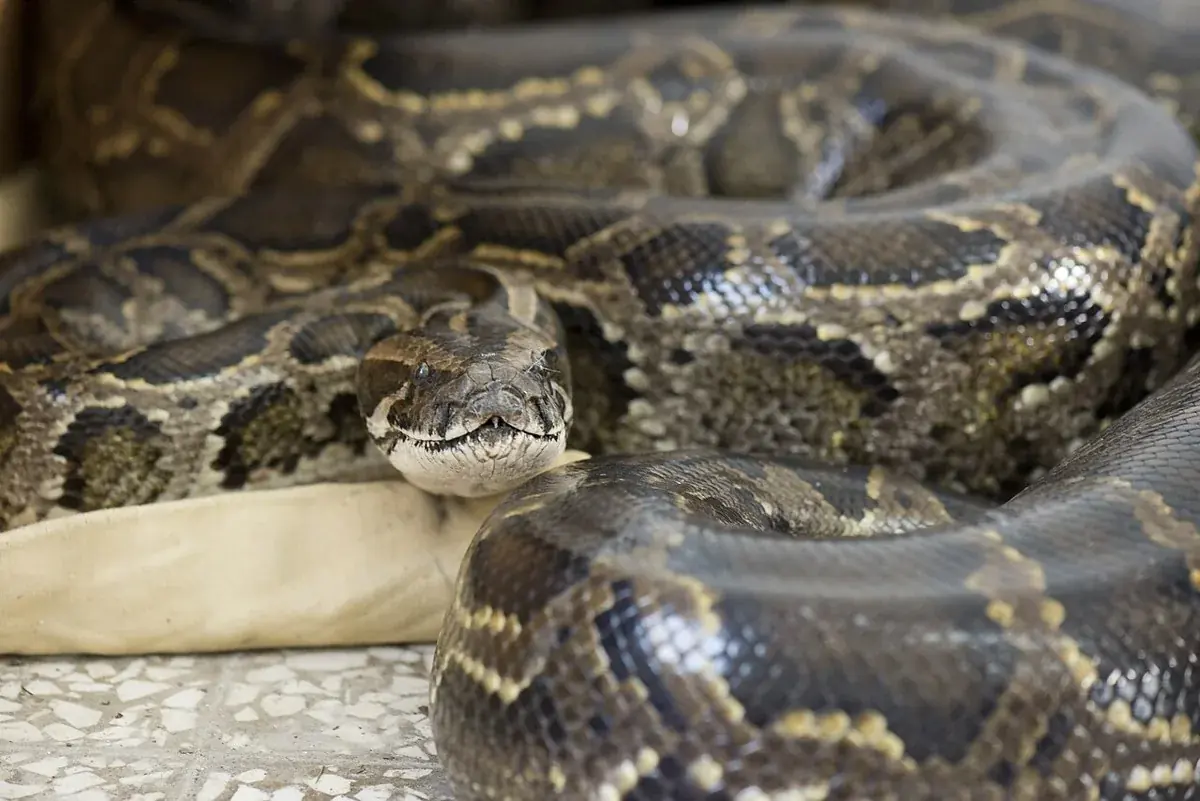
Even a small Burmese python requires planning for a giant adult. Chicago Exotics Animal Hospital describes frequent relinquishment when size and food demands become unmanageable. Calm behaviour does not remove the consequences of a handling mistake. This guide is an orientation for experienced keepers; it cannot approve a facility or provide a safe handling qualification. Establish adult accommodation, capable assistance and access to a suitable veterinarian before acquisition.
Plan the complete adult facility
ReptiFiles recommends housing that lets the entire snake extend and offers meaningful movement. Adult planning can involve a dedicated room or outbuilding, with strong furnishings and an accessible bathing basin. Work out drainage, cleaning access, secure separation and how the animal will be contained during maintenance. Do not base permanent housing on the dimensions of a juvenile cage or assume a large empty box meets behavioural needs.
Heat, light and moisture
Use a professionally considered thermal plan across the full enclosure, with regulated heat and independent readings in occupied areas. The ReptiFiles reference is approximately 32–33°C (90–92°F) at the basking area and about 60% ambient humidity. Preserve cooler choices and ventilation. Lamp installation must account for the animal’s height when coiled or climbing, with protected fixtures and shaded refuge. Photograph sensor placement so a caretaker knows what each reading means.
Food and a workable cleaning routine
Whole-prey feeding creates substantial storage, thawing and waste-disposal requirements. Keep the feeding procedure distinct from maintenance and have experienced assistance available for the adult. Log body condition rather than encouraging maximum growth. Water features need a realistic emptying and scrubbing method; include this work in your budget and schedule before construction, when plumbing changes are easier to make.
Quarantine and medical planning
Chicago Exotics recommends an extended quarantine before introducing a Burmese python to an established collection. Agree the isolation, examination and testing plan with your reptile vet; do not interpret normal appearance as disease clearance. New breathing difficulty, regurgitation or abnormal posture warrants prompt veterinary contact. A transport plan must include a suitable secure container, lifting assistance and confirmation that the practice can receive an adult.
Plan for decades of care
The hospital describes at least a 20-year commitment and possible survival to 25. Our specialist budget includes facility construction, utilities, large prey, replacement equipment and trained backup care. Write an emergency and future-care plan that another competent person could follow. If those arrangements depend on finding help after the animal grows, the preparation is incomplete.
Write down what an adult-ready facility must do
Before commissioning the permanent habitat, make an acceptance checklist covering secure separation during servicing, a usable cool retreat, complete concealment, bathing-water access and the route for veterinary transport. Include who will independently review the layout and who is available for adult care.
Work through the complete water-change and major-clean routine with the intended equipment. Identify heavy items, drain access, temporary containment and lock checks. Price those jobs into the build while changes are still affordable. A room's floor area alone does not answer whether two competent carers can maintain it. Keep the approved drawing and later modifications in the enclosure journal so the operating plan survives a change of carer.
Prepare for loss of equipment or a key caregiver
Create a contact sheet for the regular reptile veterinarian, an emergency receiving practice and the experienced people who can provide practical assistance. Confirm that each practice can receive the expected adult size. List the secure container, vehicle access and lifting equipment that would be used; a generic pet carrier is not a transport plan.
Record how equipment faults are reported and which parts are replaceable on site. Include a period when the primary keeper is unavailable in the planning exercise. If the entire arrangement depends on one person always being healthy and present, resolve that dependency before buying a juvenile. Written instructions help trained carers but cannot replace their practical skills.
Treat early health information as part of acquisition
Chicago Exotics identifies regurgitation, unusual body positioning and breathing difficulty as reasons for veterinary contact and emphasises quarantine before joining a collection. A normal-looking animal is not a substitute for a documented health and husbandry history.
Request examination records, parasite testing where available, recent meals and previous exposure to other snakes. Agree the receiving enclosure and veterinary assessment in advance. Preserve dates and copies in the animal's private record, keeping assumptions separate from confirmed findings. If a problem appears, this gives the veterinarian a concise account of what changed and when, alongside the actual environmental readings and food history.
References: Chicago Exotics Animal Hospital — Burmese python health and quarantine
Sources & further reading
Read the full recommendations and check details for your animal, equipment, and local conditions.
- ReptiFiles — adult housing and environmental care
- Chicago Exotics Animal Hospital — long-term care, quarantine and health
Compiled September 2026. Original summaries; not individually reviewed by a veterinarian.